Black Panther: The Mysterious Big Cat of the Wild
Introduction: The Shadow That Rules the Jungle
Deep within the world’s rainforests, where sunlight struggles to reach the forest floor, and every rustle of leaves hides a secret, an extraordinary predator moves like a living shadow. Silent. Powerful. Almost invisible.
For centuries, travelers, hunters, and wildlife explorers have spoken of a dark cat with glowing eyes slipping through the jungle without a sound. Stories about this elusive creature inspired legends, myths, and even fear. That mysterious animal is known as the Black Panther.
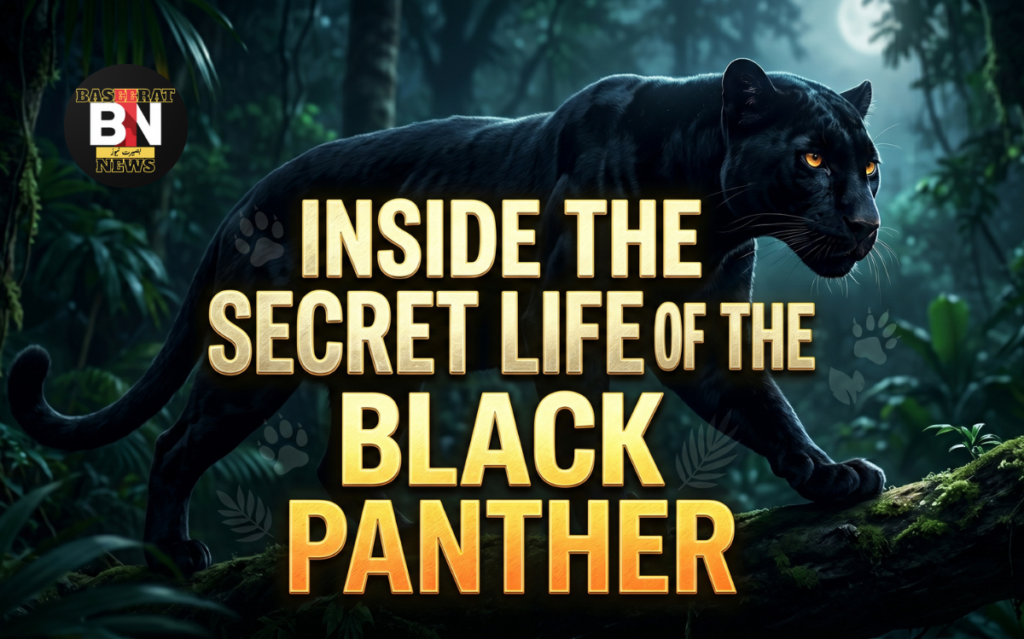
Few wild animals capture human imagination the way the black panther does. Its sleek black coat, stealthy movements, and secretive nature have made it one of the most iconic predators on Earth. Unlike lions that roar across open savannas or tigers that dominate dense forests, black panthers often remain hidden from human sight.
What makes them even more fascinating is that many people misunderstand what a black panther actually is.
Contrary to popular belief, a black panther is not a separate species. It is a leopard or jaguar with a rare genetic condition that gives its fur a dark appearance. This scientific reality is just as fascinating as the myths surrounding it.
In this comprehensive guide, we’ll explore the truth about black panthers, their habitats, behavior, hunting abilities, cultural significance, conservation challenges, and much more. By the end, you’ll understand why this magnificent predator remains one of nature’s greatest mysteries.
What Is a Black Panther?
One of the biggest misconceptions in wildlife education is the belief that a black panther is its own species.
In reality, the term “black panther” refers to a melanistic big cat.
Melanoma is a genetic condition that causes an excess production of dark pigment called melanin. As a result, the animal’s fur appears black or nearly black.
Most black panthers are:
- Melanistic leopards are found in Africa and Asia
- Melanistic jaguars are found in Central and South America
Despite appearing completely black, these animals still possess the distinctive rosette patterns seen on regular leopards and jaguars. Under bright sunlight, these hidden spots often become visible.
Scientists believe melanism may offer survival advantages in dense forests. The darker coat provides exceptional camouflage in low-light environments, allowing these predators to stalk prey more effectively.
Early explorers often described black panthers as supernatural creatures. Imagine walking through a rainforest at dusk and briefly seeing a pair of glowing eyes before the animal disappears into the darkness. Without modern biology, it’s easy to understand how legends developed.
Today, genetics explains the mystery, but the fascination remains.
Types of Black Panthers
Although the term sounds simple, black panthers can actually belong to two different big cat species.
Black Leopard
Black leopards are the most common form of black panther.
They occur mainly in:
- India
- Sri Lanka
- Nepal
- Myanmar
- Malaysia
- Parts of Africa
Dense tropical forests provide ideal conditions for melanistic leopards. Their dark coloration helps them blend into shadows where prey animals struggle to detect them.
Leopards are famous for adaptability. They can survive in:
- Rainforests
- Dry woodlands
- Mountain regions
- Grasslands
This flexibility has helped them become one of the most widespread big cats on Earth.
Black leopards possess incredible climbing skills. They frequently drag prey into trees to protect it from scavengers such as hyenas and wild dogs.
Black Jaguar
In the Americas, black panthers are usually melanistic jaguars.
These powerful cats inhabit:
- Amazon Rainforest
- Pantanal wetlands
- Central American forests
- Tropical river systems
Black jaguars tend to be more muscular than black leopards.
They possess:
- Broader heads
- Stronger jaws
- More powerful bite forces
A jaguar’s bite is among the strongest of all big cats relative to body size. It can pierce turtle shells and even crack skulls.
Unlike many cats, jaguars are exceptional swimmers. Rivers, lakes, and swamps rarely slow them down.
Their dark coats provide excellent concealment beneath dense rainforest canopies where sunlight is limited.
Leopard vs Jaguar
Although they appear similar, important differences exist.
Leopards are generally:
- More agile climbers
- Slightly lighter in build
- Found in Africa and Asia
Jaguars are generally:
- More muscular
- Stronger biters
- Better swimmers
- Found in the Americas
When melanism occurs in either species, the result is what most people call a black panther.
Black Panther Habitat
Black panthers thrive in some of the world’s most beautiful and complex ecosystems.
Picture a rainforest after heavy rain.
Moisture hangs in the air. Water drips from giant leaves. Insects buzz among towering trees. The forest floor is covered in shadows and tangled vegetation.
This environment is perfect for a black panther.
Tropical Rainforests
Rainforests are perhaps the most iconic black panther habitat.
Dense vegetation provides:
- Camouflage
- Shelter
- Abundant prey
- Safe breeding areas
The darkness beneath rainforest canopies enhances the effectiveness of melanistic coloration.
Mountain Forests
Some black leopards inhabit mountainous regions.
These environments offer:
- Rocky hiding places
- Cooler temperatures
- Reduced human disturbance
Mountain habitats often require exceptional climbing abilities, a skill these cats possess naturally.
Swamps and Wetlands
Black jaguars frequently occupy wetlands and floodplains.
These habitats support numerous prey species, including:
- Fish
- Capybaras
- Reptiles
- Deer
Unlike many cats, jaguars are comfortable hunting in water.
Grasslands and Woodland Areas
Although less common, black panthers can survive in open habitats if sufficient cover exists.
Trees, bushes, and rocky terrain help them remain concealed while hunting.
Habitat quality ultimately determines survival. Without healthy forests and abundant prey, even the most skilled predator struggles.
Physical Appearance of the Black Panther
The black panther’s appearance is one reason it has become legendary.
At first glance, the animal appears entirely black.
Look closer, however, and subtle details emerge.
Hidden rosettes often shimmer beneath sunlight.
Its body combines elegance with raw power.
A black panther moves like flowing smoke through the forest.
Every muscle serves a purpose.
The shoulders ripple beneath the coat. The tail provides balance. The paws absorb sound.
Typical features include:
- Dark black fur
- Golden or green eyes
- Muscular body
- Long tail
- Sharp retractable claws
- Powerful jaws
Adult black leopards typically weigh between 30 and 90 kilograms.
Black jaguars may exceed 120 kilograms in some regions.
Their eyes are especially striking. Against the dark fur, the bright eyes seem to glow, contributing to countless stories and legends.
Wildlife photographers often describe seeing a black panther as a magical experience.
Many spend weeks or even months searching before catching a brief glimpse.
That rarity only adds to their mystique.
Hunting and Survival Skills
If survival were an art form, the black panther would be a master artist.
Everything about its body is designed for hunting.
Master of Stealth
Unlike animals that rely on speed alone, black panthers rely heavily on stealth.
They move slowly.
Carefully.
Patiently.
Every step is deliberate.
The soft pads beneath their feet allow nearly silent movement.
A prey animal may remain completely unaware until the predator is only a few meters away.
Night Vision
Black panthers are primarily active during twilight and nighttime hours.
Their eyes contain adaptations that improve vision in low-light conditions.
This allows them to detect movement where humans see only darkness.
Ambush Specialist
Rather than chasing prey over long distances, black panthers prefer ambush attacks.
They wait.
Watch.
Calculate.
Then launch an explosive attack.
A successful strike may take only seconds after hours of patient stalking.
Tree Climbing Excellence
Leopards are among the greatest climbers in the cat family.
Black leopards inherit this remarkable ability.
They can:
- Rest in trees
- Escape danger
- Store prey
- Survey territory
Seeing a large cat carrying prey up a tree demonstrates astonishing strength.
Swimming Ability
Black jaguars excel in aquatic environments.
Many prey species feel safe near water.
For a jaguar, water often becomes an advantage.
These cats frequently cross rivers and hunt aquatic animals.
Powerful Bite Force
Jaguars possess one of the strongest bites among big cats.
Their bite can penetrate bone and armor-like shells.
This capability allows them to target prey unavailable to many other predators.
Adaptability
Perhaps their greatest survival skill is adaptability.
Black panthers adjust hunting strategies according to:
- Habitat
- Weather
- Prey availability
- Competition
This flexibility contributes greatly to their long-term survival.
Black Panther Behavior
Despite their fierce reputation, black panthers are usually solitary animals.
They spend much of their lives alone.
Territorial Nature
Each adult maintains a territory.
These territories may overlap partially, especially between males and females, but direct encounters are generally limited.
Territories are marked using:
- Scent markings
- Scratches
- Vocal signals
These markers reduce conflict by informing neighboring cats of occupancy.
Communication
Although silent most of the time, black panthers communicate through:
- Growls
- Hisses
- Purrs
- Scent signals
- Body language
Communication becomes especially important during mating season.
Mating and Reproduction
Female black panthers typically give birth to:
- One to four cubs
Cubs remain dependent on their mother for many months.
She teaches essential survival skills such as:
- Hunting
- Climbing
- Territory awareness
Parenting
Black panther mothers are exceptionally protective.
Young cubs face numerous dangers, including:
- Predators
- Disease
- Starvation
A mother’s experience often determines whether cubs survive to adulthood.
Watching a mother carefully guide her offspring through the forest reveals a gentler side of these formidable predators.
Black Panther Diet
Black panthers are carnivores with highly varied diets.
Their menu depends largely on habitat and prey availability.
Common prey includes:
- Deer
- Wild pigs
- Monkeys
- Birds
- Rodents
- Reptiles
Jaguars may also consume:
- Fish
- Turtles
- Caimans
One reason black panthers survive across diverse environments is dietary flexibility.
When preferred prey becomes scarce, they can switch to alternative food sources.
This adaptability helps them withstand environmental changes that might devastate more specialized predators.
Black Panther vs Leopard vs Jaguar
Many people wonder how black panthers compare to ordinary leopards and jaguars.
The answer begins with understanding that black panthers are usually melanistic versions of these animals.
| Feature | Black Panther | Leopard | Jaguar |
| Species | Melanistic leopard or jaguar | Leopard | Jaguar |
| Color | Black | Golden spotted | Golden spotted |
| Habitat | Forests and jungles | Africa and Asia | Americas |
| Strength | High | High | Extremely high |
| Swimming | Good | Moderate | Excellent |
| Climbing | Excellent | Excellent | Good |
| Bite Force | Strong | Strong | Exceptional |
Speed
Leopards are generally more agile and quicker climbers.
Jaguars compensate with greater power.
Intelligence
All three display remarkable intelligence.
They adapt hunting methods according to local conditions and prey behavior.
Aggression
Neither species actively seeks conflict with humans.
Most encounters occur when animals feel threatened or cornered.
Camouflage
Black panthers possess a unique advantage in dense forests where darkness enhances concealment.
Black Panther in Mythology and Culture
Long before scientists explained melanism, black panthers occupied a special place in human imagination.
African Traditions
In some African cultures, large black cats symbolized:
- Courage
- Leadership
- Mystery
- Spiritual power
Stories often portrayed them as guardians of hidden knowledge.
Native American Symbolism
Certain Indigenous traditions viewed panthers as symbols of:
- Protection
- Strength
- Determination
They represented mastery over fear and uncertainty.
Asian Folklore
Across parts of Asia, black panthers appear in legends involving:
- Forest spirits
- Sacred guardians
- Powerful omens
Their elusive nature contributed to supernatural interpretations.
Spiritual Meaning
Today, many people associate black panthers with:
- Personal strength
- Confidence
- Independence
- Transformation
The symbolism stems largely from the animal’s ability to thrive unseen in difficult environments.
Popular Culture
Modern films, books, and media have further elevated the black panther’s iconic status.
However, the real animal remains far more fascinating than fiction.
Nature itself created one of the most extraordinary predators ever known.
Are Black Panthers Dangerous?
Like all large predators, black panthers are powerful and potentially dangerous.
However, they are not man-eating monsters.
In fact, attacks on humans are extremely rare.
Most black panthers prefer avoiding people whenever possible.
Problems typically arise when:
- Animals are cornered
- Cubs are threatened
- Habitat loss increases contact with humans
Wildlife experts consistently emphasize respect rather than fear.
These animals deserve caution, but sensational stories often exaggerate the actual risk.
For most people, the greatest challenge is not surviving a black panther encounter—it’s finding one at all.
Conservation Status and Threats
Although black panthers themselves are not classified separately, the leopard and jaguar populations that produce them face serious threats.
Deforestation
Forest destruction remains one of the greatest dangers.
As forests disappear, black panthers lose:
- Shelter
- Hunting grounds
- Breeding habitat
Habitat Fragmentation
Roads, farms, and urban development divide natural habitats into isolated sections.
This limits movement and genetic diversity.
Illegal Hunting
Poaching continues to threaten many big cat populations.
Animals may be targeted for:
- Skins
- Teeth
- Traditional medicine markets
Human-Wildlife Conflict
Livestock predation sometimes results in retaliatory killings.
As human populations expand, conflicts become more common.
Climate Change
Changing weather patterns may alter:
- Forest structure
- Water availability
- Prey populations
These changes create additional pressures.
Conservation Efforts
Numerous organizations work to protect big cats through:
- Habitat preservation
- Anti-poaching patrols
- Community education
- Scientific research
Conservation success depends on balancing human needs with wildlife protection.
Protecting black panthers ultimately means protecting entire ecosystems.
When forests thrive, countless species benefit alongside these magnificent cats.
15 Amazing Black Panther Facts
- Black panthers are not a separate species.
- They are usually melanistic leopards or jaguars.
- Hidden spots remain visible in sunlight.
- Melanin results from genetic mutations.
- Black leopards occur mainly in Africa and Asia.
- Black jaguars live primarily in the Americas.
- Jaguars possess one of the strongest bites among cats.
- Black panthers are exceptional climbers.
- Many are active at night.
- Their dark coats improve camouflage in forests.
- They can carry prey into trees.
- Most avoid humans whenever possible.
- Cubs depend heavily on maternal care.
- Wildlife photographers may search for weeks without seeing one.
- They remain among the rarest and most mysterious sights in nature.
Frequently Asked Questions
Are black panthers real?
Yes. Black panthers are real animals. They are usually melanistic leopards or jaguars with unusually dark fur.
Where do black panthers live?
They inhabit parts of Africa, Asia, Central America, and South America, particularly forested regions.
Are black panthers endangered?
Their conservation status depends on the underlying species and local population. Habitat loss remains a significant concern.
Can black panthers climb trees?
Absolutely. Black leopards are among the best climbers in the cat family.
What do black panthers eat?
They consume a wide variety of prey, including deer, monkeys, wild pigs, birds, reptiles, and smaller mammals.
Why are black panthers black?
A genetic condition called melanism increases dark pigment production, creating a black appearance.
Are black panthers aggressive?
They are powerful predators but generally avoid humans.
What is melanism?
Melanism is a genetic trait that causes excessive dark pigmentation in skin, fur, or feathers.
Is a black panther a leopard or a jaguar?
It can be either. In Africa and Asia, black panthers are usually leopards. In the Americas, they are usually jaguars.
How rare are black panthers?
They are much rarer than normally colored leopards and jaguars, making sightings highly memorable.
Conclusion: Nature’s Living Shadow
The black panther remains one of the most captivating animals on Earth. Part science, part legend, and part mystery, this magnificent predator symbolizes the untamed beauty of the natural world.
Hidden within dense forests and shadowed jungles, it survives through intelligence, patience, and extraordinary adaptability. Whether it is a melanistic leopard silently climbing a rainforest tree or a black jaguar stalking prey beside an Amazon river, the black panther represents nature at its most elegant and powerful.
For generations, people have looked into the darkness of wild forests and imagined the presence of a black panther watching from the shadows. Today, science helps us understand the truth behind the legend, but the wonder remains unchanged.
As forests continue to face growing threats, protecting these remarkable cats becomes more important than ever. Their future depends on healthy ecosystems, responsible conservation, and a global commitment to preserving the wild places they call home.
The black panther is more than a rare big cat. It is a symbol of resilience, mystery, and survival, a living reminder that some of nature’s greatest treasures still move silently through the shadows, unseen yet unforgettable.
Click the link below:
https://baseeratnews.com/panda-the-gentle-giant-of-the-bamboo-forest/
Click the link below:
https://baseeratnews.com/the-secret-life-of-lions/