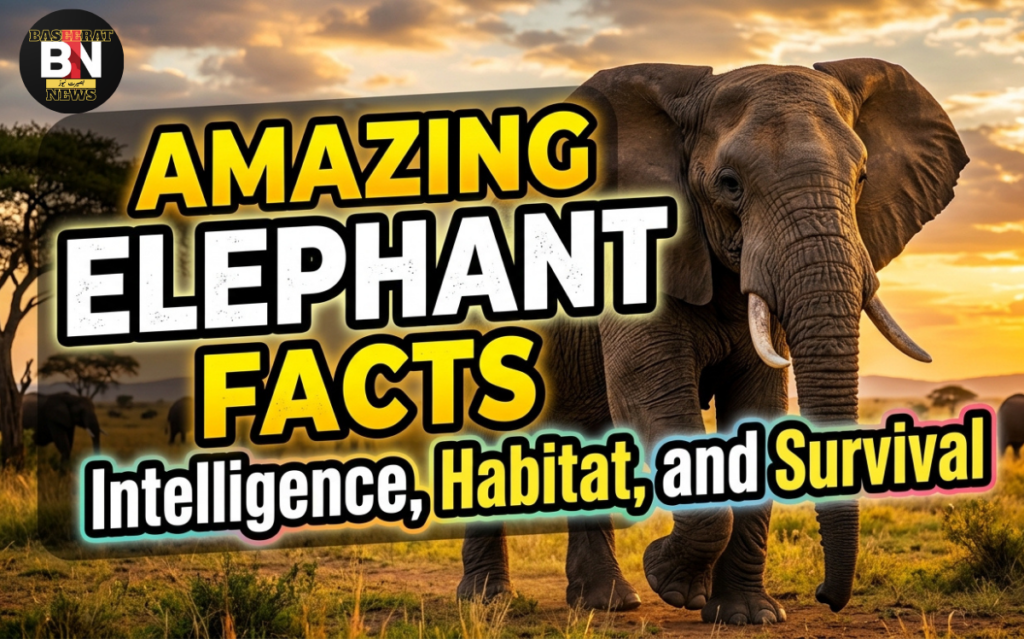
Elephant: The Ultimate Guide to Earth’s Gentle Giant
Imagine standing face-to-face with an animal weighing as much as a small truck, yet capable of gently picking a single blade of grass with remarkable precision. That animal is the elephant—one of the most intelligent, emotional, and awe-inspiring creatures on Earth.
Scientists estimate that elephants can recognize themselves in mirrors, remember locations of water sources for decades, and even appear to mourn their dead. These abilities place them among the most cognitively advanced animals known to science.
But elephants are more than fascinating wildlife. They are ecosystem engineers that shape landscapes, disperse seeds, and create habitats for countless other species. Without elephants, many ecosystems across Africa and Asia would look dramatically different.
In this comprehensive guide, you’ll discover elephant history, evolution, habitat, behavior, diet, reproduction, scientific discoveries, conservation efforts, and fascinating facts that reveal why these giants continue to capture human imagination.
Quick Facts Table
| Fact | Details |
| Scientific Name | Genus Loxodonta and Elephas |
| Common Name | Elephant |
| Habitat | Savannas, forests, grasslands, wetlands |
| Distribution | Africa and Asia |
| Diet | Herbivore |
| Length | 5.5–7.5 meters |
| Height | Up to 4 meters |
| Weight | 2,000–7,000 kg |
| Lifespan | 60–70 years |
| Conservation Status | Vulnerable to Endangered (species dependent) |
| Key Feature | Trunk, tusks, intelligence, and social behavior |
What Is an Elephant?
The elephant is the largest living land animal on Earth. It belongs to the family Elephantidae, which currently includes three recognized species:
- Elephants are mammals known for their large ears, elongated trunks, tusks, and extraordinary intelligence.
- Their trunk is one of the most versatile structures in the animal kingdom. It functions as a nose, hand, drinking tool, communication device, and weapon.
- Today, elephants are considered keystone species because their activities help maintain biodiversity. By knocking down trees, digging water holes, and dispersing seeds, they influence entire ecosystems.
History and Origins
The story of elephants stretches back more than 50 million years.
Ancient ancestors evolved from small semi-aquatic mammals. Over millions of years, these animals diversified into numerous forms, including mammoths, mastodons, and gomphotheres.
Evolution Timeline
- 55 million years ago: Earliest elephant relatives appeared.
- 37 million years ago: Larger trunked species evolved.
- 5 million years ago: Modern elephant lineages emerged.
- 400,000 years ago: Mammoths thrived across Eurasia.
- Present day: Three elephant species remain.
Genetic studies reveal that elephants are surprisingly related to hyraxes and manatees.
The extinction of mammoths around 4,000 years ago left modern elephants as the last surviving members of a once-diverse group of giant mammals.
Physical Characteristics and Main Features
Elephants possess some of the most recognizable features in the animal kingdom.
Trunk
The trunk contains over 40,000 muscles and can perform incredibly delicate movements.
Tusks
Tusks are elongated incisor teeth used for digging, defense, and stripping bark.
Ears
African elephants have much larger ears than Asian elephants. These help regulate body temperature.
Skin
Despite appearing tough, elephant skin is sensitive and requires mud baths for protection.
Intelligence
Elephants demonstrate:
- Problem-solving abilities
- Self-recognition
- Cooperation
- Long-term memory
- Emotional awareness
Many researchers rank elephant intelligence alongside that of great apes and dolphins.
Habitat, Environment, and Geographic Range
Elephants inhabit diverse ecosystems.
African Elephants
Found across:
- Savannahs
- Woodlands
- Grasslands
- Forests
Asian Elephants
Primarily occupy:
- Tropical forests
- Grasslands
- Wetlands
Elephants require access to water and large amounts of vegetation, making habitat availability critical to their survival.
As ecosystem engineers, they create trails, clear vegetation, and spread plant seeds over vast distances.
Behavior and Lifestyle
Elephants live in highly organized social groups led by experienced females called matriarchs.
Family Bonds
Female elephants remain with their family groups for life.
Communication
Elephants communicate using:
- Trumpets
- Rumbles
- Body language
- Touch
- Infrasound
Some low-frequency sounds travel several kilometers.
Daily Activities
A typical elephant spends:
- 14–18 hours of feeding
- Several hours of walking
- Time socializing and bathing
Memory
Their reputation for memory is well deserved. Matriarchs remember migration routes and water sources that help herds survive droughts.
Diet and Feeding Habits
Elephants are herbivores with enormous appetites.
An adult may consume:
- Grass
- Leaves
- Bark
- Fruit
- Roots
- Shrubs
Daily consumption can exceed 150 kilograms of vegetation.
They also drink up to 200 liters of water per day.
Because they eat such large quantities, elephants play a major role in shaping plant communities and distributing seeds.
Reproduction and Life Cycle
Elephants have one of the longest pregnancies among mammals.
Mating
Males compete for access to females during breeding seasons.
Pregnancy
Gestation lasts approximately 22 months.
Birth
A calf typically weighs around 100 kilograms at birth.
Growth
- Newborn: Dependent on mother
- Juvenile: Learns social skills
- Adolescent: Increasing independence
- Adult: Full reproductive maturity
Lifespan
Wild elephants commonly live 60–70 years.
Latest Research and Scientific Discoveries
Recent studies continue to reveal surprising insights.
Advanced Communication
Researchers have identified individual “names” embedded within elephant calls, suggesting highly sophisticated communication systems.
Emotional Intelligence
Studies indicate elephants display empathy, cooperation, and grief-like behaviors.
Genetic Diversity
Modern DNA research is helping conservationists better understand elephant populations and improve breeding management.
Migration Tracking
Satellite technology allows scientists to monitor elephant movements and identify critical wildlife corridors.
Human-Elephant Conflict Solutions
New approaches include:
- Bee-fence systems
- Early-warning technology
- Community conservation programs
Cognitive Research
Experiments continue to demonstrate advanced learning, planning, and social intelligence.
These discoveries reinforce the view that elephants possess some of the most sophisticated minds in the animal kingdom.
25 Fascinating Facts About Elephants
- Elephants are the largest land animals alive.
- Their trunk contains over 40,000 muscles.
- They can recognize themselves in mirrors.
- Elephants mourn deceased relatives.
- They can swim surprisingly well.
- They communicate using infrasound.
- A newborn calf weighs around 100 kg.
- Pregnancy lasts about 22 months.
- They are herbivores.
- They can consume over 150 kg of food daily.
- African elephants have larger ears.
- Asian elephants have smaller ears.
- Tusks are modified teeth.
- Elephants can use tools.
- They have exceptional memories.
- They enjoy mud baths.
- They can detect distant storms.
- Families are led by matriarchs.
- They disperse seeds across ecosystems.
- They create water access points for other animals.
- They recognize hundreds of individuals.
- They display empathy.
- Some populations migrate seasonally.
- They can live over 60 years.
- Elephants are considered keystone species.
Importance to Humans and Nature
Elephants provide enormous ecological benefits.
Ecological Importance
- Seed dispersal
- Habitat creation
- Vegetation management
- Biodiversity support
Cultural Importance
Elephants hold significant roles in many Asian and African cultures.
Economic Importance
Wildlife tourism centered around elephants generates substantial income for local communities.
Scientific Importance
Research on elephant cognition contributes to our understanding of intelligence and social evolution.
Threats and Challenges
Major threats include:
Habitat Loss
Agriculture and urban expansion reduce available habitat.
Poaching
The illegal ivory trade remains a serious problem.
Human-Elephant Conflict
Competition for land and crops often results in conflict.
Climate Change
Changing rainfall patterns affect water and food availability.
Fragmentation
Roads and development isolate elephant populations.
Conservation and Future Outlook
Conservation efforts are expanding globally.
Current Strategies
- Protected reserves
- Anti-poaching patrols
- Wildlife corridors
- Community education
Organizations Involved
Notable groups include the and the.
Future Outlook
While challenges remain significant, advances in conservation science and growing public awareness offer hope for elephant populations.
Common Myths and Misconceptions
Myth #1: Elephants Never Forget
Reality: They have excellent memories, but not perfect ones.
Myth #2: Elephants Are Always Gentle
Reality: They can become dangerous when threatened.
Myth #3: All Elephants Have Tusks
Reality: Some Asian elephants and females may have small or absent tusks.
Myth #4: Elephants Are Slow
Reality: They can run at speeds up to 40 km/h.
Myth #5: Elephants Fear Mice
Reality: There is no scientific evidence supporting this popular myth.
Frequently Asked Questions (FAQs)
1. What is an elephant?
The largest living land mammal.
2. How many elephant species exist?
Three recognized species.
3. Where do elephants live?
Africa and Asia.
4. What do elephants eat?
Vegetation such as grass, leaves, bark, and fruit.
5. How much food do they eat daily?
Up to 150 kilograms or more.
6. How much water do they drink?
Up to 200 liters daily.
7. How long do elephants live?
Usually 60–70 years.
8. How long is a pregnancy?
About 22 months.
9. Are elephants intelligent?
Yes, among the most intelligent animals.
10. Can elephants swim?
Yes.
11. Why do elephants have trunks?
For feeding, drinking, communication, and manipulation.
12. What are tusks made of?
Ivory.
13. Do elephants have predators?
Mostly calves face predation.
14. Are elephants endangered?
Some species are endangered.
15. How do elephants communicate?
Through sounds, touch, and body language.
16. What is a matriarch?
The leading female of a herd.
17. How fast can elephants run?
Up to about 40 km/h.
18. Can elephants recognize humans?
Yes, they can distinguish individuals.
19. Why are elephants important?
They support ecosystems.
20. Do elephants migrate?
Some populations do.
21. Can elephants use tools?
Yes.
22. How much does a calf weigh?
Around 100 kilograms.
23. What threatens elephants most?
Habitat loss and poaching.
24. What is ivory?
Material that forms elephant tusks.
25. Do elephants mourn their dead?
Evidence suggests they display grief-like behavior.
26. How large is an elephant’s brain?
The largest among land animals.
27. Are elephants social?
Extremely social.
28. What is infrasound?
Very low-frequency sound is used for communication.
29. Do elephants help forests?
Yes, through seed dispersal.
30. Can elephant populations recover?
Yes, with effective conservation efforts.
Conclusion
Elephants are far more than giant mammals roaming distant landscapes. They are intelligent problem-solvers, devoted family members, ecosystem engineers, and living reminders of Earth’s remarkable evolutionary history.
From their powerful trunks and extraordinary memories to their deep social bonds and vital ecological roles, elephants continue to fascinate scientists and nature lovers alike. Yet their future depends on our ability to protect habitats, reduce human-wildlife conflict, and combat illegal poaching.
Every elephant herd saved represents more than a conservation success—it helps preserve entire ecosystems and countless species that depend on them. As research uncovers new layers of elephant intelligence and behavior, our appreciation for these magnificent animals only grows.
The story of elephants is ultimately a story about coexistence. Protecting these gentle giants ensures that future generations will continue to witness one of nature’s most extraordinary creations.
Click the link below for more…..