
DIY Vitamin C Serum Recipes for Glowing Skin at Home
Healthy, glowing skin doesn’t always require expensive skincare products. Many people are now turning to DIY Vitamin C Serum Recipes because they offer a simple, affordable, and natural way to brighten the complexion and improve overall skin appearance. When prepared correctly with quality ingredients, homemade vitamin C serums can become a valuable addition to your skincare routine.
As a nutritionist, I always emphasize that beautiful skin starts from within. Eating vitamin C-rich foods such as oranges, strawberries, kiwi, bell peppers, broccoli, and guava supports collagen production and helps protect the skin from oxidative stress. However, topical vitamin C can also provide direct benefits by targeting the skin’s surface, helping improve radiance and reducing the appearance of uneven skin tone.
This guide explains everything you need to know about DIY Vitamin C Serum Recipes, including the benefits, the best ingredients to use, preparation methods, storage tips, and safety precautions to help you create an effective serum at home.
Why DIY Vitamin C Serum Recipes Are So Popular
The growing popularity of DIY Vitamin C Serum Recipes comes from the desire for simple skincare with fewer unnecessary additives. Commercial vitamin C serums often contain preservatives, fragrances, silicones, or other ingredients that some people prefer to avoid.
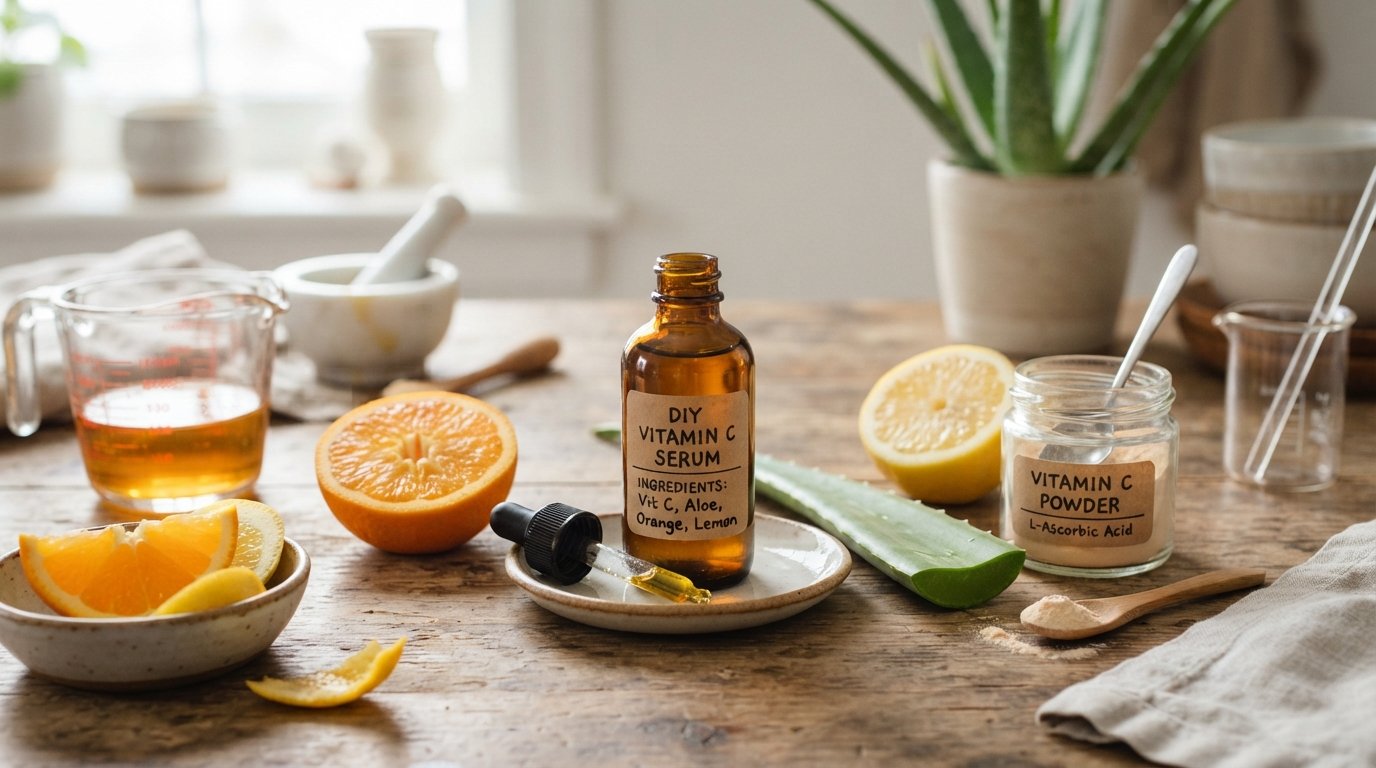
Homemade recipes allow you to:
- Control every ingredient.
- Avoid artificial fragrances.
- Save money.
- Make fresh batches regularly.
- Customize formulas for different skin types.
Vitamin C is widely recognized for its antioxidant properties. It helps defend the skin against environmental stress while promoting a brighter and healthier-looking complexion.
Benefits of DIY Vitamin C Serum Recipes for Skin
Using DIY Vitamin C Serum Recipes consistently may provide several skincare benefits when combined with a balanced diet and good sun protection.
Brighter Skin Tone
Vitamin C helps reduce the appearance of dullness, leaving the skin looking fresher and more radiant.
Supports Natural Collagen Production
Collagen is an important protein that keeps skin firm and smooth. Vitamin C plays an essential role in the body’s natural collagen formation.
Helps Improve Uneven Skin Tone
Many people use vitamin C serums to help minimize the appearance of post-acne marks and uneven pigmentation over time.
Antioxidant Protection
Environmental pollutants and UV exposure create free radicals that may contribute to premature skin aging. Vitamin C helps neutralize these free radicals.
Hydrated-Looking Skin
Many DIY recipes include vegetable glycerin or aloe vera, which help attract moisture and improve the skin’s overall appearance.
Essential Ingredients for DIY Vitamin C Serum Recipes
Choosing high-quality ingredients is the key to making an effective homemade serum.
Vitamin C Powder
Pure L-ascorbic acid powder is the most commonly used form because it dissolves easily in water and is highly effective.
Distilled Water
Always use distilled water instead of tap water to reduce contamination and improve stability.
Vegetable Glycerin
Glycerin acts as a natural humectant that helps the skin retain moisture.
Aloe Vera Gel
Pure aloe vera gel adds hydration while creating a soothing texture.
Vitamin E Oil
Vitamin E complements vitamin C by providing additional antioxidant support and improving the feel of the serum.
Dark Glass Bottle
Vitamin C breaks down when exposed to sunlight and air. Amber or dark glass bottles help extend the freshness of your serum.
DIY Vitamin C Serum Recipes for Beginners
If you’re making homemade skincare for the first time, begin with a low-strength formula.
Ingredients
- 1 teaspoon L-ascorbic acid powder
- 2 teaspoons distilled water
- 1 teaspoon vegetable glycerin
Instructions
- Wash your hands thoroughly.
- Sterilize all utensils and containers.
- Mix the vitamin C powder with distilled water until fully dissolved.
- Add vegetable glycerin.
- Stir gently until smooth.
- Pour into a dark glass dropper bottle.
- Store in the refrigerator.
This beginner-friendly serum is suitable for those introducing vitamin C into their skincare routine.
DIY Vitamin C Serum Recipes with Aloe Vera
Aloe vera creates a lightweight serum that feels soothing on the skin.
Ingredients
- 1 teaspoon vitamin C powder
- 1 tablespoon fresh aloe vera gel
- 1 tablespoon distilled water
- ½ teaspoon glycerin
Method
Mix the distilled water with vitamin C until dissolved. Add aloe vera gel and glycerin. Blend thoroughly until the mixture becomes smooth. Transfer immediately into a sterilized amber bottle and refrigerate.
This recipe works particularly well for normal and combination skin.
DIY Vitamin C Serum Recipes with Vitamin E
Vitamin E pairs well with vitamin C because both are antioxidants that support healthier-looking skin.
Ingredients
- 1 teaspoon vitamin C powder
- 2 teaspoons distilled water
- ½ teaspoon vitamin E oil
- 1 teaspoon glycerin
Directions
Combine the vitamin C powder with distilled water until dissolved. Stir in vitamin E oil and glycerin until evenly mixed. Store in a dark bottle in the refrigerator and prepare small batches to maintain freshness.
How to Use DIY Vitamin C Serum Recipes Correctly
Even the best homemade serum works best when used consistently and carefully.
Step 1
Cleanse your face using a gentle cleanser.
Step 2
Pat your skin dry with a clean towel.
Step 3
Apply 2–3 drops of your homemade vitamin C serum.
Step 4
Allow it to absorb for several minutes.
Step 5
Apply a moisturizer.
Step 6
Finish with sunscreen during the daytime, as daily sun protection is essential for maintaining healthy skin.
Who Should Try DIY Vitamin C Serum Recipes?
Homemade vitamin C serums may be suitable for adults looking to brighten dull-looking skin or simplify their skincare routine. However, people with very sensitive skin, active eczema, open wounds, or certain skin conditions should be cautious and may wish to consult a dermatologist before using homemade formulations.
DIY Vitamin C Serum Recipes for Oily Skin
People with oily skin often look for lightweight skincare products that won’t leave a greasy residue. One of the advantages of DIY Vitamin C Serum Recipes is that you can adjust the ingredients to suit your skin type.
Ingredients
- 1 teaspoon L-ascorbic acid powder
- 2 teaspoons distilled water
- 1 teaspoon pure aloe vera gel
- ½ teaspoon vegetable glycerin (optional)
How to Make It
- Dissolve the vitamin C powder completely in distilled water.
- Add the aloe vera gel and stir until smooth.
- Mix in the glycerin if you need extra hydration.
- Pour into a sterilized amber glass bottle.
- Refrigerate and use within one week.
This lightweight formula absorbs quickly and feels refreshing, making it suitable for oily and combination skin.
DIY Vitamin C Serum Recipes for Dry Skin
Dry skin benefits from ingredients that help lock in moisture while delivering the brightening effects of vitamin C.
Ingredients
- 1 teaspoon vitamin C powder
- 2 teaspoons distilled water
- 1 teaspoon vegetable glycerin
- ½ teaspoon vitamin E oil
- 1 teaspoon aloe vera gel
Directions
Mix the vitamin C powder with distilled water until fully dissolved. Stir in the remaining ingredients until the mixture is smooth. Transfer to a clean amber bottle and refrigerate immediately.
The added glycerin, aloe vera, and vitamin E provide extra hydration while helping the skin feel softer.
Common Mistakes to Avoid When Making DIY Vitamin C Serum Recipes
Although homemade skincare can be effective, several common mistakes may reduce its quality or irritate the skin.
Using Tap Water
Tap water may contain minerals, bacteria, or chlorine that can affect the stability of your serum. Distilled water is the safer option.
Making Large Batches
Vitamin C is unstable and loses effectiveness when exposed to air, light, and heat. Prepare only enough serum for about one week.
Skipping the Patch Test
Always perform a patch test by applying a small amount to the inside of your arm and waiting 24 hours. If redness, burning, or irritation develops, discontinue use.
Using Metal Containers
Some metals can react with vitamin C. Glass or food-grade plastic containers are generally better choices.
Storing at Room Temperature
Heat and sunlight speed up vitamin C oxidation. Refrigeration helps maintain freshness.
How to Store DIY Vitamin C Serum Recipes Properly
Storage plays a major role in preserving the quality of homemade vitamin C serum.
Follow these simple guidelines:
- Store in a dark amber or cobalt blue glass bottle.
- Keep the bottle tightly closed.
- Refrigerate after each use.
- Avoid exposing the serum to sunlight.
- Discard the serum if it turns dark yellow, orange, or brown, as this indicates oxidation and reduced effectiveness.
Fresh serum is usually clear or very pale yellow.
Nutritionist’s Advice: Support Healthy Skin from the Inside
While DIY Vitamin C Serum Recipes can enhance your skincare routine, healthy skin also depends on proper nutrition. Topical skincare works best when combined with a balanced diet and healthy lifestyle.
Eat More Vitamin C-Rich Foods
Excellent dietary sources include:
- Oranges
- Kiwi
- Guava
- Strawberries
- Papaya
- Bell peppers
- Broccoli
- Tomatoes
- Kale
- Brussels sprouts
These foods help support the body’s natural collagen production and provide antioxidants that protect cells from oxidative stress.
Stay Hydrated
Drinking enough water throughout the day supports overall skin health and helps maintain the skin’s natural moisture balance.
Include Healthy Fats
Foods such as avocados, walnuts, almonds, chia seeds, flaxseeds, and fatty fish provide essential fats that help support the skin barrier.
Prioritize Protein
Protein-rich foods like eggs, fish, chicken, beans, lentils, yogurt, and tofu provide amino acids needed for tissue repair and collagen formation.
Limit Excess Sugar
A diet high in added sugars may contribute to processes that affect collagen over time. Choosing whole, minimally processed foods can support overall skin health.
Frequently Asked Questions About DIY Vitamin C Serum Recipes
Can I Use DIY Vitamin C Serum Every Day?
Many people use vitamin C serum once daily. Beginners or those with sensitive skin may prefer to start every other day and increase frequency if their skin tolerates it well.
How Long Does Homemade Vitamin C Serum Last?
Because homemade serums generally do not contain preservatives, they are best made in small batches and used within about one week when refrigerated.
Why Did My Serum Turn Brown?
A brown or dark orange color usually indicates oxidation. Oxidized vitamin C is less effective, so it’s best to prepare a fresh batch.
Can I Use Vitamin C Serum at Night?
Yes. Vitamin C can be used in the morning or evening. If used during the day, apply a broad-spectrum sunscreen afterward.
Is Homemade Vitamin C Serum Suitable for Sensitive Skin?
Some people with sensitive skin may find L-ascorbic acid irritating. Starting with a lower concentration and patch testing first can help determine tolerance. If irritation persists, on DIY Vitamin C Serum.
Final Thoughts on DIY Vitamin C Serum Recipes
Making your own DIY Vitamin C Serum Recipes is a practical and budget-friendly way to incorporate vitamin C into your skincare routine. By choosing fresh, high-quality ingredients, preparing small batches, and storing them correctly, you can create a serum that supports brighter, healthier-looking skin.
Remember that skincare is only one part of the equation. A nutrient-rich diet, adequate hydration, quality sleep, regular physical activity, and daily sun protection all contribute to maintaining healthy skin. Consistency matters more than using the most expensive products.
Whether you’re new to homemade skincare or looking to simplify your beauty routine, these DIY Vitamin C Serum Recipes offer an easy starting point. With careful preparation and regular use, you can enjoy a fresh, customized serum while supporting your skin with healthy lifestyle habits.