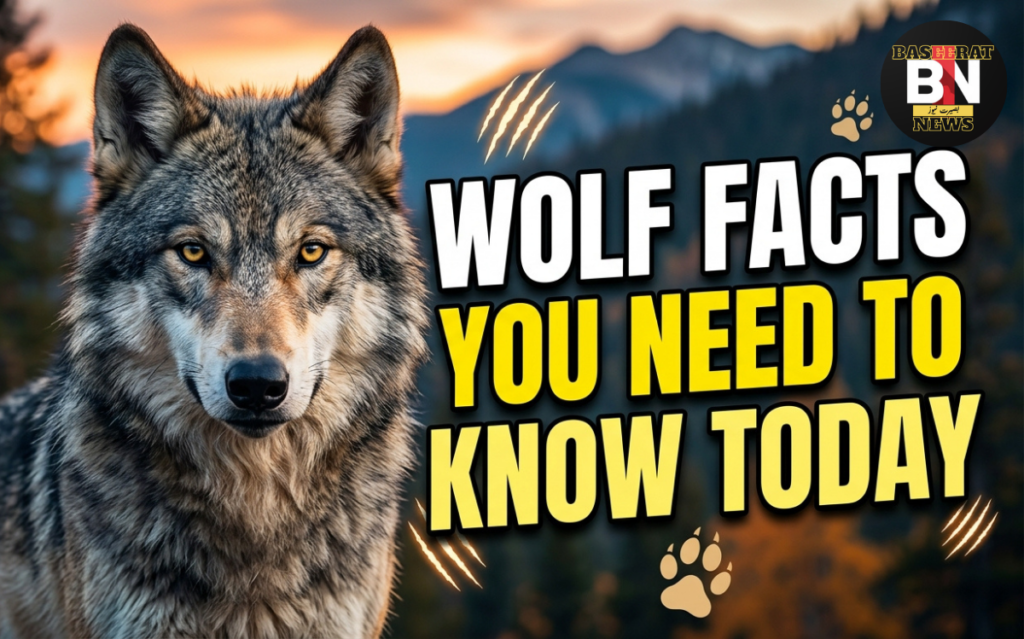
Wolf (Canis lupus): The Ultimate Guide to Nature’s Most Intelligent Apex Predator
In the frozen wilderness of the Arctic, a shadow moves silently across the snow. It doesn’t rush, it doesn’t hesitate, and yet every step is calculated with precision. That shadow is the wolf—one of the most misunderstood yet highly intelligent predators on Earth.
For thousands of years, wolves have shaped ecosystems, influenced human mythology, and even played a role in the domestication of dogs. Ancient cave paintings in Europe, dating back over 20,000 years, already depict wolves hunting in coordinated packs, suggesting early humans observed—and feared—their intelligence long before science studied it.
But here’s something surprising: despite centuries of hunting, habitat loss, and conflict with humans, wolves still survive across vast regions of the Northern Hemisphere. In fact, recent ecological studies show that where wolves return, entire ecosystems begin to rebalance naturally, restoring forests, rivers, and wildlife populations.
So why do wolves matter so much? And why are scientists still fascinated by them today?
Because wolves are not just predators—they are ecosystem engineers, social strategists, and cultural symbols that continue to shape both nature and human understanding.
In this article, we will explore everything about wolves: their biology, behavior, history, survival strategies, latest scientific discoveries, and their critical role in the natural world.
Quick Facts Table (Wolf – Canis lupus)
| Fact | Details |
| Scientific Name | Wolf (Canis lupus) |
| Origin | North America, Europe, Asia |
| Habitat | Forests, tundra, grasslands, mountains |
| Size | 105–160 cm body length (excluding tail) |
| Lifespan | 6–13 years in the wild |
| Key Feature | Highly organized pack structure with advanced communication and cooperative hunting system |
What Is a Wolf?
The wolf, scientifically known as Wolf (Canis lupus), is a large carnivorous mammal belonging to the Canidae family. It is the closest wild relative of the domestic dog and shares many genetic similarities with it.
Wolves are apex predators, meaning they sit at the top of the food chain in their natural ecosystems. They primarily hunt large herbivores such as deer, elk, and moose, depending on their habitat.
What makes wolves especially fascinating is their social structure. Unlike many solitary predators, wolves live in tightly bonded family groups known as packs. These packs are not random gatherings but highly structured units with roles, leadership, cooperation, and even emotional bonding.
In modern science, wolves are studied not only as biological organisms but also as models of social intelligence. Their ability to coordinate hunts, communicate through vocalizations and body language, and raise offspring cooperatively makes them one of the most complex animals in the wild.
Today, wolves continue to play a crucial ecological role, helping regulate prey populations and maintain balance in natural ecosystems.
History and Origins
Wolves have existed for over 300,000 years, evolving during the Pleistocene epoch alongside large Ice Age mammals. Fossil evidence shows that early wolves were already adapted for endurance hunting, allowing them to chase prey over long distances.
Historically, wolves were found across most of the Northern Hemisphere, including North America, Europe, Asia, and parts of the Middle East. Their adaptability allowed them to survive in diverse environments—from Arctic tundras to dense forests.
Human interaction with wolves dates back tens of thousands of years. Early humans both feared and respected them. Archaeological findings suggest that wolves gradually began associating with human settlements, scavenging food scraps. Over time, this interaction likely led to the domestication of dogs, one of the most significant evolutionary partnerships in history.
During the Middle Ages in Europe, wolves were often associated with danger and superstition. This led to widespread hunting campaigns that significantly reduced their population in many regions. By the 19th and early 20th centuries, wolves had been nearly eradicated from parts of Western Europe and the United States.
However, in recent decades, conservation efforts have helped reintroduce wolves into protected areas, marking a slow but steady ecological recovery.
Physical Characteristics and Main Features
Wolves are built for endurance, strength, and survival.
They typically have:
- A lean, muscular body designed for long-distance travel
- Powerful jaws capable of exerting a strong bite force
- Thick double-layered fur for insulation
- Large paws that distribute weight on snow
- Keen senses of smell, hearing, and vision
Coloration varies widely depending on the region. Wolves can be gray, white, black, brown, or a mixture of these shades. Arctic wolves, for example, are often white to blend into snowy environments, while forest wolves tend to have darker coats for camouflage.
One of their most remarkable traits is stamina. Wolves can travel up to 30–60 kilometers in a single day while tracking prey. Unlike sprinters like big cats, wolves rely on endurance hunting, wearing down prey over long distances.
Their facial expressions and body language are also highly advanced. Subtle ear positions, tail movements, and posture changes communicate complex emotional and social information within the pack.
Habitat and Environment
Wolves are among the most adaptable large predators on Earth. They inhabit:
- Boreal forests of Canada and Russia
- Arctic tundra
- Mountain ranges like the Rockies and the Himalayas
- Grasslands and steppe regions
They avoid only extreme deserts and dense tropical rainforests.
Their survival depends heavily on prey availability. Wolves establish territories that can range from 50 to over 1,000 square kilometers, depending on food density.
Recent ecological studies show that wolf presence significantly impacts ecosystems. In places like Yellowstone National Park, their reintroduction led to a phenomenon known as a “trophic cascade,” where the entire ecological structure—from deer populations to vegetation growth—was restored.
Behavior and Lifestyle
Wolves are deeply social animals. A typical pack consists of 5–12 members, usually a breeding pair and their offspring.
Their daily life revolves around:
- Hunting
- Territory defense
- Pup care
- Social bonding
Communication is central to wolf behavior. They use:
- Howling (long-distance communication)
- Growls and barks (warnings or alerts)
- Body language (submission, dominance, affection)
Contrary to popular myth, wolf packs are not chaotic hierarchies. Modern research suggests they function more like family units rather than rigid dominance structures.
Play behavior is also essential, especially among pups. It helps develop hunting skills, coordination, and social bonds.
Diet and Feeding Habits
Wolves are carnivores, primarily feeding on:
- Deer
- Elk
- Moose
- Wild boar
- Smaller mammals like rabbits
They are opportunistic hunters, meaning they adjust their diet based on availability.
Hunting is a cooperative effort. Wolves often surround prey, using endurance and strategy rather than speed alone. Weak or injured animals are typically targeted, which helps maintain healthy prey populations.
A single wolf can consume up to 3–5 kg of meat in one meal when food is available.
They also exhibit food-sharing behavior within the pack, especially between adults and pups.
Reproduction and Life Cycle
Wolves typically mate once a year during the winter months.
Key stages include:
- Mating season: January–March
- Gestation period: ~63 days
- Litter size: 4–6 pups on average
Pups are born blind and completely dependent on their mother. The entire pack participates in their care by bringing food and protecting the den.
As they grow, pups begin exploring outside the den at around 3 weeks of age. By 6–8 months, they start joining hunts.
Wolves reach full maturity at around 2 years of age.
Wild lifespan averages 6–13 years, though some may live longer in protected environments.
Latest Research and Scientific Discoveries
Recent studies (2022–2026) have reshaped our understanding of wolves.
Key findings include:
- Genetic research shows wolves and dogs diverged between 20,000 and 40,000 years ago
- Wolf packs behave more like cooperative family systems than strict hierarchies
- GPS tracking reveals complex migration and territorial patterns influenced by prey movement
- Wolves significantly reduce overgrazing, improving forest regeneration
One of the most important discoveries in ecosystem science is the “trophic cascade effect.” In Yellowstone, wolves helped restore vegetation by controlling elk populations, which indirectly benefited birds, beavers, and river systems.
Another emerging field of research focuses on wolf communication. Scientists have identified distinct howl patterns that may encode information about identity, location, and even emotional state.
Conservation genetics is also helping restore genetic diversity in isolated wolf populations, improving long-term survival chances.
20 Fascinating Facts About Wolves
- Wolves can hear sounds from up to 6 miles away in forests
- They can smell prey from over 1.6 kilometers
- A wolf’s bite pressure is among the strongest in mammals
- Wolves run on their toes (digitigrade movement)
- They can travel 50+ km in a single night
- Each wolf’s howl is unique, like a vocal fingerprint
- Pups are born with blue eyes that change color later
- Wolves can swim long distances
- They communicate using over 10 vocal sounds
- The alpha dominance theory has been revised in modern science
- Wolves can survive in temperatures below -40°C
- They play a key role in forest regeneration
- They rarely attack humans in the wild
- Wolves can live in territories larger than some countries
- They form lifelong pair bonds
- Pack members often babysit pups
- Wolves can fast for several days during hunts
- Their fur has two insulating layers
- They are extremely territorial animals
- They are ancestors of all domestic dogs
Importance to Humans and Nature
Wolves play a critical ecological role by regulating herbivore populations. Without wolves, ecosystems often become overgrazed, leading to habitat degradation.
Culturally, wolves appear in myths, folklore, and spiritual traditions across Europe, Asia, and Native American cultures. They are often seen as symbols of strength, freedom, and loyalty.
Scientifically, wolves help researchers understand predator-prey dynamics, ecosystem balance, and animal cognition.
Economically, in some regions, wolf-related ecotourism generates revenue for conservation areas.
Threats and Challenges
Despite their resilience, wolves face major threats:
- Habitat fragmentation
- Illegal hunting
- Human-wildlife conflict
- Climate change is affecting prey availability
In some regions, livestock predation leads to retaliatory killings, reducing wolf populations.
Road expansion and urban development also isolate wolf territories, limiting genetic exchange.
Conservation and Future Outlook
Conservation programs worldwide are working to protect wolves through:
- Legal protection laws
- Reintroduction programs (e.g., Yellowstone)
- Wildlife corridors
- Public awareness campaigns
Organizations such as wildlife conservation groups and national park services are actively involved in monitoring populations.
The future of wolves depends on balancing human development with ecosystem preservation. In many regions, populations are slowly recovering, showing that coexistence is possible.
Myths and Misconceptions
Myth 1: Wolves are dangerous to humans
Reality: Wild wolves rarely attack humans and usually avoid contact.
Myth 2: Alpha wolves dominate through aggression
Reality: Modern research shows packs are family-based, led by breeding pairs rather than aggressive dominance battles.
Frequently Asked Questions (FAQs with Answers)
1. What is a wolf?
A wolf is a large wild carnivorous mammal belonging to the species Canis lupus, known for living and hunting in packs.
2. Where do wolves live?
Wolves live in forests, mountains, tundra, grasslands, and remote wilderness areas across North America, Europe, and Asia.
3. Are wolves dangerous to humans?
Wolves generally avoid humans, and attacks are extremely rare in the wild.
4. What do wolves eat?
Wolves mainly eat deer, elk, moose, wild boar, and small mammals, depending on their habitat.
5. How long do wolves live?
Wild wolves live around 6–13 years, while those in protected environments may live longer.
6. Do wolves hunt in groups?
Yes, wolves hunt in coordinated packs to bring down large prey efficiently.
7. Are wolves related to dogs?
Yes, domestic dogs are genetically descended from wolves.
8. What is a wolf pack?
A wolf pack is a family group consisting of parents and their offspring that live and hunt together.
9. How fast can wolves run?
Wolves can run up to 60–70 km/h in short bursts.
10. Why do wolves howl?
Wolves howl to communicate, mark territory, locate pack members, and strengthen social bonds.
11. How big is a wolf?
Adult wolves can be 105–160 cm long and weigh between 25–60 kg, depending on species and region.
12. Do wolves attack livestock?
Sometimes, wolves may prey on livestock, especially where natural prey is scarce.
13. What colors can wolves be?
Wolves can be gray, white, black, brown, or a mix depending on genetics and habitat.
14. Are wolves endangered?
Some wolf populations are stable, while others remain threatened or endangered, depending on the region.
15. How do wolves communicate?
Wolves communicate through howling, body posture, facial expressions, and scent marking.
16. Where are wolves most common?
Wolves are most common in remote forests, tundra regions, and protected wilderness areas.
17. What is a gray wolf?
The gray wolf is the most widespread wolf species found across North America, Europe, and Asia.
18. Do wolves mate for life?
Yes, many wolves form long-term pair bonds and often stay together for life.
19. How many pups do wolves have?
A wolf typically gives birth to 4–6 pups per litter.
20. What is the role of wolves in ecosystems?
Wolves regulate prey populations and help maintain ecological balance in natural environments.
21. Can wolves survive in hot climates?
Wolves prefer colder regions but can adapt to some warmer climates if food and habitat are available.
22. What is the biggest wolf species?
The largest wolf species is the Northwestern wolf (Canis lupus occidentalis).
23. Do wolves migrate?
Wolves do not migrate long distances but may travel widely within their territory.
24. How intelligent are wolves?
Wolves are highly intelligent, showing problem-solving skills, cooperation, and complex communication.
25. Are wolves stronger than dogs?
Wolves are generally stronger, more resilient, and more adapted for survival than most domestic dogs.
26. What threatens wolf populations today?
Habitat loss, hunting, human conflict, and climate change are major threats.
27. Can wolves and dogs interbreed?
Yes, wolves and domestic dogs can interbreed, producing wolf-dog hybrids.
28. Why are wolves important to forests?
Wolves control herbivore populations, which helps vegetation and forest ecosystems recover.
29. What is the lifespan of a wolf pup?
Wolf pups begin exploring at 3–4 weeks and become independent at around 6–8 months.
30. Are wolves protected by law?
In many countries, wolves are legally protected, though laws vary by region.
Conclusion
The wolf remains one of the most influential predators in the natural world. From shaping ecosystems to inspiring human culture, its presence extends far beyond wilderness boundaries.
Understanding wolves is not just about studying an animal—it is about understanding balance, survival, and the delicate structure of nature itself.
As conservation efforts continue and scientific knowledge expands, wolves are slowly reclaiming their place in ecosystems once lost to human expansion. Their survival story is also a reflection of our ability to restore nature when science and responsibility work together.
In the end, the wolf is not just a symbol of wilderness—it is a reminder that nature thrives when balance is respected.
Click the link below for more…

https://baseeratnews.com/inside-the-secret-life-of-the-black-panther/