Rhino: The Ultimate Guide to Nature’s Armored Giant
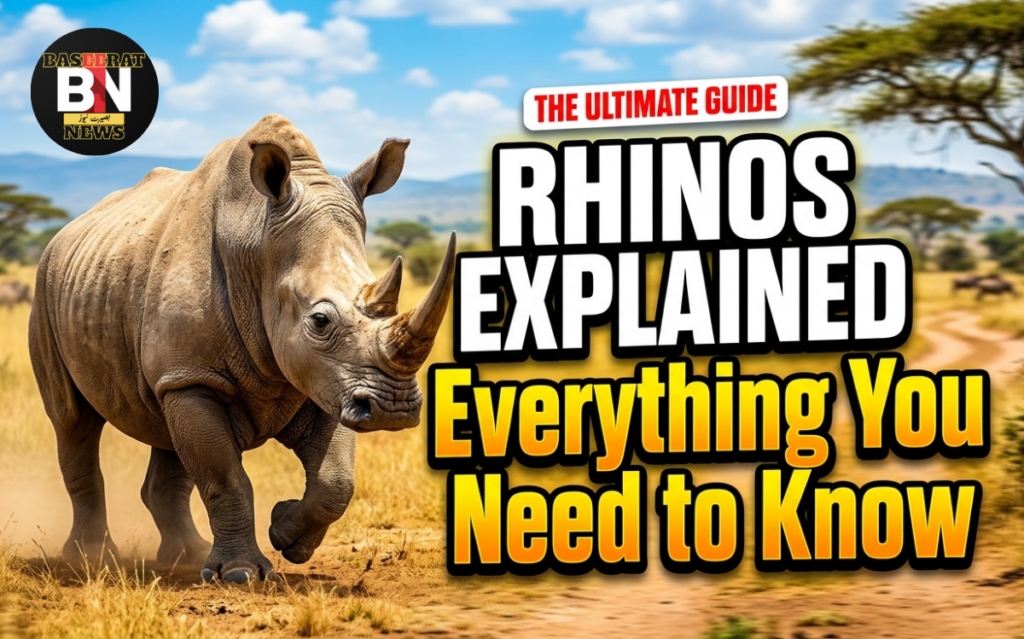
Imagine standing on the African savanna at dawn when a two-ton giant emerges from the morning mist. Its thick, armor-like skin glows softly in the rising sunlight, and a powerful horn crowns its massive head. Despite its prehistoric appearance, this animal is not a relic from a forgotten age—it is a rhinoceros, one of the most remarkable creatures still walking the Earth.
Here’s a surprising fact: rhinos have existed for more than 50 million years, surviving dramatic climate changes, ice ages, and the rise and fall of countless species. Yet today, their greatest challenge comes from humans.
Rhinos are among the largest land mammals on Earth, second only to elephants in size. Their impressive strength, unique appearance, and ecological importance have made them symbols of wilderness across Africa and Asia.
Why should we care about rhinos? Beyond their iconic status, they play a crucial role in shaping ecosystems, supporting biodiversity, and maintaining healthy landscapes. Their survival is closely linked to the health of entire habitats.
In this comprehensive guide, you’ll discover everything about rhinos—their history, species, behavior, diet, reproduction, scientific discoveries, conservation efforts, and much more.
Quick Facts Table
| Fact | Details |
| Scientific Name | Family Rhinocerotidae |
| Common Name | Rhinoceros (Rhino) |
| Origin | Africa and Asia |
| Habitat | Grasslands, savannas, forests, wetlands |
| Length | 2.5–4.5 meters |
| Weight | 800–3,600 kg |
| Lifespan | 35–50 years |
| Diet | Herbivore |
| Main Feature | One or two keratin horns |
| Conservation Status | Vulnerable to Critically Endangered |
What Is a Rhino?
A rhinoceros, commonly called a rhino, is a large herbivorous mammal belonging to the family Rhinocerotidae. The word “rhinoceros” comes from Greek words meaning “nose horn.”
Today, five living rhino species exist:
- White Rhino
- Black Rhino
- Indian Rhino
- Javan Rhino
- Sumatran Rhino
Although they share common ancestry, each species has evolved unique adaptations suited to different environments.
Rhinos are known for their thick skin, massive bodies, and distinctive horns. Interestingly, their horns are made of keratin—the same material found in human hair and fingernails.
These animals serve as ecosystem engineers. By grazing and browsing vegetation, they influence plant growth and create habitats that benefit numerous other species.
Millions of people around the world recognize rhinos as symbols of strength and resilience. Unfortunately, they have also become symbols of the global fight against wildlife extinction.
History and Origins
Rhinos have an ancient lineage stretching back over 50 million years.
The earliest rhino ancestors appeared during the Eocene Epoch. Over time, these animals diversified into numerous species across Europe, Asia, and North America.
One famous prehistoric relative was Paraceratherium, considered the largest land mammal ever to exist. This giant stood over 16 feet tall and weighed up to 20 tons.
During prehistoric times, rhinos occupied a wide variety of habitats. Fossils reveal their presence across multiple continents.
As climates changed, many ancient species disappeared, leaving only a handful of survivors.
Human interactions with rhinos date back thousands of years. Ancient cave paintings, Asian artwork, and African folklore all feature these magnificent animals.
By the 19th and 20th centuries, hunting and habitat destruction caused severe population declines.
Recent genetic research has helped scientists better understand rhino evolution, revealing complex relationships among modern species and their ancient ancestors.
Physical Characteristics and Main Features
Rhinos possess one of the most recognizable appearances in the animal kingdom.
Size
Depending on species, rhinos weigh between 800 and 3,600 kilograms.
The white rhino is the largest species and can exceed 2.3 tons.
Skin
Although often described as armor-plated, rhino skin is surprisingly sensitive.
Their thick skin protects against injuries, while folds create the appearance of natural armor.
Horns
Rhino horns are perhaps their most famous feature.
Unlike the horns of cattle or antelope, rhino horns contain no bone core. They consist entirely of densely packed keratin fibers.
Vision and Senses
Rhinos have relatively poor eyesight but compensate with excellent hearing and a powerful sense of smell.
A rhino can detect scents from great distances, helping it identify threats, food, and potential mates.
Speed
Despite their enormous size, rhinos can run up to 50 km/h (31 mph).
Strength
A charging rhino is one of nature’s most formidable forces, capable of knocking down trees and defending itself against predators.
Habitat, Environment, and Location
Rhinos inhabit diverse ecosystems across Africa and Asia.
African Rhinos
White and black rhinos primarily live in:
- South Africa
- Namibia
- Kenya
- Zimbabwe
They thrive in grasslands, savannas, and shrublands.
Asian Rhinos
Indian, Javan, and Sumatran rhinos inhabit:
- India
- Nepal
- Indonesia
These species prefer tropical forests, wetlands, and riverine habitats.
Ecosystem Role
Rhinos help maintain ecological balance by shaping vegetation patterns.
Their feeding habits create pathways and open spaces that benefit birds, insects, and smaller mammals.
Behavior and Lifestyle
Rhinos lead fascinating lives.
Most species are solitary, especially adult males.
A typical day includes:
- Feeding
- Resting
- Wallowing in mud
- Exploring territories
Mud Baths
Mud wallows help regulate body temperature and protect against insects.
Watching a giant rhino happily rolling in mud reveals a surprisingly playful side.
Communication
Rhinos communicate through:
- Vocalizations
- Scent markings
- Body language
They produce grunts, snorts, squeals, and even trumpet-like sounds.
Territorial Behavior
Males often establish territories and use dung piles as communication centers.
These “message boards” convey information about identity and reproductive status.
Diet and Feeding Habits
Rhinos are strict herbivores.
What They Eat
Their diet includes:
- Grasses
- Leaves
- Shoots
- Fruits
- Bark
Grazers vs Browsers
White rhinos are grazers, feeding mainly on grasses.
Black rhinos are browsers, consuming shrubs and tree leaves.
Feeding Adaptations
Different lip shapes help species exploit specific food sources.
White rhinos possess broad, square lips, while black rhinos have pointed, prehensile lips.
Ecological Impact
By consuming vegetation, rhinos help control plant growth and maintain habitat diversity.
Reproduction and Life Cycle
Rhino reproduction occurs slowly, making population recovery challenging.
Mating Behavior
Males compete for access to females.
Courtship can last several days.
Pregnancy
Gestation lasts approximately 15–18 months, among the longest of any land mammal.
Birth
Females typically give birth to one calf.
Newborn calves can weigh between 40 and 65 kilograms.
Growth
Calves remain with their mothers for 2–4 years.
They learn feeding habits, survival skills, and social behaviors during this period.
Lifespan
Most rhinos live:
- 35–45 years in the wild
- Up to 50 years in captivity
Latest Research and Scientific Discoveries
Recent scientific studies have transformed our understanding of rhino conservation.
Advanced Tracking
Researchers now use GPS collars and drones to monitor rhino movements.
These technologies help prevent poaching and improve habitat management.
Genetic Conservation
Scientists are developing genetic databases to preserve rhino diversity.
This information helps guide breeding programs.
Assisted Reproduction
One of the most exciting developments involves advanced reproductive technologies aimed at saving critically endangered rhino populations.
Artificial Intelligence
AI-powered surveillance systems are improving anti-poaching efforts by detecting suspicious activity in protected areas.
Disease Monitoring
Veterinarians now use sophisticated diagnostic tools to identify health issues before they become severe.
Habitat Restoration
Researchers continue studying how restored ecosystems support rhino populations and increase biodiversity.
These advances offer hope for species that once seemed destined for extinction.
25 Fascinating Facts About Rhinos
- Rhinos have existed for over 50 million years.
- They are among the largest land mammals.
- Rhino horns are made of keratin.
- Rhinos can run up to 50 km/h.
- Their eyesight is relatively poor.
- Their sense of smell is excellent.
- White rhinos are not actually white.
- Black rhinos are not black.
- Rhinos enjoy mud baths.
- They communicate through dung piles.
- A calf may stay with its mother for years.
- Rhinos can weigh more than a car.
- They help shape ecosystems.
- Most species are solitary.
- Rhinos can be surprisingly gentle.
- Ancient rhinos lived across multiple continents.
- Some prehistoric rhinos were gigantic.
- Rhinos have thick but sensitive skin.
- They are herbivores.
- Their ears rotate independently.
- Rhinos can remember locations.
- They are excellent swimmers.
- Females are highly protective mothers.
- Conservation efforts have saved some populations.
- Rhinos remain one of Earth’s most iconic animals.
Importance to Humans and Nature
Rhinos provide significant ecological value.
By shaping vegetation, they create habitats for countless species.
Healthy rhino populations contribute to biodiversity and ecosystem stability.
Economically, rhinos support wildlife tourism, generating revenue for local communities.
Culturally, they appear in folklore, art, and conservation campaigns worldwide.
Scientifically, rhinos offer valuable insights into evolution, genetics, and ecosystem management.
Threats and Challenges
Rhinos face numerous threats.
Poaching
Illegal hunting for horns remains the greatest danger.
Habitat Loss
Agricultural expansion and urban development reduce available habitat.
Climate Change
Changing rainfall patterns affect food and water availability.
Small Populations
Limited population sizes increase vulnerability to disease and genetic problems.
Human-Wildlife Conflict
As habitats shrink, encounters between humans and rhinos become more frequent.
Conservation and Future Outlook
Conservation efforts have achieved notable successes.
Key strategies include:
- Anti-poaching patrols
- Protected reserves
- Community involvement
- Habitat restoration
- Scientific monitoring
Organizations worldwide work tirelessly to protect rhinos.
Some populations, particularly white rhinos in certain regions, have shown encouraging recovery.
The future remains challenging but hopeful. Continued international cooperation could secure rhinos’ survival for generations to come.
Common Myths and Misconceptions
Myth #1: Rhino horns are made of bone.
Reality: They are made of keratin.
Myth #2: Rhinos are always aggressive.
Reality: Most avoid conflict unless threatened.
Myth #3: White rhinos are white-colored.
Reality: Their name likely originated from a linguistic misunderstanding.
Myth #4: Rhinos have poor intelligence.
Reality: Rhinos demonstrate memory, learning ability, and complex behaviors.
Myth #5: All rhino species are equally common.
Reality: Some species are critically endangered.
Frequently Asked Questions (FAQs)
1. What is a rhino?
A large herbivorous mammal belonging to the family Rhinocerotidae.
2. How many rhino species exist?
Five living species.
3. Where do rhinos live?
Africa and Asia.
4. What do rhinos eat?
Grasses, leaves, shoots, fruits, and bark.
5. How long do rhinos live?
Typically 35–50 years.
6. Are rhinos endangered?
Several species are endangered or critically endangered.
7. What are rhino horns made of?
Keratin.
8. How fast can rhinos run?
Up to 50 km/h.
9. Are rhinos aggressive?
Usually, only when threatened.
10. Which rhino is the largest?
White rhino.
11. Which rhino is the rarest?
Javan rhino.
12. Can rhinos swim?
Yes.
13. Do rhinos have predators?
Adults have few natural predators.
14. How much does a rhino weigh?
800–3,600 kg depending on species.
15. Why do rhinos wallow in mud?
Cooling and insect protection.
16. How many calves do they have?
Usually one.
17. How long is a pregnancy?
15–18 months.
18. Are rhinos social?
Mostly solitary.
19. What is the biggest threat to rhinos?
Poaching.
20. Why are rhinos important?
They support healthy ecosystems.
21. Do rhinos have good eyesight?
No, but they have excellent smell and hearing.
22. How old is the rhino lineage?
Over 50 million years.
23. Can rhino horns regrow?
Yes, if not damaged at the base.
24. Are rhinos related to elephants?
No.
25. What is a baby rhino called?
A calf.
26. Which countries protect rhinos?
Many, including South Africa, Kenya, India, Nepal, and Indonesia.
27. Are rhinos mammals?
Yes.
28. What role do rhinos play in ecosystems?
They shape vegetation and support biodiversity.
29. Can rhinos be kept in zoos?
Yes, many participate in conservation breeding programs.
30. Is there hope for rhino conservation?
Yes, thanks to global conservation efforts.
Conclusion
Few animals capture the imagination quite like the rhinoceros. These ancient giants have survived for millions of years, weathering dramatic environmental changes and evolving into some of the most distinctive mammals on Earth. Their immense strength, unique horns, and crucial ecological role make them far more than just impressive wildlife; they are architects of the ecosystems they inhabit.
Yet rhinos stand at a crossroads. Poaching, habitat loss, and environmental pressures continue to threaten their future. At the same time, groundbreaking research, dedicated conservation programs, and growing public awareness are creating new opportunities for recovery.
Every rhino that roams a grassland, forest, or wetland today represents a remarkable survival story. Protecting these animals is not simply about saving a species; it is about preserving biodiversity, supporting healthy ecosystems, and ensuring that future generations can witness one of nature’s most extraordinary creations.
As conservation efforts continue to expand, there is genuine hope that rhinos will remain part of our planet’s wild landscapes for centuries to come. Their story reminds us that even the most powerful animals sometimes need human protection and that positive action can make a lasting difference.
Click the link below for more…….
https://baseeratnews.com/history-of-dinosaurs/