Turtle: The Ultimate Guide to Earth’s Ancient Shelled Survivor
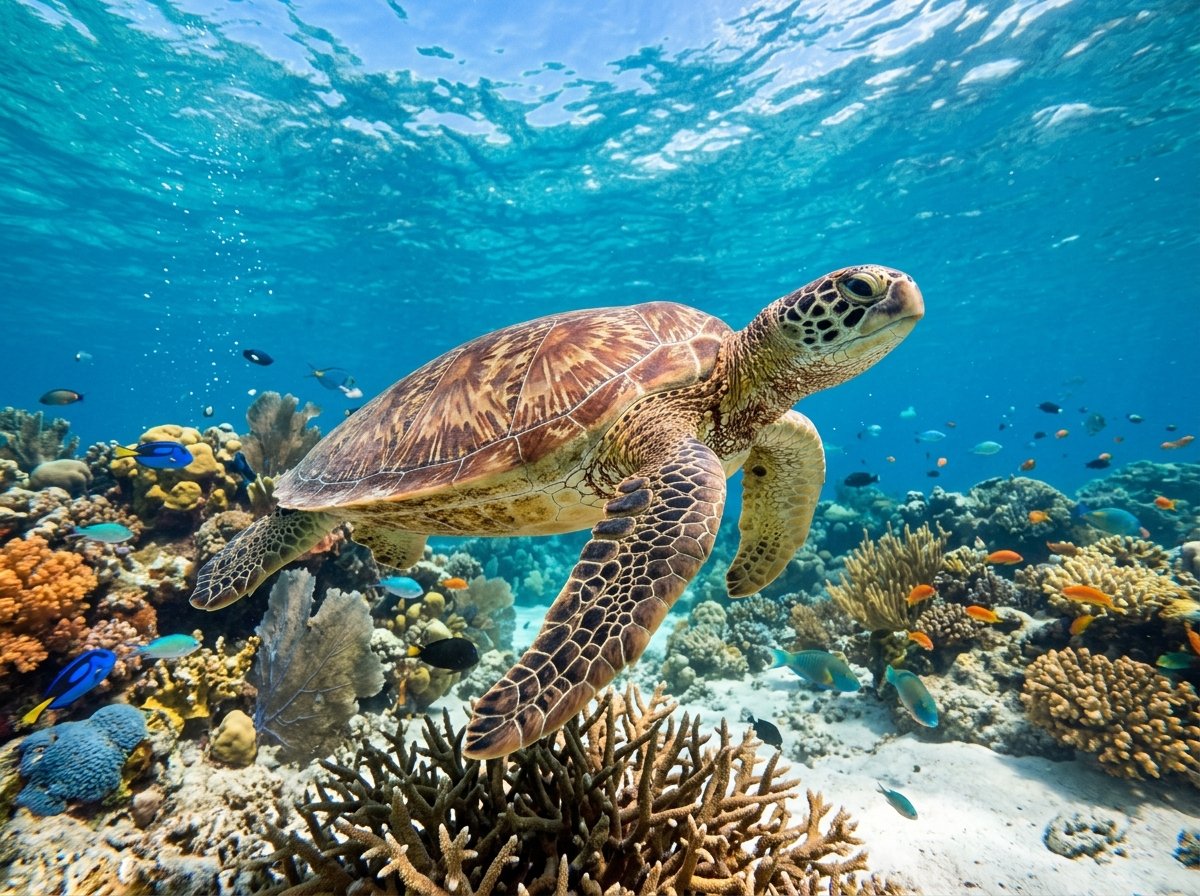
Imagine an animal that was already roaming the Earth when dinosaurs dominated the landscape. While countless species disappeared during mass extinctions, turtles managed to survive and continue their journey into the modern world.
A few years ago, marine researchers tracking sea turtles off the coast of Florida were amazed to discover individuals returning to the exact beaches where they had hatched decades earlier. This remarkable navigation ability highlights just how extraordinary these ancient reptiles truly are.
Have you ever wondered how turtles have survived for more than 200 million years while so many other creatures vanished?
The answer lies in a combination of incredible adaptations, resilience, and evolutionary success. Turtles are among the most recognizable animals on Earth, famous for their protective shells, long lifespans, and calm demeanor. Yet beneath that familiar appearance lies a fascinating story of survival, migration, intelligence, and ecological importance.
Today, turtles inhabit nearly every continent except Antarctica. They can be found in oceans, rivers, lakes, wetlands, forests, and even deserts. Some species weigh only a few ounces, while others exceed 1,500 pounds.
Turtles play a crucial role in maintaining healthy ecosystems. They help control prey populations, disperse seeds, maintain seagrass beds, and contribute to nutrient cycling. Unfortunately, many turtle species now face significant threats from habitat destruction, pollution, climate change, and illegal wildlife trade.
In this comprehensive guide, you’ll discover everything about turtles—from their ancient origins and unique anatomy to their behavior, diet, reproduction, latest scientific discoveries, and conservation efforts. Whether you’re a wildlife enthusiast, student, researcher, or simply curious about nature, this article offers a complete look into the remarkable world of turtles.
Quick Facts About Turtles
| Fact | Details |
| Common Name | Turtle |
| Scientific Order | Testudines |
| First Appearance | Over 220 million years ago |
| Habitat | Oceans, rivers, lakes, wetlands, forests, deserts |
| Diet | Herbivore, omnivore, or carnivore, depending on species |
| Average Lifespan | 20–100+ years |
| Largest Species | Leatherback Sea Turtle |
| Smallest Species | Speckled Padloper Turtle |
| Main Defense | Protective shell |
| Number of Species | More than 360 species |
| Geographic Range | Worldwide except Antarctica |
| Conservation Status | Many species are threatened or endangered |
What Is a Turtle?
A turtle is a reptile belonging to the order Testudines, a unique group of animals distinguished by a protective shell made from modified ribs and bones. Unlike any other vertebrate on Earth, turtles carry their protective armor wherever they go.
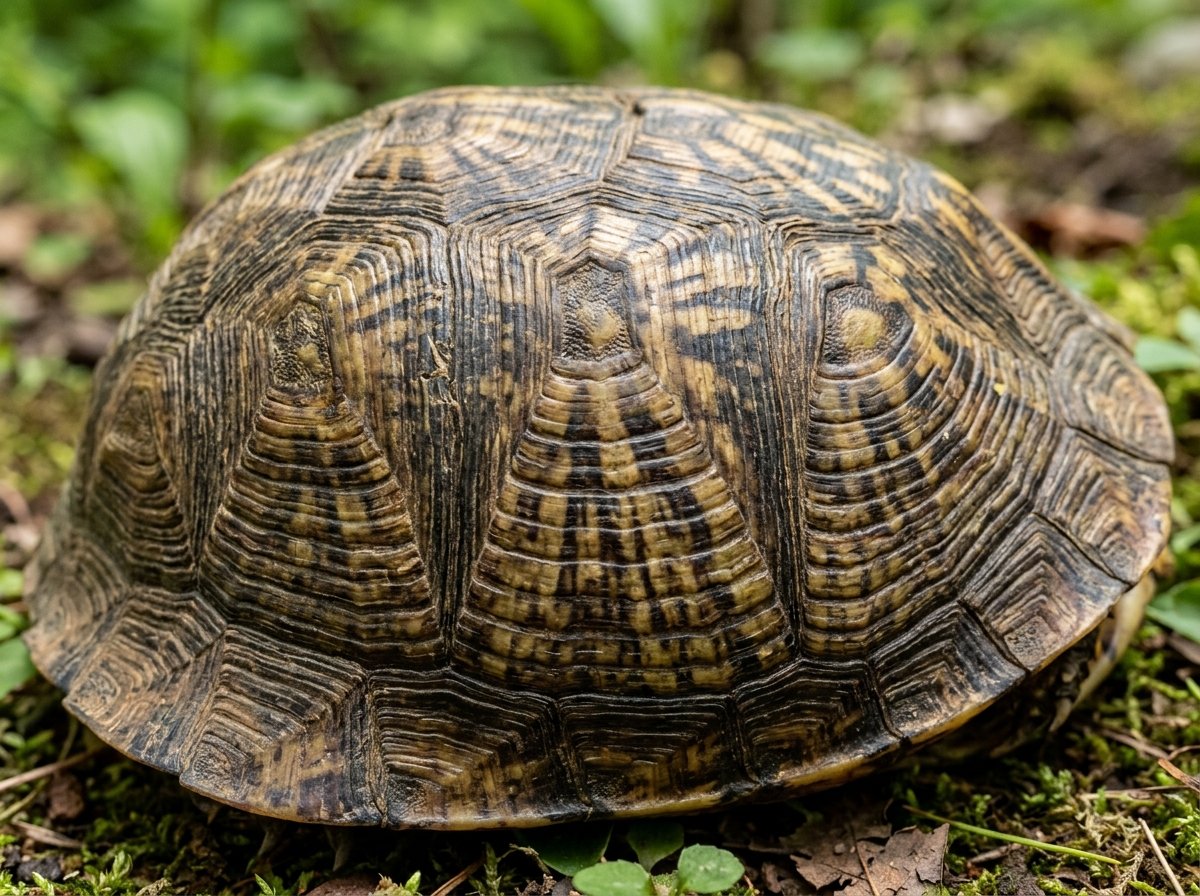
The shell consists of two primary sections. The upper portion is called the carapace, while the lower section is known as the plastron. These structures are connected by bone and covered by scales called scutes.
One common misconception is that turtles can leave their shells. In reality, the shell is part of the turtle’s skeleton. The spine and rib cage are fused directly to it, making removal impossible without causing death.
Scientists classify turtles into three major groups:
Sea Turtles
Sea turtles spend nearly their entire lives in the ocean. Species such as the green sea turtle and loggerhead turtle migrate thousands of miles across oceans.
Freshwater Turtles
These turtles inhabit rivers, lakes, ponds, and wetlands. Examples include painted turtles and snapping turtles.
Tortoises
Tortoises are land-dwelling turtles adapted for life on dry terrain. Their heavy, dome-shaped shells provide excellent protection from predators.
The earliest turtle ancestors appeared during the Late Triassic Period over 220 million years ago. Since then, turtles have survived multiple extinction events, including the catastrophe that eliminated non-avian dinosaurs approximately 66 million years ago.
Today, turtles serve important ecological functions. Sea turtles maintain healthy seagrass ecosystems, freshwater turtles help recycle nutrients, and tortoises contribute to seed dispersal in many environments.
Their combination of ancient origins, specialized anatomy, and ecological importance makes turtles one of the most fascinating groups of animals on Earth.
History and Origins of Turtles
The story of turtles begins more than 220 million years ago during the Triassic Period, making them among the oldest reptile groups still alive today.
Early Earth looked dramatically different from the modern world. Dinosaurs were only beginning to emerge, and the continents were joined together as a massive supercontinent known as Pangaea. It was during this ancient era that the first turtle ancestors evolved.
One of the earliest known turtle relatives is Odontochelys semitestacea, discovered in China and dating back approximately 220 million years. This remarkable fossil possessed a partial shell and teeth, providing scientists with valuable clues about turtle evolution.
Another important species, Proganochelys, lived around 210 million years ago. Unlike modern turtles, it could not retract its head into its shell. However, it already possessed a fully developed shell, suggesting that this defining feature evolved very early in turtle history.
For decades, scientists debated how turtle shells developed. Modern fossil discoveries indicate that turtle ribs gradually expanded outward over millions of years, eventually forming the protective structure seen today.
Throughout the Jurassic and Cretaceous periods, turtles diversified into numerous forms. Some adapted to freshwater habitats, while others became marine specialists.
When the asteroid impact triggered the mass extinction event 66 million years ago, turtles were among the groups that survived. Researchers believe their adaptable diets, slow metabolism, and ability to shelter in water or underground contributed to their resilience.
Fossil evidence shows that giant turtles once inhabited many regions. Some extinct marine species exceeded 13 feet in length, making them among the largest turtles ever known.
Today, genetic research continues to uncover new insights into turtle evolution. Advanced DNA studies reveal relationships among species that were previously unclear, helping scientists better understand how modern turtles evolved from their ancient ancestors.
Turtles represent a living connection to prehistoric Earth. Every species alive today carries evolutionary traits that have been refined through hundreds of millions of years of natural selection.
Physical Characteristics and Main Features
The most distinctive feature of any turtle is undoubtedly its shell. Unlike armor worn by other animals, a turtle’s shell is an integral part of its body.
The shell consists of over 50 bones fused. This structure provides exceptional protection against predators while also supporting internal organs.
Shell shapes vary dramatically among species.
Sea turtles possess streamlined shells that reduce drag during swimming. Tortoises generally have high-domed shells that resist crushing attacks from predators. Freshwater turtles often display flatter shells that improve mobility in aquatic environments.
Another remarkable adaptation is the turtle’s beak. Unlike mammals, turtles lack teeth. Instead, they possess sharp, keratin-covered beaks designed for cutting vegetation, crushing prey, or capturing fish.
Turtle limbs reflect their lifestyles:
- Sea turtles have powerful flippers.
- Freshwater turtles possess webbed feet.
- Tortoises feature sturdy elephant-like legs.
Size variation among turtles is extraordinary.
The tiny speckled padloper turtle measures only a few inches long. In contrast, leatherback sea turtles can exceed 7 feet in length and weigh more than 1,500 pounds.
Many species exhibit excellent vision and color perception. Sea turtles can detect subtle differences in light and use environmental cues for navigation.
One of the most impressive turtle traits is longevity. Some tortoise species regularly live beyond 100 years, with documented individuals reaching ages exceeding 150 years.
Turtles also possess slow metabolisms that allow them to survive extended periods without food. Certain aquatic species can remain underwater for surprisingly long durations by reducing oxygen consumption.
These unique physical adaptations have helped turtles thrive in environments ranging from tropical oceans to arid deserts, making them one of nature’s most successful and enduring groups of reptiles.
Habitat, Environment, and Geographic Distribution
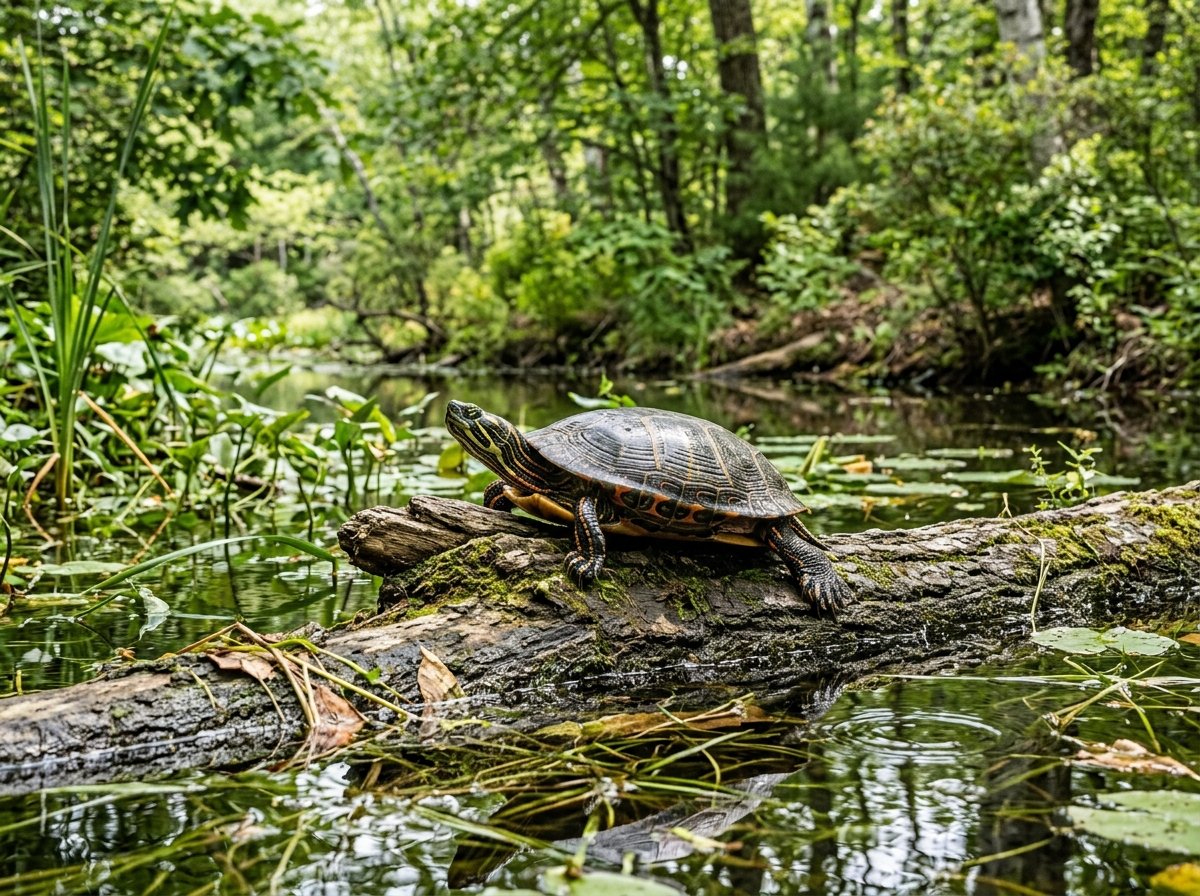
One of the reasons turtles have survived for millions of years is their remarkable ability to adapt to different environments. From tropical oceans and freshwater wetlands to deserts and dense forests, turtles occupy an incredible variety of habitats.
Where Do Turtles Live?
Turtles can be found on every continent except Antarctica. Their distribution ranges from the warm beaches of Florida and Hawaii to the rivers of South America, the forests of Asia, and the deserts of Africa.
Scientists generally classify turtle habitats into three categories:
Marine Habitats
Sea turtles spend most of their lives in oceans. Species such as the green sea turtle, loggerhead, hawksbill, and leatherback turtle travel thousands of miles across the Atlantic, Pacific, and Indian Oceans.
These turtles depend on healthy coral reefs, seagrass meadows, and coastal ecosystems for food and shelter.
Freshwater Habitats
Freshwater turtles live in rivers, ponds, lakes, swamps, and wetlands. They often bask on logs or rocks to regulate their body temperature.
Many North American species thrive in freshwater environments, including painted turtles, musk turtles, and snapping turtles.
Terrestrial Habitats
Tortoises are land-dwelling turtles adapted for life away from water. They inhabit deserts, grasslands, and forests where they feed primarily on vegetation.
Climate Preferences
Most turtles prefer warm climates because they are ectothermic animals, meaning they rely on external heat sources to regulate body temperature.
Sunlight plays a vital role in:
- Digestion
- Growth
- Immune system function
- Reproduction
Many species spend hours basking in the sun to absorb heat.
Ecosystem Importance
Turtles are ecological engineers.
Sea turtles maintain healthy seagrass beds by grazing on vegetation. Freshwater turtles help clean aquatic environments by consuming dead organisms and algae. Tortoises disperse seeds across large distances, helping plants reproduce.
Without turtles, many ecosystems would function less efficiently.
Behavior and Lifestyle
Despite their reputation for being slow and quiet, turtles exhibit surprisingly complex behaviors.
Daily Activities
A typical turtle’s day revolves around three essential activities:
- Finding food
- Avoiding predators
- Regulating body temperature
Many freshwater turtles spend mornings basking before becoming active hunters or foragers.
Sea turtles often travel long distances while searching for feeding grounds.
Migration
Among the most impressive behaviors in the animal kingdom is sea turtle migration.
Some species travel more than 8,000 miles during their lifetime.
Female sea turtles frequently return to the exact beach where they hatched decades earlier. Scientists believe they navigate using Earth’s magnetic field.
Social Behavior
Most turtles are solitary animals.
Unlike wolves or dolphins, turtles generally do not form permanent social groups. However, they may gather in areas with abundant food or suitable nesting locations.
Communication
Although turtles do not communicate like birds or mammals, they are far from silent.
Researchers have discovered that some species produce sounds, including:
- Clicks
- Hisses
- Chirps
- Low-frequency vocalizations
These sounds may help coordinate mating or hatchling behavior.
Survival Strategies
Turtles possess several effective survival adaptations:
Protective Shell
Their shell remains the first line of defense against predators.
Camouflage
Many species blend perfectly into their surroundings.
Aquatic Escape
Freshwater turtles can quickly dive underwater when threatened.
Long Lifespans
Living for decades increases reproductive opportunities and species survival.
A Remarkable Survival Story
Researchers studying sea turtles in Florida documented individuals returning to nesting beaches after journeys spanning thousands of miles. Some females repeatedly visit the same nesting sites for decades.
This extraordinary navigational ability remains one of nature’s greatest mysteries.
Diet and Feeding Habits
Turtle diets vary dramatically depending on species, age, and habitat.
Herbivorous Turtles
Many tortoises and adult green sea turtles primarily consume plant material.
Their diets include:
- Grasses
- Leaves
- Flowers
- Fruits
- Aquatic plants
- Seagrass
Carnivorous Turtles
Certain species prefer animal prey.
Examples include:
- Fish
- Insects
- Worms
- Crustaceans
- Mollusks
- Small amphibians
Snapping turtles are particularly effective predators.
Omnivorous Turtles
Many freshwater turtles consume both plants and animals.
This flexible feeding strategy helps them survive when food availability changes.
Hunting Techniques
Different turtles use different feeding methods.
Ambush Hunting
Snapping turtles often remain motionless before striking prey.
Grazing
Green sea turtles continuously graze seagrass beds.
Scavenging
Some turtles consume dead animals, helping recycle nutrients.
Role in the Food Chain
Turtles occupy important positions within ecosystems.
They act as:
- Predators
- Herbivores
- Scavengers
- Prey animals
Their feeding habits influence plant growth, prey populations, and nutrient cycles.
Scientific Findings
Recent studies show that sea turtles help maintain productive seagrass ecosystems. Areas with healthy turtle populations often support greater biodiversity than areas where turtles have declined.
Reproduction and Life Cycle
The reproductive cycle of turtles is one of the most fascinating stories in nature.
Courtship and Mating
During breeding seasons, males compete for access to females.
Courtship behaviors may include:
- Head movements
- Gentle biting
- Swimming displays
- Following females
In aquatic species, mating usually occurs in water.
Nest Building
After mating, females search for suitable nesting locations.
Sea turtles often return to beaches where they hatched years or even decades earlier.
Using their rear flippers, females dig nests in sand and deposit eggs before carefully covering them.
Egg Laying
Depending on the species, females may lay:
- 1 to 200 eggs per nesting event
Sea turtles commonly lay between 80 and 120 eggs.
Incubation
Eggs remain buried for several weeks or months.
Temperature plays a critical role.
A remarkable feature of many turtles is temperature-dependent sex determination:
- Warmer temperatures often produce females.
- Cooler temperatures often produce males.
This adaptation helps regulate population dynamics.
Hatching
Once development is complete, hatchlings use a temporary egg tooth to break free.
Many hatchlings emerge together, increasing survival chances.
The Journey to Water
For sea turtles, the journey from nest to ocean is extremely dangerous.
Predators include:
- Birds
- Crabs
- Fish
- Mammals
Only a small percentage survive to adulthood.
Scientists estimate that approximately 1 in 1,000 hatchlings reach reproductive age.
Juvenile Stage
Young turtles focus primarily on growth and survival.
Many spend years hidden in protected habitats before reaching maturity.
Adult Life
Adult turtles may reproduce for decades.
Sea turtles generally reach maturity between 20 and 50 years of age.
Some tortoise species mature even later.
Lifespan
Turtles are among the longest-living vertebrates on Earth.
Typical lifespans include:
| Type | Average Lifespan |
| Freshwater Turtles | 20–50 years |
| Sea Turtles | 50–100 years |
| Large Tortoises | 100–150+ years |
Some giant tortoises have exceeded 180 years.
Why Longevity Matters
Long lifespans allow turtles to reproduce repeatedly throughout their lives.
However, this strategy also creates challenges.
Because turtles mature slowly, population recovery can take decades after declines occur.
This is one reason conservation efforts are so important.
Latest Research and Scientific Discoveries (2024–2026)
The past few years have brought exciting advances in turtle science.
1. Satellite Tracking Reveals Hidden Migration Routes
Researchers are using increasingly sophisticated satellite tags to monitor sea turtle movements.
These studies have uncovered migration routes spanning entire oceans and identified previously unknown feeding grounds.
2. Climate Change Impacts on Hatchlings
Scientists continue studying how rising temperatures affect turtle populations.
Warmer nesting beaches are producing disproportionately female hatchlings in some species.
Researchers are evaluating long-term consequences for population stability.
3. Microplastic Exposure
Recent studies have found microplastics in many marine turtle populations.
Scientists are investigating how these pollutants affect:
- Growth
- Reproduction
- Immune function
- Survival
4. Improved Conservation Technologies
Drones and artificial intelligence now help researchers:
- Monitor nesting beaches
- Count turtles
- Detect threats
- Improve habitat protection
These technologies allow conservationists to gather data more efficiently than ever before.
5. Genetic Discoveries
Advanced DNA analysis is helping scientists identify distinct turtle populations and understand migration patterns.
These findings support more targeted conservation programs.
6. Disease Monitoring
Researchers are closely studying fibropapillomatosis, a disease affecting many sea turtle populations.
Understanding its causes may improve treatment and prevention strategies.
7. Restoration Success Stories
Several turtle populations have shown encouraging recovery due to conservation measures.
Protected nesting beaches, fishing regulations, and habitat restoration projects have increased nesting activity in some regions.
Expert Perspective
Many conservation biologists consider turtles excellent indicators of ecosystem health.
When turtle populations thrive, coastal and freshwater habitats often show signs of improved environmental quality.
The combination of satellite technology, genetic analysis, artificial intelligence, and conservation science is providing unprecedented insight into these ancient reptiles.
For the first time in history, researchers can monitor turtle populations on a global scale, offering hope for their long-term survival.
25 Fascinating Facts About Turtles
- Turtles have existed for more than 220 million years.
- They survived the mass extinction that wiped out dinosaurs.
- A turtle’s shell is part of its skeleton.
- Turtles cannot leave their shells.
- There are over 360 known turtle species.
- The leatherback sea turtle is the largest turtle species.
- Some turtles can live for more than 150 years.
- Sea turtles travel thousands of miles during migration.
- Female sea turtles often return to the beach where they hatched.
- Turtles have excellent underwater vision.
- Most turtles have no teeth.
- They use strong beaks to cut food.
- Some freshwater turtles can absorb oxygen through specialized tissues underwater.
- Sea turtles help maintain healthy seagrass ecosystems.
- Tortoises are land-dwelling turtles.
- The smallest turtle species can fit in your hand.
- Some turtles can remain underwater for several hours.
- Temperature can determine the sex of hatchlings.
- Many turtle species communicate using sounds.
- Turtle shells contain more than 50 bones.
- Hawksbill turtles help coral reefs by eating sponges.
- Green sea turtles become mostly herbivorous as adults.
- Giant tortoises are among the longest-living vertebrates.
- Turtles play an important role in nutrient recycling.
- Many turtle species are threatened by human activities.
Importance to Humans and Nature
Turtles are much more than fascinating reptiles. They are essential components of ecosystems around the world.
Ecological Importance
Maintaining Healthy Seagrass Beds
Sea turtles graze on seagrass, preventing overgrowth and encouraging healthy plant development.
Healthy seagrass beds:
- Store carbon
- Support fish populations
- Protect coastlines
Supporting Coral Reef Health
Hawksbill sea turtles consume sponges that compete with corals.
This helps coral reefs maintain biodiversity.
Nutrient Cycling
Freshwater turtles and sea turtles contribute to nutrient movement between ecosystems.
Their feeding and nesting activities help distribute nutrients across habitats.
Seed Dispersal
Many tortoise species consume fruits and spread seeds through their droppings.
This supports forest regeneration.
Economic Importance
Turtles contribute significantly to ecotourism.
Popular turtle-watching destinations in Florida, Hawaii, Costa Rica, and other coastal regions attract millions of visitors annually.
Healthy turtle populations can generate substantial income for local communities.
Scientific Importance
Researchers study turtles to better understand:
- Longevity
- Navigation
- Climate adaptation
- Evolution
- Marine ecology
Cultural Importance
Throughout history, turtles have appeared in myths, folklore, and religious traditions.
Many cultures view turtles as symbols of:
- Wisdom
- Endurance
- Stability
- Longevity
Threats and Challenges Facing Turtles
Despite surviving for millions of years, turtles now face unprecedented threats.
Climate Change
Rising temperatures affect turtle nesting beaches.
Because sex determination depends on temperature, warmer sands can create heavily female-biased populations.
Sea-level rise also threatens nesting areas.
Habitat Loss
Urban development destroys critical habitats.
Examples include:
- Wetland drainage
- Coastal construction
- Deforestation
- River modification
Plastic Pollution
Plastic waste is one of the greatest dangers to marine turtles.
Many turtles mistake plastic bags for jellyfish.
Ingested plastic can cause:
- Starvation
- Injury
- Internal blockages
Fishing Activities
Accidental capture in fishing gear remains a major cause of turtle mortality.
Although improved equipment has reduced some risks, bycatch continues to affect populations worldwide.
Illegal Wildlife Trade
Some turtles are captured for:
- Exotic pet markets
- Traditional medicine
- Food consumption
This trade has severely reduced certain species.
Pollution
Chemical contamination affects turtle health and reproduction.
Pollutants accumulate in waterways and marine environments.
Predation of Eggs and Hatchlings
Many predators consume turtle eggs and hatchlings before they reach adulthood.
Natural predation has always existed, but human-related habitat changes often increase these risks.
Conservation and Future Outlook
Fortunately, conservation efforts are making a difference.
Protected Areas
Many countries have established:
- Marine protected areas
- Wildlife refuges
- Nesting beach reserves
These locations provide safe habitats for turtles.
Technological Advances
Modern tools are improving conservation efforts:
- Satellite tracking
- Drones
- Artificial intelligence
- Genetic monitoring
These technologies help scientists better understand turtle populations.
Community Involvement
Local communities increasingly participate in:
- Beach cleanups
- Nest protection
- Habitat restoration
- Public awareness campaigns
Future Outlook
Although many turtle species remain threatened, there is reason for optimism.
Successful conservation programs have increased nesting activity in several regions.
Continued protection, research, and education can help ensure turtles remain part of Earth’s ecosystems for generations to come.
Common Myths and Misconceptions
Myth #1: Turtles Can Leave Their Shells
Reality: The shell is permanently attached to the turtle’s skeleton.
Myth #2: All Turtles Live in Water
Reality: Tortoises spend nearly their entire lives on land.
Myth #3: Turtles Are Slow Everywhere
Reality: Sea turtles are powerful swimmers capable of traveling long distances.
Myth #4: Turtles Do Not Communicate
Reality: Many species produce sounds and behavioral signals.
Myth #5: All Turtles Live More Than 100 Years
Reality: Lifespans vary greatly depending on species.
Myth #6: Turtles Are Indestructible Because of Their Shells
Reality: Shells provide protection, but turtles remain vulnerable to many threats.
Myth #7: Sea Turtles Always Return to the Same Nesting Beach
Reality: Many do, but some may nest at nearby locations.
Frequently Asked Questions About Turtles
1. What is a turtle?
A turtle is a reptile belonging to the order Testudines, characterized by a protective shell.
2. How many turtle species exist?
Scientists recognize more than 360 species worldwide.
3. How old are turtles as a group?
Turtles have existed for over 220 million years.
4. Can turtles leave their shells?
No. The shell is part of their skeleton.
5. What do turtles eat?
Depending on the species, turtles may be herbivores, carnivores, or omnivores.
6. How long do turtles live?
Many species live between 20 and 100 years, while some tortoises exceed 150 years.
7. What is the largest turtle?
The leatherback sea turtle is the largest living turtle species.
8. What is the smallest turtle?
The speckled padloper turtle is among the smallest known species.
9. Are turtles reptiles?
Yes. Turtles belong to the reptile class.
10. Do turtles have teeth?
No. They use sharp beaks instead.
11. Where do sea turtles live?
They inhabit oceans around the world except polar regions.
12. Where do freshwater turtles live?
They live in ponds, rivers, lakes, and wetlands.
13. What is the difference between turtles and tortoises?
Tortoises are adapted for life on land, while many turtles spend significant time in water.
14. How do turtles protect themselves?
Their shells provide physical protection from predators.
15. Can turtles hear?
Yes, although their hearing differs from that of mammals.
16. How do sea turtles navigate?
Scientists believe they use Earth’s magnetic field and environmental cues.
17. How far can sea turtles migrate?
Some species travel thousands of miles across oceans.
18. Why do turtles bask in the sun?
Basking helps regulate body temperature and supports digestion.
19. Are turtles endangered?
Many species are threatened or endangered.
20. What threatens turtles most?
Habitat loss, pollution, climate change, and fishing activities.
21. Why are turtles important?
They help maintain healthy ecosystems and biodiversity.
22. Do turtles care for their young?
Most turtles provide little or no parental care after laying eggs.
23. How many eggs does a turtle lay?
The number varies by species, ranging from a few eggs to over 100.
24. How long do turtle eggs take to hatch?
Incubation periods vary but often last several weeks to months.
25. What determines a hatchling’s sex?
Temperature often influences sex during egg development.
26. Can turtles breathe underwater?
Most turtles must surface for air, although some species can absorb limited oxygen underwater.
27. What role do turtles play in ecosystems?
They contribute to nutrient cycling, vegetation management, and food-web stability.
28. How can people help turtles?
Supporting conservation programs, reducing plastic use, and protecting habitats can help turtle populations.
Conclusion
Turtles are among the most remarkable survivors in Earth’s history. For more than 220 million years, these resilient reptiles have endured dramatic environmental changes, mass extinctions, and shifting ecosystems. Their unique shells, impressive longevity, and diverse lifestyles have made them one of the most successful groups of vertebrates on the planet.
From the giant leatherback sea turtle crossing vast oceans to the giant tortoises roaming isolated islands, every species tells a story of adaptation and survival. Turtles play critical roles in maintaining healthy ecosystems, supporting biodiversity, and advancing scientific understanding of evolution, navigation, and longevity.
Yet their future is far from guaranteed. Habitat destruction, climate change, pollution, and illegal wildlife trade continue to threaten many populations. The good news is that conservation efforts are producing measurable results, proving that human action can make a positive difference.
The next time you see a turtle gliding through water or basking in the sun, remember that you are looking at a living descendant of a lineage older than most animals alive today. Protecting turtles means preserving a vital piece of Earth’s natural heritage—one that has survived for millions of years and deserves a future just as long.
Click the link below for more……

https://baseeratnews.com/the-ultimate-sharks-ocean-predators/
Click the link below for more articles……