
Dolphins: The Intelligent Guardians of the Ocean
Long before modern ships crossed the oceans, sailors told stories about mysterious creatures racing beside their boats under moonlit skies. They moved like shadows in the water — fast, graceful, and strangely friendly. Some sailors believed these animals guided lost travelers home. Others thought they carried the souls of drowned mariners. Across cultures and centuries, dolphins became symbols of protection, intelligence, and harmony with the sea.
Even today, dolphins continue to fascinate humanity more than almost any other marine creature. They leap through waves with effortless elegance, communicate through whistles and clicks, and display emotional behavior that often feels deeply human. Scientists have discovered dolphins recognizing themselves in mirrors, forming lifelong social bonds, teaching their young, and even helping injured companions survive. Few wild animals have earned such admiration from people around the world.
But beneath their playful reputation lies a far more complex story. Dolphins are survivors of millions of years of evolution. They are hunters, navigators, communicators, and highly social mammals adapted perfectly for life beneath the ocean surface. Their intelligence rivals that of some primates, and their societies can be surprisingly sophisticated.
At the same time, dolphins now face growing dangers from pollution, fishing industries, climate change, underwater noise, and habitat destruction. The same oceans that once allowed them to thrive are changing rapidly.
Understanding dolphins is not simply about learning facts about marine life. It is about exploring one of nature’s most extraordinary species — a creature that continues to challenge human ideas about intelligence, emotion, and the connection between humans and the natural world.
Introduction
Dolphins are among the most recognizable marine animals on Earth. Found in oceans, rivers, and coastal waters across the globe, these aquatic mammals have captured human imagination for thousands of years. Their curved mouths create what appears to be a permanent smile, their acrobatic leaps inspire wonder, and their remarkable intelligence continues to attract scientific attention.
Unlike fish, dolphins are mammals. They breathe air, give birth to live young, produce milk for their babies, and maintain warm body temperatures. Their closest living relatives are surprisingly land mammals such as cows and hippos, revealing a fascinating evolutionary journey from land to sea millions of years ago.
Today, scientists recognize more than 40 dolphin species living in different marine environments. Some inhabit warm tropical waters, while others survive in icy northern seas. Certain species, like the bottlenose dolphin, are highly social and often interact with humans. Others remain elusive and poorly understood in remote parts of the ocean.
Dolphins belong to the cetacean family, which also includes whales and porpoises. They are known for their streamlined bodies, powerful tails, and advanced communication systems. Through echolocation, dolphins can navigate murky waters, locate prey, and identify objects with astonishing precision. This biological sonar system is so advanced that researchers continue studying it for inspiration in human technology.
What makes dolphins especially unique is their social intelligence. They live in groups called pods and form strong social relationships. Some dolphins cooperate during hunts, protect injured pod members, and communicate using signature whistles that function similarly to names. Researchers have documented playful behavior, problem-solving abilities, and emotional responses that suggest a high level of cognitive complexity.
Human fascination with dolphins stretches back to ancient civilizations. In Greek mythology, dolphins were sacred creatures connected to the gods. Ancient sailors considered them protectors at sea. Modern cultures celebrate dolphins through films, documentaries, marine parks, literature, and environmental campaigns.
However, dolphins also reveal the darker side of humanity’s relationship with nature. Industrial pollution, plastic waste, fishing nets, and climate disruption increasingly threaten dolphin populations worldwide. Some species are critically endangered, particularly freshwater dolphins living in polluted river systems.
Studying dolphins offers insight into marine ecosystems and animal intelligence while reminding humans of the fragile balance between civilization and the natural environment. Their story is one of beauty, survival, adaptation, and growing uncertainty in a rapidly changing world.
History of Dolphins
The history of dolphins stretches back more than 50 million years, beginning with land-dwelling mammals that slowly adapted to life in water. Scientists believe the ancestors of dolphins once resembled small deer-like creatures living near rivers and coastal regions. Over millions of years, these animals evolved into fully aquatic mammals capable of surviving entirely in marine environments.
One of the earliest known ancestors was Pakicetus, a mammal that lived around 50 million years ago. Fossils discovered in South Asia revealed characteristics linking them to modern whales and dolphins. Although it walked on land, its ear structure resembled that of present-day cetaceans. Over time, evolutionary changes transformed these ancient mammals into more streamlined swimmers.
As millions of years passed, species like Ambulocetus developed stronger swimming abilities. Often called the “walking whale,” Ambulocetus could move both on land and in water. Eventually, fully aquatic ancestors emerged with flippers, tail propulsion, and reduced hind limbs. Nature slowly shaped them into the dolphins seen today.
Ancient human civilizations quickly noticed dolphins in nearby seas. In Ancient Greece, dolphins held spiritual significance and frequently appeared in art, pottery, and mythology. Greek legends described dolphins rescuing sailors from storms and guiding ships through dangerous waters. The god Apollo was sometimes associated with dolphins, and the city of Delphi may even derive its name from the Greek word “delphis,” meaning dolphin.
The Romans admired dolphins as symbols of speed and intelligence. Mosaics, sculptures, and fountains featuring dolphins decorated wealthy homes and public spaces. Across the Mediterranean world, sailors considered dolphin sightings a sign of safety and good fortune.
In many Indigenous cultures, dolphins also played important spiritual roles. Polynesian traditions viewed them as guides across the ocean. Certain Native American tribes believed dolphins carried messages between humans and sea spirits. Along the coasts of Africa and Asia, fishermen developed stories about dolphins helping humans find fish.
During the Age of Exploration, European sailors continued sharing tales of dolphins swimming beside ships for days at a time. Some believed dolphins intentionally protected people from sharks or drowning. While many stories became exaggerated through folklore, modern observations have confirmed cases where dolphins appeared to assist humans in distress.
Scientific understanding of dolphins began expanding significantly during the 18th and 19th centuries. Naturalists studied dolphin anatomy, behavior, and classification more carefully. By the 20th century, researchers discovered dolphins possessed unusually large brains relative to body size. Their intelligence soon became a major scientific topic.
Marine biology advanced rapidly after World War II. Researchers used underwater microphones to study dolphin sounds and communication patterns. Experiments revealed dolphins could learn commands, solve puzzles, and recognize symbols. Public fascination grew through television shows, documentaries, and marine exhibits.
However, the modern era also brought serious threats. Industrial fishing accidentally trapped dolphins in massive nets. Pollution contaminates marine ecosystems. Coastal development disrupted habitats. Certain dolphin species experienced dramatic population declines.
Today, dolphins stand at the center of global marine conservation efforts. They remain symbols of ocean intelligence and environmental awareness while reminding humanity of the urgent need to protect marine ecosystems for future generations.
Types of Dolphins
Dolphins exist in remarkable diversity across the world’s oceans and rivers. Scientists currently recognize over 40 species, each adapted to unique environments and lifestyles. While many people imagine all dolphins looking similar, the reality is far more fascinating. Different species vary in size, color, behavior, habitat, and social structure.
Bottlenose Dolphin

The bottlenose dolphin is perhaps the most famous dolphin species. Known for its curved mouth and playful nature, it frequently appears in films, aquariums, and documentaries.
Bottlenose dolphins live in warm and temperate oceans worldwide. They are highly intelligent and adaptable, often living near coastlines where human interaction is more common. These dolphins use sophisticated communication systems and cooperate during hunts.
Adult bottlenose dolphins can grow up to 13 feet long and weigh over 600 pounds. Their social nature makes them one of the most studied marine mammals on Earth.
Orca or Killer Whale
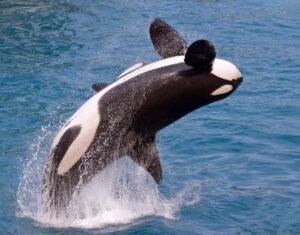
Despite their name, killer whales are actually the largest members of the dolphin family.
Orcas inhabit every ocean, from icy Arctic waters to tropical seas. They are apex predators known for extraordinary hunting intelligence and strong family structures. Different orca populations even possess unique hunting techniques and vocal dialects.
Some orcas hunt seals on ice, while others specialize in fish or squid. Their teamwork during hunts demonstrates exceptional coordination and communication.
Spinner Dolphin

Spinner dolphins are famous for their spectacular aerial spins.
These dolphins commonly inhabit tropical oceans and often travel in large groups. Scientists believe their spinning behavior may help remove parasites, communicate socially, or simply serve as a playful activity.
Spinner dolphins are especially active at night when they hunt fish and squid in deeper waters.
Common Dolphin

Common dolphins are among the fastest marine mammals in the world.
They often swim alongside ships and can reach speeds exceeding 35 miles per hour. Their distinctive hourglass color pattern helps identify them easily.
These dolphins are highly social and frequently gather in enormous pods containing hundreds or even thousands of individuals.
Pink River Dolphin

The Amazon river dolphin, also called the pink river dolphin, is one of the most unusual dolphin species.
Unlike ocean dolphins, these freshwater mammals inhabit the rivers of South America. Their flexible necks allow easier movement through flooded forests and narrow river channels.
As they age, many individuals develop a pink coloration, giving them an almost mythical appearance. Local folklore throughout the Amazon often portrays them as magical creatures.
Dusky Dolphin

Dusky dolphins are known for acrobatic performances and energetic social behavior.
They commonly live near New Zealand and the South American coastlines. These dolphins frequently leap, twist, and perform synchronized movements above the water surface.
Risso’s Dolphin

Risso’s dolphins have a unique appearance marked by scars across their bodies.
These scars result from social interaction and encounters with squid, their primary prey. Risso’s dolphins possess bulbous heads and lack the elongated beaks seen in many other species.
Hector’s Dolphin

Hector’s dolphin is among the rarest dolphins in the world.
Found only around New Zealand, this small species faces severe threats from fishing nets and habitat disturbance. Conservationists consider protecting Hector’s dolphins a major environmental priority.
The diversity of dolphins demonstrates nature’s extraordinary ability to adapt species to different environments. From icy oceans to muddy rivers, dolphins continue thriving in habitats across the planet — though many now require urgent protection.
Anatomy of Dolphins
Dolphins possess bodies perfectly designed for life in water. Every part of their anatomy supports speed, agility, communication, and survival in marine environments.
Their streamlined shape reduces water resistance, allowing them to swim efficiently through oceans and rivers. Unlike fish, dolphins move using powerful tail flukes that travel up and down rather than side to side. This motion enables bursts of remarkable speed during hunts or escapes from predators.
A dolphin’s skin is smooth and rubbery, helping minimize drag while swimming. Beneath the skin lies a thick layer of fat called blubber, which provides insulation and stores energy. Blubber becomes especially important in colder waters.
One of the most recognizable features is the dorsal fin located on the back. While not present in all species, this fin helps maintain balance and stability during movement.
Dolphins breathe through a blowhole located on top of the head. This adaptation allows quick breathing at the surface without lifting the entire body out of the water. Unlike humans, dolphins consciously control every breath they take.
Their hearing abilities are extraordinary. Specialized fat deposits in the jaw help transmit sound vibrations to the inner ear, supporting echolocation. Dolphins produce clicking sounds and interpret returning echoes to locate prey and navigate underwater environments.
A dolphin’s brain is unusually large relative to body size. Scientists have identified advanced brain regions associated with communication, emotion, memory, and social interaction. Their highly developed nervous systems contribute to impressive learning abilities and behavioral complexity.
Strong flippers allow steering and maneuverability, while muscular bodies generate immense swimming power. Their teeth are usually cone-shaped and designed for gripping slippery prey such as fish and squid rather than chewing food.
Every anatomical feature reflects millions of years of evolution, transforming ancient land mammals into some of the ocean’s most efficient and intelligent predators.
Dolphin Intelligence
Among all marine animals, dolphins are widely regarded as some of the most intelligent creatures on Earth. Their intelligence has fascinated scientists, philosophers, and animal behavior researchers for decades. In many ways, studying dolphins challenges traditional assumptions about consciousness, communication, and non-human cognition.
Dolphins possess remarkably large brains relative to their body size. More importantly, certain regions associated with social behavior, problem-solving, and emotional processing are highly developed. Researchers studying dolphin neurology have found similarities between dolphin and human brain complexity, particularly in areas linked to communication and self-awareness.
One of the most famous discoveries involving dolphin intelligence is mirror self-recognition. In scientific experiments, dolphins examined marks placed on their bodies while looking into mirrors, suggesting they understood the reflection represented themselves. This ability is considered a major indicator of advanced self-awareness and is shared by only a few species, including humans, great apes, elephants, and certain birds.
Communication among dolphins is highly sophisticated. They produce whistles, clicks, body movements, and pulse sounds to exchange information. Some scientists believe dolphin communication systems may contain elements resembling language.
Research has revealed that dolphins develop individual “signature whistles” functioning similarly to names. Each dolphin creates a unique sound pattern early in life, allowing pod members to identify and call one another. This level of vocal individuality is extremely rare in the animal kingdom.
Echolocation itself demonstrates extraordinary cognitive ability. Dolphins emit clicking sounds that bounce off objects and return as echoes. By analyzing these echoes, dolphins can determine shape, size, movement, and distance with remarkable precision. They can even detect hidden objects buried beneath sand or identify differences between materials underwater.
Social learning plays a critical role in dolphin societies. Young dolphins observe adults to learn hunting methods, communication patterns, and survival strategies. In some regions, dolphins use unique cultural behaviors passed from generation to generation. For example, certain bottlenose dolphins in Australia place sea sponges over their snouts while searching for food on the ocean floor — a learned behavior not seen in all populations.
Dolphins also display problem-solving abilities in laboratory studies and wild environments. They can understand symbols, follow complex instructions, imitate behaviors, and cooperate during tasks. Some dolphins have learned to recognize artificial languages created by researchers.
Perhaps most fascinating is dolphin emotional intelligence. Dolphins appear capable of empathy, cooperation, grief, and social bonding. Injured or sick dolphins are sometimes supported at the surface by pod members to help them breathe. Mothers maintain strong bonds with calves, and social alliances can last many years.
Playfulness is another hallmark of dolphin intelligence. Dolphins surf waves, toss seaweed, chase one another, and interact curiously with objects in their environment. Scientists often associate play behavior with higher cognitive development because it requires creativity, social awareness, and learning flexibility.
Interactions with humans have further highlighted dolphin intelligence. Dolphins in the wild occasionally assist swimmers threatened by sharks or guide lost individuals toward safety. While not fully understood scientifically, such behaviors reinforce public fascination with dolphin empathy and awareness.
Military organizations have even trained dolphins for underwater detection tasks because of their advanced sensory capabilities and trainability. Dolphins can locate underwater mines and identify objects more effectively than certain technologies under specific conditions.
Still, dolphin intelligence remains partly mysterious. Researchers continue debating whether dolphin cognition should be considered comparable to primates in certain areas. Some experts argue dolphins possess forms of intelligence fundamentally different from human thinking because their social lives and sensory experiences evolved in aquatic environments.
What is clear, however, is that dolphins are far more than instinct-driven animals. They are conscious, socially complex beings capable of learning, communication, adaptation, and emotional interaction on a level rarely seen outside humanity itself.
Life Cycle of Dolphins
The life cycle of dolphins begins with strong maternal care and long developmental periods. Unlike many marine animals that produce large numbers of offspring, dolphins invest significant time and energy into raising a single calf.
Pregnancy lengths vary by species, though many dolphins carry calves for about 10 to 18 months. Bottlenose dolphins, for example, typically experience a pregnancy lasting around one year. Mothers usually give birth to one calf, though twins occasionally occur.
Calves are born tail-first, reducing the risk of drowning during delivery. Immediately after birth, the mother helps guide the newborn to the surface for its first breath. This moment is critical for survival.
Young dolphins rely heavily on maternal protection and milk during early life stages. Dolphin milk contains high fat content, supporting rapid growth in marine conditions. Calves nurse underwater and remain close to their mothers for several years.
Childhood among dolphins involves extensive learning. Young dolphins observe adults hunting, socializing, communicating, and navigating ocean environments. Play behavior helps calves develop coordination and social skills.
Adolescence brings increasing independence. Young males may leave maternal groups and form alliances with other males, while females often remain within family-oriented social structures.
Sexual maturity depends on the species. Smaller dolphins mature earlier, while larger species may require over a decade to reach adulthood. Adult dolphins continue participating in complex social networks throughout life.
Lifespan also varies significantly. Some smaller species live around 20 years, while orcas can survive for more than 80 years. Female orcas are especially notable for long post-reproductive lifespans, a rare trait shared with humans.
Older dolphins sometimes display scars, worn teeth, and slower movement, though many remain socially active late into life. The long life cycle of dolphins reflects their advanced intelligence and social dependence.
Food and Hunting
Dolphins are skilled predators with highly coordinated hunting techniques. Most species primarily consume fish and squid, though larger dolphins such as orcas hunt seals, penguins, and even whales.
Echolocation plays a central role during hunts. Dolphins emit clicking sounds that reveal the location and movement of prey, even in dark or murky water. This biological sonar gives them extraordinary hunting accuracy.
Many dolphins hunt cooperatively. Pods work together to surround schools of fish, trapping them into tight formations known as bait balls. Once prey becomes concentrated, dolphins take turns feeding.
Some species display region-specific hunting traditions. In South Carolina, bottlenose dolphins perform “strand feeding,” intentionally sliding onto muddy shorelines to catch fish before wriggling back into the water.
Orcas demonstrate even more advanced hunting strategies. Certain populations create waves to wash seals from ice floes, while others coordinate attacks on larger marine mammals. These techniques are often passed culturally between generations.
Dolphins swallow prey whole because their teeth are designed for gripping rather than chewing. Their high metabolism requires frequent feeding, especially for active species.
Interestingly, dolphins sometimes cooperate with humans during fishing activities. In parts of Brazil and Myanmar, wild dolphins help herd fish toward fishermen, creating mutually beneficial hunting partnerships that have existed for generations.
Dolphin Behavior
Dolphin behavior is one of the most studied subjects in marine biology because of its complexity and resemblance to certain human social patterns.
Most dolphins live in pods ranging from a few individuals to several hundred members. Pod structures may shift depending on food availability, migration, mating, and protection needs. Social bonds within pods can remain strong for many years.
Communication forms the foundation of dolphin society. Dolphins use whistles, clicks, body postures, tail slaps, and physical contact to exchange information. Vocalizations may communicate identity, emotion, warnings, or hunting coordination.
Play behavior appears throughout a dolphin’s life. Dolphins surf waves, chase birds, toss seaweed, and interact with floating objects. Such playfulness is considered evidence of high cognitive function and emotional engagement.
Dolphins are also known for synchronized swimming and cooperative movement. Entire pods may leap or turn simultaneously, creating spectacular displays that strengthen social coordination.
Aggression occasionally occurs, especially among males competing for mates. However, dolphins also demonstrate empathy and caregiving behavior. Injured pod members are sometimes supported near the surface to help with breathing.
Sleep behavior among dolphins is highly unusual. Because dolphins must consciously breathe, only one half of the brain sleeps at a time. This adaptation allows continued movement and awareness while resting.
Migration patterns vary between species. Some dolphins travel enormous distances following prey or seasonal temperature changes, while others remain within smaller home ranges.
Researchers have also observed dolphins using tools and exhibiting curiosity toward humans. Their interactions with divers and swimmers often appear playful and investigative rather than fearful.
The social complexity of dolphins continues to challenge scientific understanding of animal behavior, suggesting levels of emotional and intellectual depth once believed to be uniquely human.
Humans and Dolphins
The relationship between humans and dolphins stretches across mythology, science, entertainment, and conservation. Few wild animals have developed such a strong emotional connection with people.
Ancient civilizations viewed dolphins positively. Greek sailors believed dolphins rescued drowning humans, while Roman art celebrated them as symbols of protection and guidance. Across the Pacific, many Indigenous cultures associated dolphins with wisdom and spiritual power.
Modern interactions intensified during the 20th century through marine parks, documentaries, and scientific research. Dolphins became global icons of intelligence and friendliness. Television series such as Flipper helped popularize dolphin admiration worldwide.
Scientists increasingly studied dolphin cognition and communication, leading to major discoveries about animal intelligence. Dolphins became important subjects in neuroscience, behavioral science, and marine biology.
Therapy programs involving dolphins also emerged. Some researchers explored whether dolphin interaction could assist individuals with emotional or developmental challenges, though scientific evidence remains debatable.
Unfortunately, human relationships with dolphins have not always been positive. Industrial fishing accidentally kills thousands of dolphins each year through entanglement in nets. Pollution contaminates marine ecosystems, while captivity industries have faced criticism regarding animal welfare.
Certain dolphin hunts continue in parts of the world, sparking international debate and conservation activism.
Despite these challenges, dolphins remain powerful ambassadors for ocean conservation. Their popularity helps raise awareness about marine pollution, climate change, and habitat destruction.
Humans see reflections of intelligence, emotion, and social connection in dolphins — perhaps explaining why these animals inspire such deep fascination across cultures and generations.
Threats Facing Dolphins
Although dolphins appear widespread and resilient, many species now face serious threats caused largely by human activity. Across oceans and rivers worldwide, environmental pressures continue growing.
One of the biggest dangers is accidental capture in fishing equipment. Gillnets, trawl nets, and longline fisheries trap dolphins that become unable to reach the surface for air. Thousands die annually through bycatch.
Plastic pollution has also become a major crisis. Dolphins ingest plastic fragments directly or indirectly through contaminated prey. Sharp debris can injure digestive systems, while toxic chemicals accumulate inside body tissues.
Ocean pollution extends beyond plastic waste. Industrial chemicals, pesticides, oil spills, and heavy metals contaminate marine ecosystems. Dolphins, positioned near the top of food chains, absorb concentrated toxins over time.
Noise pollution increasingly disrupts dolphin communication and navigation. Ships, military sonar, underwater drilling, and industrial activities create intense underwater sound environments. Because dolphins rely heavily on echolocation and acoustic communication, excessive noise can interfere with hunting and social interaction.
Climate change presents another growing threat. Rising ocean temperatures alter fish migration patterns and disrupt food availability. Coral reef decline and ecosystem instability affect marine biodiversity, indirectly impacting dolphin populations.
Freshwater dolphins face especially severe risks. River pollution, dam construction, habitat destruction, and boat traffic threaten species living in rivers such as the Amazon and Ganges. Some freshwater dolphin populations have declined dramatically in recent decades.
Captivity and entertainment industries remain controversial. Critics argue that intelligent, socially complex dolphins suffer psychological stress in confined environments. Several countries have introduced stricter regulations or banned dolphin performances entirely.
Hunting continues in certain regions despite international criticism. Dolphins are sometimes hunted for meat, bait, or traditional practices.
Boat strikes also injure dolphins in busy coastal waters. Increased tourism and marine traffic raise collision risks, especially for young or injured animals.
Perhaps most concerning is habitat fragmentation. Coastal development, pollution, and industrial expansion reduce safe environments for dolphin populations to thrive naturally.
Some species now face possible extinction. The vaquita, a small porpoise closely related to dolphins, has become one of the world’s rarest marine mammals due to illegal fishing activity.
Protecting dolphins ultimately requires protecting entire marine ecosystems. Their declining populations often signal broader environmental damage affecting countless ocean species.
Conservation Efforts
Conservation organizations, scientists, and governments worldwide are working to protect dolphins and their habitats from increasing environmental threats.
Marine protected areas represent one major conservation strategy. These zones restrict harmful activities such as overfishing, industrial drilling, or destructive tourism practices. Protected habitats allow dolphin populations greater safety for feeding, breeding, and migration.
Efforts to reduce fishing bycatch have also expanded significantly. New fishing technologies, modified nets, and acoustic warning devices help reduce accidental dolphin entanglement. International agreements encourage safer fishing practices across many regions.
Pollution control remains critical. Environmental campaigns targeting plastic waste reduction, cleaner waterways, and industrial regulation aim to improve ocean health for dolphins and countless other marine species.
Scientific research plays an important role in conservation planning. Researchers track migration patterns, monitor population health, study communication systems, and identify environmental risks affecting different species.
Public awareness campaigns have transformed dolphins into symbols of marine conservation. Educational programs encourage sustainable seafood choices, reduced plastic use, and support for ocean protection policies.
Several countries have introduced stricter laws regulating dolphin captivity and hunting. International conservation treaties now recognize the importance of protecting marine mammals globally.
Community-based conservation efforts also show success. In some regions, local fishermen cooperate with researchers to develop sustainable practices benefiting both marine ecosystems and coastal economies.
Conservation remains an ongoing challenge, but increasing global awareness offers hope that future generations may continue sharing the oceans with these remarkable animals.
Fascinating Facts About Dolphins
Dolphins are filled with surprises, and many facts about them sound almost unbelievable.
- Dolphins are mammals, not fish.
- Some dolphins can swim at over 20 miles per hour.
- Orcas are actually the largest dolphin species.
- Dolphins sleep with only half of their brain at a time.
- They use echolocation like biological sonar.
- Certain dolphins have unique whistles functioning like names.
- Dolphins can recognize themselves in mirrors.
- Some species cooperate with fishermen during hunts.
- Dolphins have existed for millions of years.
- They breathe consciously and must surface for air.
- A dolphin calf stays close to its mother for several years.
- Dolphins can leap more than 20 feet above water.
- Some dolphins live in freshwater rivers.
- Bottlenose dolphins are among the most intelligent animals on Earth.
- Dolphins communicate through clicks, whistles, and body movements.
- They can form strong lifelong social bonds.
- Dolphins often display playful behavior even as adults.
- Ancient Greeks considered dolphins sacred.
- Certain species migrate thousands of miles annually.
- Dolphins help maintain healthy marine ecosystems by balancing prey populations.
These remarkable traits continue to inspire scientists and ocean lovers worldwide.
Conclusion
Dolphins are far more than playful ocean animals leaping beside boats. They are intelligent marine mammals shaped by millions of years of evolution, capable of sophisticated communication, social bonding, and extraordinary adaptation. Their story connects biology, history, mythology, and environmental science in ways few animals can match.
From ancient legends to modern neuroscience, dolphins have consistently challenged human understanding of animal intelligence. Their behaviors suggest emotional depth, cultural learning, cooperation, and awareness rarely seen elsewhere in nature. Whether navigating dark waters through echolocation or teaching calves survival skills, dolphins demonstrate remarkable complexity beneath the ocean surface.
At the same time, dolphins reveal the growing environmental crisis facing Earth’s oceans. Pollution, overfishing, habitat destruction, underwater noise, and climate change increasingly threaten species that once thrived freely across the seas. Their struggles mirror the larger condition of marine ecosystems worldwide.
Yet there is still hope. Conservation efforts, scientific research, public awareness, and international cooperation continue to improve protections for many dolphin populations. Around the world, people are recognizing that protecting dolphins also means protecting the health of oceans themselves.
Perhaps this is why dolphins continue to fascinate humanity. They represent intelligence without civilization, social connection without language as humans know it, and survival within one of the planet’s harshest environments. Watching dolphins move through the water reminds people that the natural world still contains mysteries capable of inspiring awe.
In the end, dolphins are not simply creatures of the sea. They are living symbols of curiosity, freedom, intelligence, and the fragile relationship between humanity and the oceans that sustain life on Earth.
FAQs About Dolphins
1. Are dolphins fish or mammals?
Dolphins are mammals because they breathe air, give birth to live young, and produce milk.
2. How intelligent are dolphins?
Dolphins are considered among the most intelligent animals on Earth.
3. How do dolphins communicate?
They communicate using whistles, clicks, body language, and echolocation sounds.
4. What do dolphins eat?
Most dolphins eat fish and squid.
5. Can dolphins recognize themselves?
Yes, dolphins can recognize themselves in mirrors.
6. How long do dolphins live?
Depending on the species, dolphins may live from 20 to over 80 years.
7. Do dolphins sleep?
Yes, but only half of their brain sleeps at a time.
8. Are dolphins dangerous?
Most dolphins are friendly, though wild dolphins should always be respected.
9. What is the largest dolphin species?
The orca, also called the killer whale, is the largest dolphin species.
10. Can dolphins live in rivers?
Yes, several species live in freshwater rivers.
11. Why do dolphins jump out of water?
Jumping may help communication, play, parasite removal, or navigation.
12. How fast can dolphins swim?
Some species can swim at over 20 miles per hour.
13. What is echolocation?
Echolocation is a sonar-like system dolphins use to locate objects and prey.
14. Are dolphins social animals?
Yes, dolphins are highly social and live in groups called pods.
15. Do dolphins help humans?
There are documented cases of dolphins assisting swimmers and fishermen.
16. Why are dolphins endangered?
Pollution, fishing nets, habitat loss, and climate change threaten dolphins.
17. Can dolphins feel emotions?
Research suggests dolphins experience emotions and social bonding.
18. How many dolphin species exist?
Scientists recognize more than 40 species.
19. What oceans do dolphins live in?
Dolphins live in nearly every ocean worldwide.
20. Are dolphins protected by law?
Many countries protect dolphins through marine conservation laws.
21. How do dolphins breathe underwater?
They cannot breathe underwater and must surface for air.
22. Do dolphins have teeth?
Yes, most dolphins have cone-shaped teeth for gripping prey.
23. What is a baby dolphin called?
A baby dolphin is called a calf.
24. Are dolphins related to whales?
Yes, dolphins belong to the cetacean family alongside whales.
25. Why are dolphins important?
Dolphins help maintain healthy marine ecosystems and indicate ocean health.