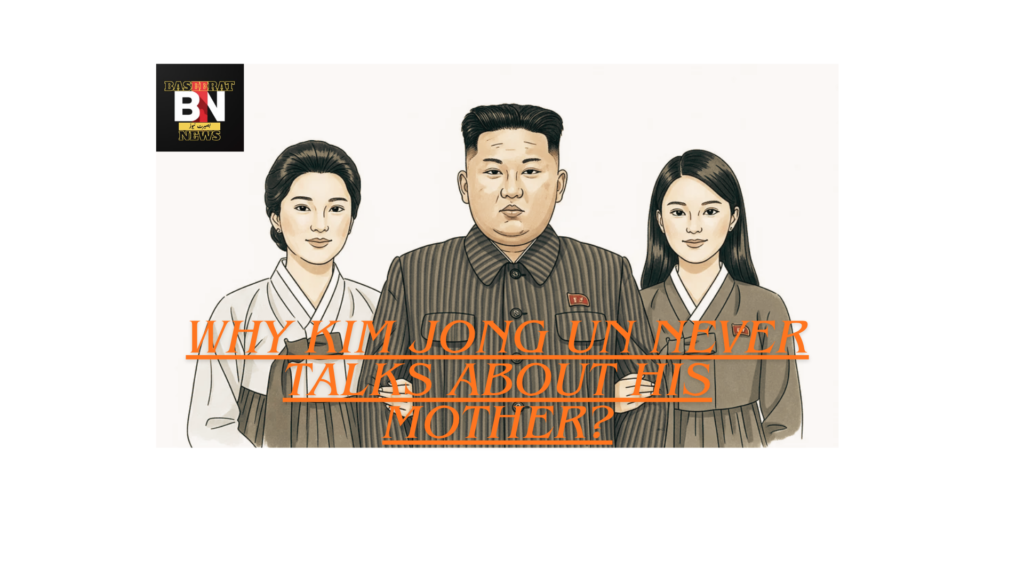
Why Kim Jong Un never talks about his mother?
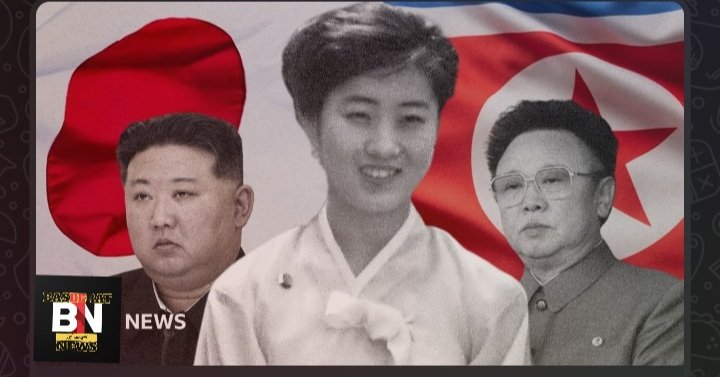
Kim Jong Un — the all-powerful ruler of North Korea — has never once publicly spoken his mother’s name. The reason? Her story is a truth so dangerous it could shake the very foundation of his dynasty.
North Korea is a country where everything is controlled — the news, the thoughts of its people, the pages of history, and even the stories of its ruling family. But buried beneath decades of state propaganda lies one secret that towers above all others: Who was Kim Jong Un’s mother? Why does he never mention her? And what was so explosive about her bloodline that an entire government has gone to extraordinary lengths to hide it?
This is not merely a family story. This is the story of a regime built on lies — and the one truth that could bring it all crashing down.
Ko Yong Hui: The Name That Must Never Be Spoken
Kim Jong Un’s mother was named **Ko Yong Hui**. But inside North Korea, that name has never been uttered in public. Instead, she is referred to only by state-approved titles — “Great Mother,” “Mother of Pyongyang,” and “The Respected Mother Who Is the Most Faithful Subject to the Dear Leader.” Her actual name remains a classified state secret to this day.
Ko Yong Hui was born on June 26, 1952, in **Osaka, Japan** — a detail that alone makes her identity politically toxic in a country that has built its entire ideology on hatred of Japanese colonialism. Her father, Ko Gyon-tek, was a Zainichi Korean — an ethnic Korean living in Japan — who worked in a sewing factory run by Japan’s wartime ministry. He later became involved in smuggling, and to escape arrest, he relocated his entire family to North Korea in 1961 or 1962 under a mass repatriation program deceptively called the “Paradise on Earth” campaign.
From the very beginning, Ko Yong Hui’s origins were a liability. Born on enemy soil, raised in a family tainted by both Japanese association and criminal activity, she was the last person anyone would have imagined becoming the mother of North Korea’s supreme leader.
The Dancer Who Captivated a Dictator
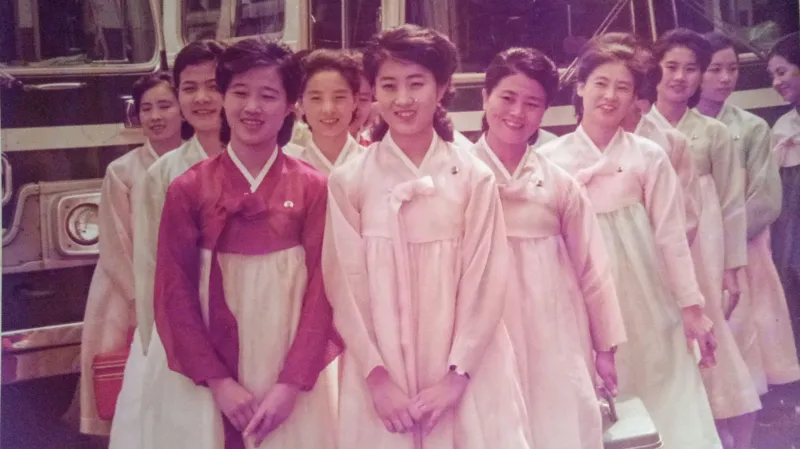
As a young woman, Ko Yong Hui joined the prestigious **Mansudae Art Troupe** in Pyongyang — an elite state-sponsored performing arts group known for producing North Korea’s finest dancers and entertainers. She was beautiful, graceful, and immensely talented. And it was here, around 1972, that she first caught the eye of **Kim Jong Il**.
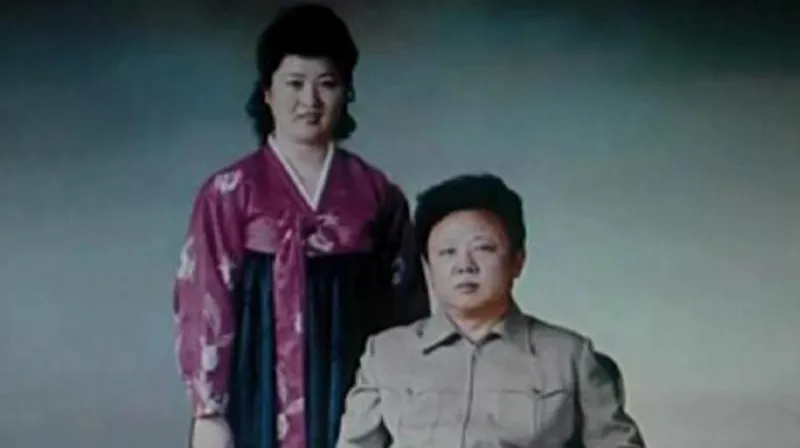
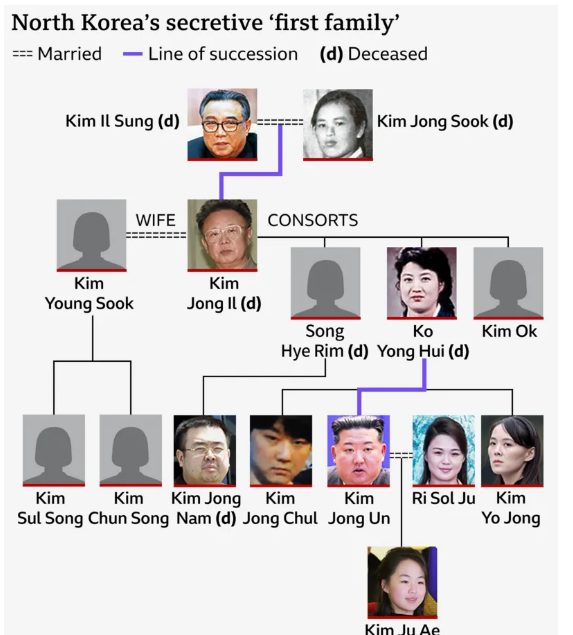
At the time, Kim Jong Il was being groomed as the successor to his father, Kim Il Sung. He was already married to Kim Young-suk, the daughter of a senior military official — a union arranged to strengthen political alliances. He also had other mistresses. But Ko Yong Hui was different. According to Japanese journalist Yoji Gomi, who authored a detailed biography of Ko published in 2025, Kim Jong Il was completely captivated by her beauty and charm. He fell deeply in love and eventually made her his de facto First Lady — though she was never officially acknowledged as such.
Ko Yong Hui bore Kim Jong Il three children:
– **Kim Jong Chul** (1981) — their eldest son, who remained politically inactive and showed little interest in leadership
– **Kim Jong Un** (1982 or 1983) — today’s supreme leader of North Korea
– **Kim Yo Jong** (1987) — their youngest daughter, now widely regarded as one of the most dangerous and influential women in the world
Songbun: North Korea’s Hidden Caste System
To understand why Ko Yong Hui’s identity is such a threat, one must understand **Songbun** — North Korea’s rigid social classification system. Under Songbun, every citizen is assigned a class based on their family background and perceived loyalty to the state. Those labeled as “hostile class” — anyone with ties to Japan, South Korea, or deemed ideologically impure — face severe discrimination. They are denied access to elite universities, banned from high-ranking military or government positions, and subjected to constant surveillance.
Ko Yong Hui fell squarely into the lowest possible category. Her birth in Japan, her father’s work for Japan’s wartime military apparatus, and his history as a smuggler gave her what analysts describe as “the lowest imaginable status qualities” under the Songbun system.
The term used for such people in North Korea is **jjaepo** — those considered “tainted” by foreign or ideologically dangerous influences. The idea that the son of a jjaepo could rise to become the supreme leader of North Korea is not just embarrassing to the regime — it is existentially threatening to its entire foundation of legitimacy.
The Paektu Bloodline: A Sacred Myth Under Threat
At the heart of North Korea’s ruling ideology lies a single sacred symbol — **Mount Paektu**, a volcanic mountain straddling the border between North Korea and China. According to state mythology, it was on the slopes of this mountain that Kim Il Sung, the founding father of North Korea, led his guerrilla fighters against Japanese occupation. State propaganda also insists that Kim Jong Il was born in a log cabin on these same sacred slopes — though Western historians believe he was actually born in a Soviet military camp in Russia.
From this myth, the Kim dynasty constructed what it calls the **Paektu Bloodline** — a sacred, unbroken lineage of revolutionary purity stretching from Kim Il Sung down to Kim Jong Un. This bloodline is the single most important source of the regime’s legitimacy. It declares the Kim family to be pure, untouchable, chosen by destiny to rule.
Now consider what happens if the world learns that Kim Jong Un’s mother was born in Osaka, that her father was a smuggler who fled North Korea’s justice, and that she herself was classified as a member of the “hostile class” under North Korea’s own laws. The entire Paektu myth collapses. The sacred bloodline is revealed as fiction. The dynasty’s claim to power crumbles.
This is why Ko Yong Hui’s name is a state secret.
A Mother’s Love, A Dictator’s Silence
Despite the political dangers her identity posed, by all accounts Kim Jong Un genuinely loved his mother. Defector testimonies and intelligence reports suggest Ko Yong Hui was a warm and devoted parent. She reportedly taught her children Japanese songs and exposed them to both Korean and Japanese culture during their upbringing. Her younger sister, Ko Yong Suk, even traveled to Switzerland to help raise young Kim Jong Un during his school years there — though she later sought asylum in the United States, causing yet another diplomatic embarrassment for Pyongyang.
Ko Yong Hui’s final years were marked by suffering. Diagnosed with breast cancer in the late 1990s, she delayed seeking treatment, reportedly because the political tensions surrounding the question of succession made it dangerous to appear weak or absent. By the time she traveled to Paris for medical care in the spring of 2004, it was too late. She died on August 13, 2004, at the age of just 51.
Kim Jong Un built a grave for his mother at Mount Taesong in 2012 — one of the only public acknowledgements of her existence that the regime has ever allowed.
A New Book, A New Storm
In 2025, Japanese journalist **Yoji Gomi** published a landmark biography titled *Ko Yong-hui: The Zainichi Korean Who Became Kim Jong-un’s Mother*. Drawing on interviews with Ko’s surviving relatives still living in Japan, the book revealed explosive new details about her background — details that Pyongyang would have much preferred to keep buried.
The book confirms that Ko’s father was not simply a factory worker but an active smuggler who dealt in illegal Japanese goods and fled to North Korea specifically to escape criminal prosecution. This revelation deals a double blow to North Korean propaganda. For decades, the regime has portrayed Zainichi Koreans who relocated to North Korea as patriotic heroes returning to the motherland. Ko’s father’s story exposes that narrative as a convenient fiction.
North Korea had quietly produced a state documentary in 2011 titled *Mother of Great Songun Korea*, in which Ko was portrayed in near-revolutionary terms — styled after the revered Kim Jong Suk, the legendary first wife of Kim Il Sung. But as foreign journalists began tracing Ko’s real background following the documentary’s release, the film was quietly pulled from state archives and has not been seen since.
A North Korean defector-turned-researcher told Radio Free Asia: “The regime fears even a small crack in the illusion of revolutionary purity.”
Kim Jong Un’s Strategy: Silence, Censorship, and a Clean Facade
Kim Jong Un has taken deliberate steps to ensure his mother’s identity remains buried:
**First**, her name remains officially classified inside North Korea. Only honorary titles are permitted in any reference to her.
**Second**, analysts believe the shocking 2013 **execution of Jang Song Thaek** — Kim’s own uncle and one of the most powerful men in the country — was partly driven by old family grievances. According to defector accounts, Jang had actively blocked Ko Yong Hui from gaining recognition and acceptance within the Kim family hierarchy during the 1980s and 1990s. Kim Jong Un reportedly settled that score decisively.
**Third**, Kim has deliberately constructed a carefully polished public image around his wife, **Ri Sol Ju**. Unlike his mother, Ri comes from a respectable, upper-middle-class Pyongyang family and received formal classical singing training in China — giving her an impeccable Songbun record. By prominently featuring Ri Sol Ju at military parades, state banquets, and public ceremonies alongside their daughter, Kim is projecting an image of wholesome family stability that his own childhood lacked — and laying the groundwork for an untainted lineage for his successors.
The Last Chapter: A Woman Erased by History
Ko Yong Hui’s story is not just the story of one woman — it is the story of a truth that an entire government chose to bury. She was the de facto First Lady of one of the world’s most secretive nations, yet she was never officially acknowledged. She raised three children, one of whom became one of the most feared rulers on earth, another who became arguably the most dangerous woman in global politics, and one who quietly faded from the picture altogether.
She lived only 51 years. She was born in Japan, raised in Pyongyang, loved by a dictator, and died alone in Paris — then erased from the official record of the nation her son now rules with an iron fist.
Her grave sits on Mount Taesong. Her name is never spoken in the country she once called home. And Kim Jong Un — the man who threatens the world with nuclear weapons — has never found the courage to say it aloud.
Because some truths are so dangerous that even dictators are afraid of them.
*Sources: BBC, Wikipedia, South China Morning Post, WION News, Crossing Borders NK, Athens Times, BelleNews*