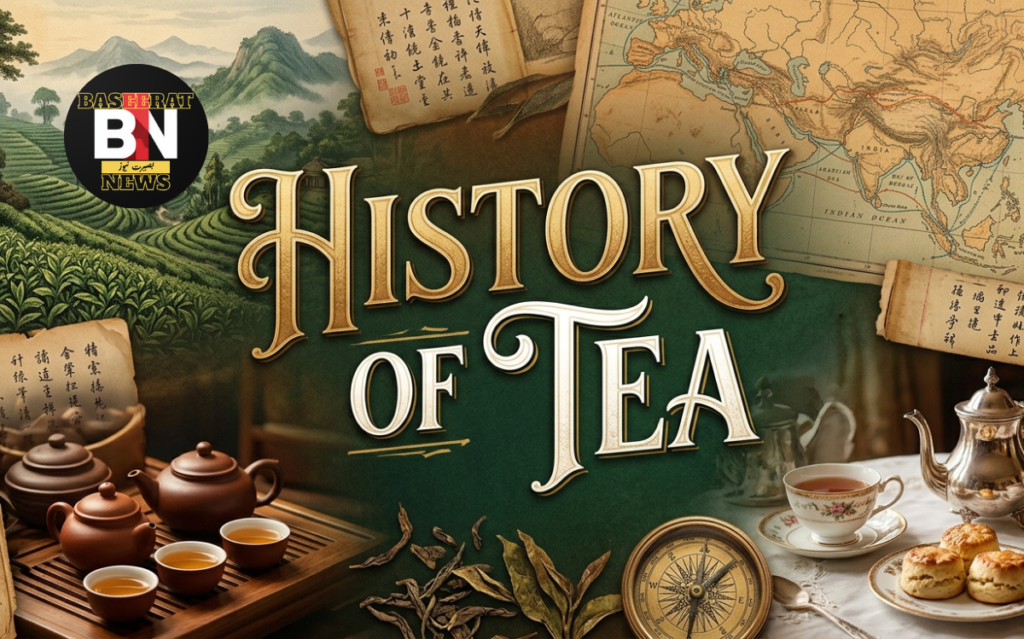
History of Tea — From Ancient China to the Modern World
Introduction
Today, tea is one of the most consumed drinks on Earth. From the crowded streets of London to the mountain villages of China, from Japanese tea rooms to South Asian homes, billions of people begin their day with a warm cup of tea. Some drink it for energy, some for comfort, while others enjoy it as part of tradition and culture. Yet behind this simple beverage lies a history stretching back thousands of years.
The story of tea is not just about leaves boiled in water. It is a story of emperors, monks, traders, explorers, and entire empires. Tea influenced international trade routes, inspired political revolutions, and shaped social customs across continents. Over centuries, tea transformed from a medicinal herb in ancient China into a global cultural phenomenon.
Historians believe tea was first discovered in China nearly 5,000 years ago. According to legend, the Chinese emperor Shennong accidentally discovered tea when leaves from a wild tree drifted into his pot of boiling water. What began as a chance discovery slowly evolved into one of humanity’s most beloved beverages.
As tea spread across Asia, it became connected to spirituality, meditation, and healing. Buddhist monks carried tea traditions to Japan and Korea, where tea ceremonies later became symbols of discipline and elegance. In Europe, tea became a luxury product for royal families and wealthy merchants before eventually becoming a daily necessity for millions.
The history of tea also includes stories of colonial expansion, economic power, and political resistance. The rise of the British tea trade changed world commerce forever and even contributed to famous historical events like the Boston Tea Party.
Today, tea exists in countless forms — black tea, green tea, herbal tea, matcha, bubble tea, and more. Despite modern innovation, the ancient roots of tea culture remain alive. Every cup still carries echoes of its extraordinary journey through history.
1. The Discovery of Tea in Ancient China
The origins of tea begin deep within the ancient landscapes of China. Long before tea became a commercial product or a social tradition, it was valued as a medicinal plant. Chinese legends trace the discovery of tea back to around 2737 BCE during the reign of Emperor Shennong, a legendary ruler known for studying herbs and agriculture.
According to the famous story, Shennong believed that boiling drinking water helped protect health and prevent disease. One afternoon, while resting beneath a wild tree, several leaves drifted into his pot of hot water. Curious about the aroma, he tasted the liquid and found it refreshing and energizing. That accidental moment is widely celebrated as the birth of tea.
Although historians cannot fully verify the legend, archaeological evidence confirms that tea plants were used in ancient China thousands of years ago. Early Chinese communities initially consumed tea as medicine rather than a recreational beverage. Ancient herbal healers believed tea could improve digestion, increase alertness, remove toxins from the body, and support overall health.
In the beginning, tea preparation was very different from modern brewing methods. Early tea leaves were often crushed, boiled with herbs, spices, and sometimes even vegetables. Tea was closer to a medicinal soup than the refined drink people know today.
Tea gradually became associated with philosophy and balance in Chinese culture. Ancient Chinese medicine focused heavily on harmony within the body, and tea was viewed as a natural substance capable of restoring energy and mental clarity. This connection between tea and wellness would remain important throughout history.
As Chinese civilization expanded, tea cultivation also developed. Farmers began growing tea plants intentionally rather than harvesting only wild leaves. Regions with humid mountains and fertile soil became ideal locations for tea farming. Southern China, especially mountainous areas, emerged as the center of tea production.
By the time early Chinese dynasties rose to power, tea had already become deeply woven into daily life. What started as an herbal remedy slowly evolved into an important social and cultural tradition that would eventually influence the entire world.
2. Tea During Chinese Dynasties
Tea culture flourished during the great dynasties of ancient China. Over centuries, tea evolved from a medicinal drink into an art form connected to philosophy, social life, literature, and spirituality. Different dynasties introduced new methods of preparing and consuming tea, helping shape tea traditions that still exist today.
The Tang Dynasty
During the Tang Dynasty (618–907 CE), tea became enormously popular across China. Historians often describe this period as the golden age of Chinese tea culture. Tea houses appeared in cities, merchants traded tea across regions, and poets celebrated tea in literature.
One important figure during this era was Lu Yu, author of The Classic of Tea, considered the world’s first book dedicated entirely to tea. His writings explained tea preparation, cultivation, utensils, and drinking customs. Lu Yu elevated tea from an ordinary beverage into a respected cultural practice.
Tea bricks were common during the Tang period. Tea leaves were compressed into solid blocks, then ground into powder and boiled with water. This method made transportation easier and allowed tea to spread through trade routes.
The Song Dynasty
The Song Dynasty (960–1279 CE) introduced even greater sophistication to tea culture. During this period, powdered tea became highly fashionable among scholars and elites.
Tea preparation turned into a refined ceremony involving careful whisking techniques, elegant bowls, and artistic presentation. Competitions were held where participants judged the quality, foam texture, and appearance of tea.
Buddhist monks also played a major role during this era. Tea was valued for helping monks remain awake during long meditation sessions. The connection between tea and spiritual discipline became especially important in East Asia.
The Ming Dynasty
The Ming Dynasty (1368–1644 CE) transformed tea culture once again. Instead of powdered tea, loose-leaf tea became popular. This major shift changed brewing methods permanently.
People began steeping whole leaves directly in hot water, much closer to modern tea preparation. Teapots made from fine clay also became fashionable, particularly in regions famous for pottery craftsmanship.
The Ming period helped establish many tea styles still consumed today, including green tea and black tea varieties. Tea drinking became deeply connected to hospitality, family gatherings, intellectual discussions, and relaxation.
By the end of the Ming Dynasty, tea had already become one of China’s most valuable cultural exports. Traders and travelers carried tea traditions beyond China’s borders, beginning a new chapter in global tea history.
3. Tea Spreads Across Asia
As Chinese civilization expanded through trade and cultural exchange, tea slowly spread across Asia. Monks, merchants, and travelers introduced tea to neighboring regions, where local cultures adapted it into their own traditions and lifestyles.
One of the earliest countries to adopt tea culture was Japan. Buddhist monks traveling between China and Japan brought tea seeds and preparation methods during the early medieval period. Tea quickly became associated with Zen Buddhism because monks believed it improved concentration during meditation.
Over time, Japan developed one of the world’s most famous tea traditions: the Japanese tea ceremony. Known for discipline, simplicity, and spiritual symbolism, these ceremonies emphasized harmony, respect, purity, and tranquility. Powdered green tea, later called Matcha, became central to Japanese tea culture.
Tea also spread into Korea, where it became connected to religious rituals and royal ceremonies. Korean tea culture focused on natural simplicity and peaceful social interaction. Tea drinking was viewed as a calm and respectful activity that encouraged reflection and balance.
In Tibet, tea evolved differently because of the region’s harsh climate and unique lifestyle. Tibetan people mixed tea with butter and salt to create a rich, high-energy drink suitable for cold mountain environments. Butter tea became an essential part of daily survival and hospitality.
Tea eventually reached India as well. Although tea plants grew naturally in regions like Assam, tea drinking initially remained limited compared to China. Later, under British colonial influence, India would become one of the world’s largest tea producers.
Trade routes such as the Silk Road helped tea travel across mountains, deserts, and borders. Merchants transported tea bricks alongside silk, spices, and precious goods. In many regions, tea became so valuable that it was sometimes used as currency.
By spreading across Asia, tea transformed into far more than a beverage. It became connected to religion, diplomacy, social customs, and identity. Every culture adapted tea differently, creating unique traditions that still survive today.
4. Tea Arrives in Europe
Tea remained largely unknown in Europe for thousands of years. That changed during the 16th and 17th centuries when European explorers and traders began expanding maritime trade with Asia. As ships returned from the East carrying spices, silk, porcelain, and exotic goods, tea slowly entered European society.
Portuguese traders were among the first Europeans to encounter tea in China. Portuguese missionaries and merchants observed Chinese tea customs and introduced reports about the mysterious drink back to Europe. However, tea initially remained rare and expensive.
The Dutch later played a major role in bringing tea into European markets. During the early 1600s, Dutch merchant ships transported tea from Asia to ports across Europe. Wealthy families became fascinated by this foreign beverage from China.
At first, tea was considered a luxury product reserved only for aristocrats and royal households. Because imported tea was extremely expensive, drinking tea became a symbol of wealth and sophistication. Elegant tea sets, porcelain cups, and decorative teapots became fashionable among Europe’s upper classes.
Tea gained even greater popularity in England during the 17th century. The marriage of King Charles II to Portuguese princess Catherine of Braganza helped introduce tea culture into the English royal court. Catherine loved tea and regularly drank it, influencing aristocratic society to adopt the beverage.
Soon, tea drinking spread beyond royal circles into coffeehouses and public spaces. Merchants recognized tea’s economic potential, and demand continued to grow rapidly. Tea became associated with elegance, intelligence, and social interaction.
European consumers also began modifying tea traditions according to local tastes. The British added sugar and milk, creating a style that later became globally famous. Afternoon tea traditions eventually developed into an important part of British social culture.
As Europe’s appetite for tea increased, international competition for the tea trade intensified. Powerful trading companies emerged, seeking control over tea imports and production. This demand would eventually reshape global economics, colonial expansion, and international politics in dramatic ways.
5. The British Empire and the Tea Revolution
By the 18th century, tea had become far more than a fashionable drink in Britain. It transformed into a national obsession that influenced trade, politics, social customs, and even the expansion of the British Empire itself. No other country embraced tea with such passion, and no empire profited from it more aggressively.
When tea first arrived in Britain during the 1600s, it was extremely expensive. Only wealthy aristocrats could afford it. Elegant tea sets decorated royal homes, and drinking tea became a sign of status and sophistication. However, demand grew rapidly among all social classes. Merchants soon realized tea could become one of the most profitable commodities in Europe.
The powerful East India Company dominated much of the tea trade between Asia and Britain. The company imported massive quantities of tea from China and later controlled tea production in British colonies. Tea soon became central to the British economy.
One of Britain’s most famous cultural traditions, afternoon tea, began during the 19th century. Historians often credit Anna Russell with popularizing the custom. At the time, dinner was served very late in the evening, leaving a long gap between lunch and dinner. To satisfy hunger, Anna Russell began requesting tea along with light snacks during the afternoon. The tradition quickly spread among the upper-class society and later throughout Britain.
Afternoon tea eventually became an important social ritual. Families and friends gathered around teapots, sandwiches, pastries, and cakes. Tea rooms appeared across British cities, creating spaces for conversation and relaxation.
The British also changed the way tea was consumed. Unlike traditional Chinese tea preparation, British drinkers commonly added milk and sugar. Sugar plantations in the Caribbean supplied enormous amounts of sugar to Britain, linking tea consumption to colonial trade networks and the labor of enslaved workers. Tea with milk and sugar became deeply connected to British identity.
As tea consumption exploded, the British government imposed heavy taxes on tea imports. These taxes made tea extremely expensive for ordinary citizens. Smuggling became widespread, with illegal tea trade networks operating across Britain to avoid government taxation.
Despite high prices, British society developed what many historians describe as a tea addiction. People from nearly every class consumed tea daily. Factory workers drank tea for energy during long working hours, while wealthy elites used tea gatherings for social networking and business discussions.
Tea became so economically important that Britain eventually sought direct control over tea production rather than relying entirely on Chinese imports. This ambition later led to large tea plantations in India and other colonies.
By the 19th century, tea was no longer simply a drink. It had become part of Britain’s economy, culture, imperial expansion, and political power. Few products shaped the British Empire as deeply as tea.
6. The Boston Tea Party and American History
Tea also played a surprising role in the birth of the United States. During the 18th century, tensions between Britain and its American colonies increased over taxation and political control. Tea became one of the central symbols of that conflict.
The British government faced serious financial problems after years of war and imperial expansion. To raise money, Parliament introduced several taxes on the American colonies. Many colonists became angry because they had no direct representation in the British government. Their famous slogan became: “No taxation without representation.”
One major source of conflict was the Tea Act of 1773. This law allowed the East India Company to sell tea directly to the American colonies at reduced prices. Although the tea itself became cheaper, colonists viewed the act as another attempt by Britain to control colonial trade and enforce unfair taxation.
Many American merchants feared losing business because the East India Company received special advantages. Political activists also worried that accepting taxed tea would mean accepting Britain’s authority over the colonies.
Colonial resistance grew rapidly. Protest groups organized demonstrations, boycotts, and public meetings against British tea imports. The conflict eventually exploded in the city of Boston.
On the night of December 16, 1773, a group of colonists disguised themselves and boarded British ships carrying tea in Boston Harbor. They threw hundreds of tea chests into the water in protest against British taxation and imperial policies. This dramatic event became known as the Boston Tea Party.
The British government reacted harshly by introducing punitive laws known as the Intolerable Acts. Instead of calming tensions, these measures pushed the colonies even closer toward rebellion.
Historians consider the Boston Tea Party one of the major turning points leading to the American Revolution. Tea had evolved from a simple imported beverage into a political symbol of freedom, resistance, and independence.
Even today, the Boston Tea Party remains one of the most famous protests in American history. It demonstrates how deeply tea influenced not only culture and trade, but also revolutionary political movements that changed the modern world.
7. Tea Plantations and Colonial Expansion
As Britain’s demand for tea continued growing during the 19th century, relying entirely on Chinese tea imports became expensive and politically risky. British leaders wanted direct control over tea production. This ambition led to the creation of enormous tea plantations across British colonies, especially in India and Sri Lanka.
British explorers discovered that tea plants grew naturally in parts of Assam, a fertile region in northeastern India. The climate, rainfall, and mountainous terrain proved ideal for large-scale tea cultivation. Soon, British companies established commercial plantations throughout the region.
Assam tea became famous for its strong flavor, dark color, and rich aroma. It quickly gained popularity in Britain, especially as part of breakfast tea blends. Today, Assam remains one of the world’s most important tea-producing regions.
The British also developed tea plantations in Darjeeling, located in the Himalayan foothills. Darjeeling tea became known for its lighter taste and delicate floral aroma. Many tea experts still refer to it as the “champagne of teas.”
Tea cultivation expanded beyond India into Sri Lanka, which was then called Ceylon under British colonial rule. After coffee plantations in Ceylon were damaged by disease, British plantation owners shifted heavily toward tea production. Ceylon tea soon became another globally recognized product.
However, the expansion of tea plantations came with harsh realities. Colonial tea production relied heavily on exploited labor systems. Workers often faced dangerous conditions, extremely low wages, long working hours, and poor living environments.
Many laborers were transported from distant regions under difficult conditions. Entire communities became economically dependent on plantation systems controlled by colonial companies. Historians continue debating the social and economic consequences of these labor practices.
Tea plantations also transformed local landscapes. Forests were cleared to create massive agricultural estates, permanently changing environmental conditions in some regions.
Despite these challenges, colonial tea production dramatically increased global tea availability. What was once a luxury item for wealthy elites became affordable for ordinary people worldwide.
By the early 20th century, India and Sri Lanka had become major centers of international tea production. Even today, millions of people around the world drink teas originating from Assam, Darjeeling, and former colonial plantations.
8. Different Types of Tea and Their Origins
Although many people think different teas come from completely different plants, most traditional teas actually come from the same plant species: Camellia sinensis. The differences between tea varieties mainly depend on how the leaves are processed after harvesting.
Green Tea
Green Tea is one of the oldest forms of tea and remains especially popular in China and Japan. Green tea leaves are heated quickly after harvesting to prevent oxidation. This process helps preserve the leaves’ green color and fresh flavor.
For centuries, green tea has been associated with health, meditation, and traditional Asian culture. Japanese tea ceremonies often use powdered green tea known as matcha.
Black Tea
Black Tea became highly popular in Britain, India, and many Western countries. Unlike green tea, black tea undergoes full oxidation, which darkens the leaves and creates a stronger flavor.
Famous varieties include Assam tea, Darjeeling tea, and Ceylon tea. Black tea is commonly consumed with milk and sugar, especially in South Asia and Britain.
White Tea
White Tea is among the least processed tea varieties. Producers harvest young tea buds and dry them naturally with minimal handling.
White tea originated mainly in China and became known for its delicate flavor and light sweetness. Historically, it was sometimes reserved for emperors and nobility.
Oolong Tea
Oolong Tea falls between green tea and black tea in oxidation level. Originating in China and Taiwan, oolong tea is famous for its complex aroma and layered flavor profiles.
Traditional oolong preparation often involves multiple infusions, allowing drinkers to experience changing flavors from the same leaves.
Herbal Tea
Technically, herbal teas are not always true teas because they may not contain tea leaves from Camellia sinensis. Instead, they are made using herbs, flowers, fruits, or spices.
Popular herbal teas include chamomile, peppermint, hibiscus, and ginger tea. Many cultures historically used herbal infusions for relaxation, digestion, and healing purposes.
The incredible diversity of tea shows how one simple plant evolved into countless traditions, flavors, and cultural identities around the world.
9. Tea in Modern Culture
Tea remains deeply connected to modern life, but today’s tea culture is far more diverse and global than ever before. Traditional tea customs continue surviving alongside new trends, creative beverages, and international tea businesses.
One of the most influential modern tea trends is Bubble Tea, which originated in Taiwan during the 1980s. Bubble tea combines sweet milk tea with chewy tapioca pearls and colorful flavors. The drink rapidly spread across Asia, Europe, and North America, especially among younger generations.
Tea cafés specializing in bubble tea now operate in cities worldwide. Social media also helped popularize visually creative tea drinks featuring fruit syrups, layered colors, and unique toppings.
Meanwhile, Matcha has experienced enormous global popularity. Matcha is now used not only in tea ceremonies but also in desserts, smoothies, ice cream, and specialty coffee shops. Many consumers associate matcha with wellness, focus, and healthy living.
Modern tea culture is also closely linked to the global wellness industry. Many people drink tea for relaxation, stress reduction, digestion, and energy support. Herbal teas promoting sleep, detoxification, and immunity have become major products in health-focused markets.
Tea cafés have evolved into social spaces similar to coffee shops. Students work on laptops while drinking tea, friends gather for conversations, and travelers explore local tea traditions in urban tea lounges.
Economically, the global tea market is enormous. Countries such as China, India, Kenya, Sri Lanka, and Turkey produce millions of tons of tea annually. International trade networks distribute tea products to nearly every corner of the world.
Tea has also become part of modern cultural identity. In South Asia, chai remains central to hospitality and daily conversation. In Britain, afternoon tea traditions still attract tourists and locals alike. In East Asia, tea ceremonies continue to preserve ancient customs and philosophies.
Despite modern commercialization, tea still carries emotional and cultural meaning. For many people, tea represents comfort, connection, relaxation, and tradition — qualities that have survived for thousands of years.
10. Health Benefits of Tea Through History
Throughout history, people have believed tea offers important health benefits. Ancient Chinese healers originally used tea as medicine long before it became a social beverage. Even today, modern scientific research continues exploring tea’s possible effects on health and wellness.
In ancient China, tea was believed to improve digestion, cleanse the body, and increase mental alertness. Herbal doctors recommended tea for fatigue, headaches, and concentration. Buddhist monks often consumed tea during long meditation sessions because it helped them remain awake and focused.
Traditional Asian medicine also associated tea with balance and inner harmony. Different teas were believed to influence body temperature, energy flow, and emotional calmness.
Modern science has identified compounds in tea known as antioxidants, especially polyphenols and catechins. Researchers believe antioxidants may help protect cells from damage caused by free radicals. Green tea, in particular, has received significant scientific attention because of its high antioxidant content.
Tea also contains caffeine, though usually less than coffee. This moderate caffeine level can improve alertness and concentration without creating the intense stimulation some people experience from stronger caffeinated drinks.
Many people drink herbal teas for relaxation and digestion. Chamomile tea is commonly associated with better sleep, while peppermint tea is often used to support digestive comfort.
Studies have also explored tea’s potential connection to heart health, metabolism, and stress reduction. However, experts generally recommend moderation and balanced lifestyles rather than viewing tea as a miracle cure.
One reason tea remained popular for thousands of years is its emotional effect. Drinking tea often creates moments of calm in busy lives. Whether shared socially or enjoyed alone, tea encourages people to slow down, reflect, and relax.
From ancient herbal medicine to modern wellness culture, tea has always represented more than flavor alone. Its connection to health and balance remains one of the strongest reasons for its lasting global popularity.
Historical Timeline of Tea
| Year | Event |
| 2737 BCE | Tea was discovered in ancient China |
| 618 CE | Tea culture flourishes during the Tang Dynasty |
| 800 CE | Tea spreads to Japan through Buddhist monks |
| 1600s | Tea reaches Europe through traders |
| 1660s | Tea becomes fashionable in Britain |
| 1773 | The Boston Tea Party took place |
| 1800s | British tea plantations expand in India |
| 1867 | Tea production grows rapidly in Sri Lanka |
| 1980s | Bubble tea was invented in Taiwan |
| Modern Era | Tea becomes a global cultural and wellness industry |
Conclusion
For thousands of years, tea has traveled across mountains, oceans, empires, and civilizations. What began as a legendary discovery in ancient China slowly transformed into one of humanity’s most influential beverages. Along the way, tea shaped trade routes, inspired religious rituals, fueled colonial economies, and even contributed to political revolutions.
The history of Tea is ultimately a story about human connection. Different cultures adopted tea in unique ways, yet the drink continued bringing people together across borders and generations. From Japanese tea ceremonies to British afternoon tea, from Indian chai stalls to modern tea cafés, tea became a shared global experience.
Even in today’s fast-moving world, tea still creates moments of calm and conversation. Families gather around teapots, friends meet over warm cups, and individuals pause their busy routines for a brief sense of comfort. Ancient traditions remain alive within these simple daily rituals.
Tea also reflects the complexity of history itself. Behind every cup lies a journey involving culture, commerce, religion, exploration, labor, and innovation. The rise of tea influenced economies and empires, but it also shaped personal habits and emotional traditions that continue today.
Modern tea culture keeps evolving through wellness trends, bubble tea shops, and global experimentation with flavors. Yet despite all these changes, the essence of tea remains remarkably timeless.
A single leaf, once drifting into hot water thousands of years ago, eventually connected the world in ways no one could have imagined. That extraordinary journey is why tea remains far more than a drink — it is a living piece of human history.
Top 30 FAQs About Tea
1. Who discovered tea first?
According to Chinese legend, tea was discovered by Emperor Shennong around 2737 BCE when tea leaves accidentally fell into boiling water.
2. Which country is the birthplace of tea?
China is widely considered the birthplace of tea.
3. What plant does tea come from?
Most traditional teas come from the plant Camellia sinensis.
4. What are the main types of tea?
The main types are:
- Green tea
- Black tea
- White tea
- Oolong tea
- Pu-erh tea
5. Is herbal tea real tea?
Herbal teas are technically herbal infusions because many do not contain actual tea leaves from Camellia sinensis.
6. Why did tea become popular in Britain?
Tea became popular because of royal influence, global trade, and the expansion of the British Empire.
7. What is afternoon tea?
Afternoon tea is a British tradition involving tea served with light snacks, sandwiches, and pastries during the afternoon.
8. What is the Boston Tea Party?
It was a political protest in 1773 where American colonists threw British tea into Boston Harbor to protest taxation.
9. Why was tea taxed in colonial America?
Britain taxed tea to generate revenue from the American colonies.
10. What is Matcha?
Matcha is a finely powdered Japanese green tea used in traditional tea ceremonies.
11. What is Bubble Tea?
Bubble tea is a Taiwanese tea-based drink usually made with milk tea and chewy tapioca pearls.
12. Which country drinks the most tea?
Countries like Turkey, China, India, and the United Kingdom are among the world’s largest tea consumers.
13. Is tea older than coffee?
Yes, tea has been consumed for thousands of years before coffee became globally popular.
14. Why do people add milk to tea?
Milk softens the strong flavor of black tea and becomes especially popular in Britain and South Asia.
15. Does tea contain caffeine?
Yes, most traditional teas contain caffeine, though usually less than coffee.
16. What is green tea famous for?
Green tea is known for its antioxidants and association with health and wellness.
17. What is Assam tea?
Assam tea is a strong black tea grown in Assam.
18. Why is Darjeeling tea special?
Darjeeling tea is famous for its delicate aroma and unique flavor.
19. What role did monks play in tea history?
Buddhist monks helped spread tea culture across Asia and used tea during meditation.
20. Is tea good for digestion?
Many people believe tea supports digestion, especially herbal teas like peppermint and ginger tea.
21. What are antioxidants in tea?
Antioxidants are natural compounds that may help protect body cells from damage.
22. Which tea is strongest in flavor?
Black tea is generally stronger and bolder in flavor compared to green or white tea.
23. Why was tea expensive in Europe?
Tea was imported from Asia and heavily taxed, making it a luxury product in early Europe.
24. What is the East India Company?
It was a powerful British trading company that controlled much of the tea trade during the colonial era.
25. How did tea spread around the world?
Tea spread through trade routes, colonial expansion, merchants, and cultural exchange.
26. What is white tea?
White tea is a lightly processed tea made from young tea buds and leaves.
27. Can tea help with relaxation?
Many people drink tea to relax, especially herbal teas such as chamomile.
28. Why is tea culturally important?
Tea represents hospitality, social connection, tradition, and cultural identity in many societies.
29. What is the healthiest type of tea?
Many experts consider green tea among the healthiest because of its high antioxidant content.
30. Why has tea remained popular for thousands of years?
Tea combines flavor, tradition, health benefits, comfort, and social connection, making it timeless across generations and cultures.