History of Dinosaurs: Complete Evolution and Extinction Timeline
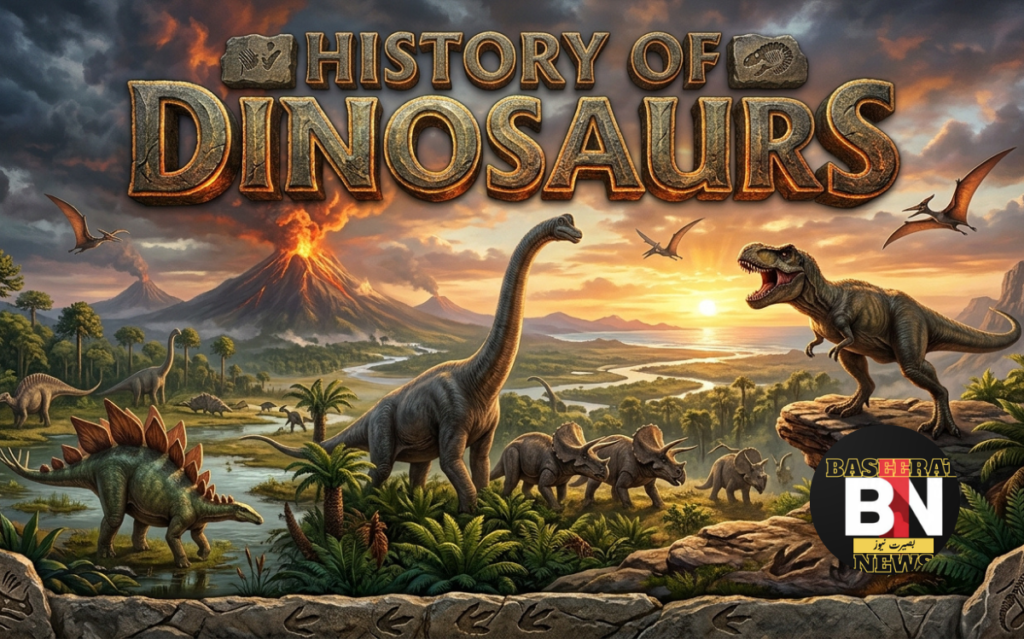
Long before humans built cities, crossed oceans, or even existed, gigantic creatures ruled the Earth. Towering predators walked through dense prehistoric forests, while massive plant-eating giants shook the ground beneath their enormous feet. For more than 160 million years, dinosaurs dominated nearly every corner of the planet, surviving changing climates, volcanic disasters, and fierce competition.
Some dinosaurs were larger than modern buildings, while others were no bigger than birds. Certain species hunted in packs with terrifying precision, while peaceful herbivores spent their lives feeding on ancient plants across endless landscapes. Their world was filled with swamps, giant insects, active volcanoes, and oceans unlike anything seen today.
Then, almost suddenly in geological history, these mighty creatures disappeared.
The extinction of dinosaurs remains one of the greatest mysteries in science. What could destroy animals powerful enough to dominate Earth for millions of years? Was it a massive asteroid, violent volcanic eruptions, climate change, or something even more catastrophic?
Today, fossils hidden beneath deserts, mountains, and cliffs continue revealing the forgotten story of Earth’s prehistoric rulers. Every discovery helps scientists understand how dinosaurs evolved, lived, hunted, and eventually vanished from the planet.
The history of dinosaurs is not only a story about ancient creatures. It is also the story of Earth itself — a planet constantly changing over time, evolving, surviving, and extinguishing.
Introduction
The history of dinosaurs is one of the most fascinating chapters in Earth’s past. These incredible creatures ruled the planet for more than 160 million years, making them among the most successful animals ever to exist. From small feathered hunters to gigantic long-necked herbivores, dinosaurs evolved into hundreds of species that adapted to forests, deserts, plains, and coastal environments across the prehistoric world.
Dinosaurs first appeared during the Triassic Period around 230 million years ago. At that time, Earth looked completely different from today. The continents were connected into a giant supercontinent called Pangaea, and the climate was much hotter and drier. Early dinosaurs were relatively small creatures struggling to survive among other ancient reptiles. However, over millions of years, they evolved into dominant animals that controlled land ecosystems throughout the Jurassic and Cretaceous periods.
What makes dinosaurs so fascinating is not only their massive size but also the mystery surrounding their lives and extinction. Some species developed sharp claws and powerful jaws for hunting, while others evolved horns, armor, and gigantic bodies for defense. Recent fossil discoveries even suggest that certain dinosaurs had feathers and may have behaved similarly to modern birds.
Scientists who study dinosaur fossils are known as paleontologists. Through fossil excavations and modern technology, researchers continue to uncover new dinosaur species every year. Fossils provide valuable evidence about how these creatures lived, hunted, reproduced, and interacted with their environment millions of years ago.
Perhaps the biggest mystery in dinosaur history is their extinction. Around 66 million years ago, most dinosaur species disappeared during a catastrophic event that changed life on Earth forever. Despite their extinction, dinosaurs continue to capture human imagination through museums, documentaries, scientific research, and popular movies.
The story of dinosaurs is ultimately a story of evolution, survival, and the dramatic changes that shaped our planet over millions of years.
What Are Dinosaurs?
Dinosaurs were a group of ancient reptiles that lived during the Mesozoic Era, often called the “Age of Dinosaurs.” They first appeared around 230 million years ago and became the dominant land animals on Earth for an incredibly long period of time. Unlike many prehistoric creatures that disappeared quickly, dinosaurs survived environmental changes and evolved into a wide variety of species before their extinction.
The word “dinosaur” comes from Greek terms meaning “terrible lizard.” However, dinosaurs were far more complex than giant reptiles. They existed in many different forms, sizes, and behaviors. Some dinosaurs were enormous herbivores with long necks and massive bodies, while others were fast-moving carnivores designed for hunting. Certain species were smaller than modern chickens, proving that dinosaurs were not always gigantic monsters.
Dinosaurs are scientifically separated into two main groups based on hip structure: saurischians and ornithischians. Saurischians included meat-eating predators and giant long-necked dinosaurs, while ornithischians mainly consisted of plant-eating species with defensive adaptations such as horns and armored plates.
One of the most surprising discoveries in modern paleontology is the connection between dinosaurs and birds. Fossil evidence shows that many dinosaurs had feathers long before modern birds evolved. Scientists now believe that birds are direct descendants of certain dinosaur groups. This discovery completely changed humanity’s understanding of dinosaur evolution.
Dinosaurs lived in environments very different from today’s world. Ancient Earth contained enormous forests, giant ferns, active volcanoes, shallow seas, and warm climates. Oxygen levels and ecosystems also differed greatly from modern conditions, allowing some dinosaurs to grow to extraordinary sizes.
Fossils are the primary reason scientists understand dinosaurs today. Fossils form when bones, footprints, eggs, or even skin impressions become preserved in rock over millions of years. Paleontologists study these remains to learn how dinosaurs moved, hunted, reproduced, and evolved.
Interestingly, dinosaurs were not the only prehistoric reptiles alive during the Mesozoic Era. Flying reptiles such as pterosaurs and marine reptiles like mosasaurs lived alongside them, although they were not technically true dinosaurs.
Today, dinosaurs remain symbols of mystery, power, and evolution. Their fossils continue to reveal new information about Earth’s ancient ecosystems and the incredible diversity of life that once existed millions of years before humans appeared.
Origin of Dinosaurs
The origin of dinosaurs began during the Triassic Period, roughly 230 million years ago, after one of the deadliest extinction events in Earth’s history. Before dinosaurs appeared, the planet was dominated by other reptile species struggling to survive in a harsh and unstable environment. Massive volcanic eruptions, climate changes, and ecological disasters had wiped out many forms of life, creating opportunities for new species to evolve.
At that time, all major continents were joined together in a giant landmass called Pangaea. This supercontinent stretched across much of the planet and created extreme climates. Large deserts covered enormous regions, while temperatures were often hot and dry. Seasonal weather changes could be intense, making survival difficult for many ancient animals.
Early dinosaurs evolved from reptile ancestors known as archosaurs. These reptiles possessed characteristics that later helped dinosaurs become dominant creatures. Strong legs, upright posture, and improved mobility allowed early dinosaur species to move more efficiently than many competing reptiles.
Some of the earliest known dinosaurs include Eoraptor and Herrerasaurus. These dinosaurs were relatively small compared to the gigantic species that appeared later during the Jurassic Period. Early dinosaurs likely hunted insects and small animals while trying to survive among larger predators.
Scientists still debate which species should officially be considered the first true dinosaur. Fossil discoveries continue changing scientific theories about dinosaur origins and evolution. Each new excavation provides additional clues about how these animals developed and adapted to prehistoric environments.
One reason dinosaurs became successful was their ability to evolve quickly. Their strong limbs and active movement gave them advantages over slower reptile species. Over millions of years, dinosaurs spread across different ecosystems and gradually became dominant land animals.
Climate also played an important role in dinosaur evolution. As environments changed, dinosaurs adapted into different forms. Some species became giant herbivores capable of reaching vegetation high above the ground, while others evolved into fast and intelligent predators.
The rise of dinosaurs was not immediate. For millions of years, they existed alongside many competing reptiles before eventually dominating Earth’s ecosystems. Their success demonstrates how evolution and environmental change can transform small species into rulers of an entire planet.
The origin of dinosaurs marks the beginning of one of the most extraordinary periods in natural history — a time when prehistoric giants shaped Earth’s ecosystems for millions of years.
Dinosaur Timeline and Geological Periods
The history of dinosaurs is divided into three major geological periods: the Triassic, Jurassic, and Cretaceous periods. Together, these eras form the Mesozoic Era, commonly known as the “Age of Dinosaurs.” Each period featured dramatic environmental changes, new dinosaur species, and important evolutionary developments that shaped prehistoric life on Earth.
Triassic Period
The Triassic Period began around 252 million years ago, shortly after Earth experienced the largest mass extinction event in its history. Much of the planet was dry, hot, and unstable. Volcanoes were active across many regions, and deserts covered huge parts of the supercontinent Pangaea.
During this difficult period, the first dinosaurs appeared. Early dinosaur species were generally small and lightweight compared to later giants. They lived alongside many other reptiles and faced intense competition for survival.
Dinosaurs during the Triassic were not yet dominant creatures. Instead, they represented only a small part of Earth’s ecosystems. However, their upright posture, strong legs, and active movement gave them advantages that slowly helped them spread across prehistoric environments.
Scientists believe that repeated environmental changes during the Triassic Period eliminated many competing species, allowing dinosaurs to evolve and expand more successfully over time.
Jurassic Period
The Jurassic Period began around 201 million years ago and marked the true rise of dinosaurs. During this era, Earth’s climate became warmer and wetter, creating enormous forests filled with ferns and ancient plants. The breakup of Pangaea also began during this time, slowly separating the continents.
This period witnessed the appearance of some of the largest dinosaurs in history. Massive herbivores such as Brachiosaurus evolved long necks that allowed them to feed on tall vegetation high above the ground.
At the same time, predators grew larger and more powerful. Dinosaurs became the dominant land animals across much of the world. Ancient forests echoed with the sounds of giant creatures moving through thick vegetation.
Another famous Jurassic dinosaur was Stegosaurus, known for the large plates along its back and spikes on its tail. These defensive features helped protect it from predators.
The Jurassic Period also saw important evolutionary developments, including the rise of feathered dinosaurs and early bird ancestors. Fossil evidence suggests that some species became faster, smarter, and more socially complex during this era.
Cretaceous Period
The Cretaceous Period began around 145 million years ago and became the final chapter in dinosaur history. During this time, dinosaur diversity reached its highest point. New plant species, including flowering plants, spread across the planet and transformed prehistoric ecosystems.
Some of the most famous dinosaurs lived during the Cretaceous Period. Among them was Tyrannosaurus rex, one of the largest and most powerful predators ever discovered. With enormous jaws and crushing bite force, it became an iconic symbol of prehistoric power.
Another well-known species was Triceratops, recognized for its three horns and large protective frill. These features likely helped defend against predators and compete with rivals.
The Cretaceous world was rich with biodiversity. Dinosaurs adapted to forests, coastal regions, plains, and swamp environments across the globe. Some species became highly specialized hunters, while others evolved defensive armor, spikes, or enormous body sizes.
However, this period also ended in disaster. Around 66 million years ago, a catastrophic extinction event wiped out most dinosaur species. Scientists believe a massive asteroid impact near present-day Mexico caused devastating environmental changes that blocked sunlight, destroyed ecosystems, and collapsed food chains worldwide.
This extinction event marked the end of the Age of Dinosaurs and opened the way for mammals to eventually dominate Earth. Despite their disappearance, dinosaurs left behind fossils that continue to reveal the extraordinary story of their evolution, dominance, and extinction millions of years later.
Types of Dinosaurs
Dinosaurs evolved into hundreds of different species during the Mesozoic Era. Some were enormous plant-eaters that peacefully roamed prehistoric forests, while others became terrifying predators capable of hunting massive prey. Over millions of years, dinosaurs adapted to different climates, food sources, and environments, creating one of the most diverse groups of animals in Earth’s history.
Scientists generally divide dinosaurs into two major categories based on diet: herbivores and carnivores. However, many dinosaur species also developed unique survival features such as armor, horns, feathers, and specialized hunting abilities.
Herbivorous Dinosaurs
Herbivorous dinosaurs were plant-eating species that survived on leaves, ferns, shrubs, and ancient trees. Many herbivores evolved enormous body sizes because large stomachs helped them digest tough prehistoric vegetation more efficiently.
One of the most famous herbivores was Brachiosaurus. This gigantic dinosaur used its extremely long neck to reach vegetation high above the ground. Its massive size also protected it from many predators.
Another well-known herbivore was Triceratops. It possessed three sharp horns and a large bony frill around its neck. Scientists believe these features helped defend against predators and may also have been used during battles with rival dinosaurs.
Some herbivorous dinosaurs developed armor for protection. Ankylosaurus had thick armored plates covering its body and a powerful club-like tail that could injure attacking predators.
These giant herbivores often traveled in groups for protection, much like modern elephants or buffalo herds. Their enormous presence shaped prehistoric ecosystems by controlling plant growth across vast regions.
Carnivorous Dinosaurs
Carnivorous dinosaurs were meat-eating predators that hunted other animals for survival. They evolved sharp teeth, strong legs, and powerful jaws that made them deadly hunters.
The most famous carnivore was undoubtedly Tyrannosaurus rex. With one of the strongest bite forces in animal history, T. rex dominated the late Cretaceous ecosystem. Its massive skull and sharp teeth allowed it to crush bone and attack large prey.
Another popular predator was Velociraptor. Unlike giant predators, Velociraptors were relatively small but highly intelligent and fast-moving hunters. Fossil evidence suggests they may have hunted in coordinated groups.
Some carnivores evolved unusual features for hunting. Spinosaurus possessed a crocodile-like snout and likely hunted fish in rivers and coastal areas. It was one of the largest meat-eating dinosaurs ever discovered.
Predatory dinosaurs played a major role in maintaining balance within prehistoric ecosystems. They controlled herbivore populations and forced prey species to develop stronger defenses over time.
Flying Reptiles
Although technically not true dinosaurs, flying reptiles known as pterosaurs lived alongside them during the Mesozoic Era. One famous species was Pteranodon.
These creatures used large wings to glide across ancient coastlines and oceans. Some pterosaurs had enormous wingspans larger than small airplanes. They mainly hunted fish and small animals near water environments.
Their ability to fly made them among the most unique creatures of prehistoric Earth.
Marine Reptiles
The prehistoric oceans were also filled with giant marine reptiles. One of the most terrifying was Mosasaurus.
Mosasaurus dominated ancient seas with strong jaws and streamlined bodies designed for underwater hunting. Although not technically dinosaurs, marine reptiles were important parts of the same prehistoric ecosystems.
Ancient oceans also contained giant predators such as plesiosaurs and ichthyosaurs, creating dangerous underwater worlds millions of years before humans existed.
Feathered Dinosaurs
One of the biggest scientific discoveries in recent decades is that many dinosaurs likely had feathers. Fossils found in China revealed feathered dinosaur species that looked surprisingly similar to modern birds.
These discoveries changed the traditional image of dinosaurs as purely scaly reptiles. Scientists now believe birds are direct descendants of certain dinosaur groups.
Feathered dinosaurs represent an important link between prehistoric creatures and modern wildlife, proving that dinosaur evolution continues to influence life on Earth today.
Dinosaur Behavior and Lifestyle
Dinosaurs were far more than giant reptiles wandering across prehistoric landscapes. Modern fossil discoveries reveal that many dinosaur species displayed complex behaviors related to hunting, parenting, communication, and survival. Their lifestyles varied greatly depending on size, diet, environment, and evolutionary adaptations.
Some dinosaurs were solitary predators, while others likely traveled in large groups for protection and social interaction. These behaviors helped dinosaurs survive for millions of years in constantly changing ecosystems.
Hunting and Survival
Carnivorous dinosaurs were highly specialized hunters. Predators like Tyrannosaurus rex used powerful jaws and sharp teeth to attack prey. Other species relied on speed, intelligence, and agility rather than brute strength.
Scientists believe smaller predators, such as Velociraptor, may have hunted in packs similar to wolves. Coordinated hunting would have allowed them to attack larger prey more effectively.
Herbivorous dinosaurs developed defensive strategies to survive predator attacks. Some evolved horns, spikes, thick armor, or giant body sizes to discourage hunters. Herd behavior also increased survival chances by protecting weaker members from predators.
Dinosaur Communication
Although scientists cannot directly observe dinosaur communication, fossil evidence suggests many species interacted socially. Certain dinosaurs may have used sounds, body movements, or visual displays to communicate with each other.
Large crests, horns, and frills may have helped attract mates or intimidate rivals. Some paleontologists believe dinosaurs produced deep vocal sounds similar to birds or crocodiles.
Footprint discoveries also suggest that certain species traveled together in organized groups, showing evidence of social behavior and coordinated movement.
Nesting and Parenting
One of the most fascinating discoveries in dinosaur research is evidence of parenting behavior. Fossils containing nests, eggs, and baby dinosaurs suggest some species cared for their young after hatching.
Certain dinosaurs likely protected nests from predators and remained near hatchlings during early development. This behavior resembles modern birds, strengthening the evolutionary connection between birds and dinosaurs.
Scientists have discovered nesting grounds containing hundreds of eggs, indicating that some dinosaur species returned to the same locations repeatedly for reproduction.
Migration and Movement
Large dinosaur herds may have migrated long distances in search of food and water. Seasonal climate changes could force massive groups to travel across prehistoric plains and forests.
Long-legged species were capable of covering large distances efficiently. Fossilized footprints provide important clues about dinosaur movement patterns and herd behavior.
Some giant herbivores likely moved slowly but continuously while feeding across enormous territories.
Feathered Dinosaurs and Modern Birds
Recent discoveries suggest that many dinosaurs had feathers and active lifestyles. Feathered dinosaurs may have regulated body temperature more efficiently and displayed colorful plumage during mating rituals.
Scientists now believe modern birds are descendants of certain theropod dinosaurs. This means dinosaur behavior may have been more bird-like than previously imagined.
Instead of slow-moving reptiles, some dinosaurs were likely energetic, intelligent, and socially complex animals capable of adapting to different prehistoric environments.
Fossils and the Discovery of Dinosaurs
Everything humans know about dinosaurs comes from fossils. These ancient remains provide valuable evidence about how dinosaurs lived, evolved, hunted, reproduced, and disappeared millions of years ago. Without fossils, the history of dinosaurs would remain one of Earth’s greatest unknown mysteries.
Fossils are formed when bones, footprints, eggs, or other remains become buried beneath layers of sediment over long periods of time. Minerals slowly replace the original material, turning it into stone-like structures preserved inside rock layers.
How Dinosaur Fossils Form
Fossil formation is an extremely rare process. Most dead animals disappear completely due to weather, scavengers, and decay. For fossils to form, remains must be buried quickly under mud, sand, or volcanic ash.
Over millions of years, pressure and minerals preserve these remains inside sedimentary rock. Scientists later discovered them through excavation and geological research.
Some fossils preserve more than bones. Paleontologists have discovered fossilized footprints, skin impressions, eggs, feathers, and even traces of ancient proteins.
Early Dinosaur Discoveries
The first dinosaur fossils confused scientists because no modern animals resembled them. During the 19th century, researchers slowly realized these giant bones belonged to extinct prehistoric reptiles.
One important figure in fossil discovery was Mary Anning. Although she mainly discovered marine reptile fossils, her work helped inspire modern paleontology and fossil excavation methods.
As fossil discoveries increased, scientists began reconstructing entire dinosaur skeletons and studying prehistoric ecosystems in greater detail.
Fossil Excavation Process
Modern fossil excavation requires patience, precision, and scientific expertise. Paleontologists carefully remove rock layers using brushes, chisels, and specialized tools to avoid damaging fragile fossils.
Once uncovered, fossils are protected with plaster jackets before being transported to laboratories and museums for detailed analysis.
Scientists often spend years studying a single fossil discovery. Advanced technology, such as CT scans and 3D imaging, now allows researchers to examine fossils without damaging them.
Dinosaur Museums and Research
Museums play a major role in preserving dinosaur history. Fossil exhibits help educate the public about prehistoric life and scientific discoveries.
Some of the world’s largest dinosaur skeletons are displayed in museums across North America, Europe, and Asia. These fossils allow scientists to compare species and understand evolutionary changes over millions of years.
New dinosaur species continue to be discovered regularly. Fossils found in deserts, cliffs, forests, and mountains constantly reshape scientific understanding of prehistoric life.
What Fossils Reveal About Dinosaurs
Fossils provide extraordinary information about dinosaur behavior and biology. Scientists study bone structure to estimate growth rates, movement, and muscle strength.
Footprints reveal how dinosaurs walked and traveled in groups. Fossilized nests and eggs show evidence of parenting behavior. Feather impressions reveal evolutionary links between dinosaurs and modern birds.
Perhaps most importantly, fossils help scientists understand Earth’s changing climate and ecosystems throughout prehistoric history.
Every fossil discovery adds another piece to the incredible story of dinosaurs and the ancient world they once ruled.
Why Did Dinosaurs Go Extinct?
The extinction of dinosaurs remains one of the most dramatic events in Earth’s history. For more than 160 million years, dinosaurs dominated the planet as powerful predators and enormous herbivores. Yet around 66 million years ago, most dinosaur species suddenly disappeared during a catastrophic global disaster.
Scientists continue studying this extinction event to understand what caused the fall of Earth’s prehistoric rulers.
The Asteroid Impact Theory
The most widely accepted explanation is the asteroid impact theory. According to scientists, a massive asteroid struck Earth near present-day Mexico at the end of the Cretaceous Period.
This impact created the enormous Chicxulub crater and released unimaginable amounts of energy. Explosions, earthquakes, wildfires, and giant tsunamis devastated ecosystems across the planet.
Dust and debris were thrown high into Earth’s atmosphere, blocking sunlight for months or possibly years. Without sunlight, temperatures dropped dramatically, and plants began dying across the world.
As vegetation disappeared, herbivorous dinosaurs lost their food supply. Carnivores soon followed as prey populations collapsed. Entire ecosystems began failing rapidly.
Scientists discovered evidence of this event in rock layers worldwide containing unusually high levels of iridium, a rare element commonly found in asteroids.
Volcanic Eruptions and Climate Change
Some researchers believe massive volcanic eruptions also contributed to dinosaur extinction. During the late Cretaceous Period, enormous volcanic activity occurred in what is now India.
These eruptions released huge amounts of ash, carbon dioxide, and toxic gases into the atmosphere. Climate conditions may have become unstable long before the asteroid impact occurred.
Volcanic activity could have caused:
- acid rain
- global temperature changes
- ocean disruption
- ecosystem collapse
Many scientists believe both the asteroid impact and volcanic activity worked together to create catastrophic environmental conditions.
Collapse of the Food Chain
Dinosaurs depended on stable ecosystems for survival. Once plants and smaller organisms began disappearing, food chains quickly collapsed.
Herbivores struggled to find vegetation, while carnivores lost prey animals needed for survival. Ocean ecosystems also suffered major losses as marine food sources disappeared.
Smaller animals had better chances of surviving because they required less food and adapted more quickly to changing conditions.
This explains why many small mammals survived while giant dinosaurs vanished.
Why Some Creatures Survived
Although most dinosaurs disappeared, certain species survived the extinction event. Scientists now believe modern birds are descendants of small feathered dinosaurs that adapted successfully after the catastrophe.
Bird-like dinosaurs may have survived because:
- They required less food
- They reproduced quickly
- They could fly to safer areas
- They adapted more easily
Small mammals, insects, amphibians, and some reptiles also survived and later spread across Earth after dinosaurs disappeared.
Scientific Evidence Behind the Extinction
The extinction event is officially known as the Cretaceous–Paleogene extinction event.
Scientists study fossils, rock layers, crater evidence, and climate data to understand this disaster. Modern technology continues to reveal new information about the final days of the dinosaurs.
Some researchers believe extinction occurred very rapidly, while others think environmental decline may have lasted thousands of years before the asteroid struck.
Despite decades of research, questions remain unanswered.
The End of the Age of Dinosaurs
The extinction of dinosaurs completely changed life on Earth. Their disappearance opened ecological opportunities for mammals, which eventually evolved into larger species over millions of years.
Without this extinction event, humans might never have appeared.
Although dinosaurs vanished long ago, their fossils continue telling the story of one of Earth’s most extraordinary eras. Every discovery helps scientists better understand how life evolves, survives, and disappears through natural history.
Did Any Dinosaurs Survive?
For many years, scientists believed dinosaurs disappeared completely after the mass extinction event that occurred around 66 million years ago. However, modern fossil discoveries and evolutionary research have revealed a surprising truth: not all dinosaurs vanished. In fact, some dinosaurs survived and evolved into the birds that exist today.
This discovery completely changed humanity’s understanding of dinosaur history.
Scientists now believe modern birds are direct descendants of small feathered dinosaurs known as theropods. These dinosaurs shared many characteristics with birds, including lightweight bones, feathers, clawed limbs, and similar skeletal structures. Fossils discovered over recent decades provide strong evidence supporting this evolutionary connection.
One of the most important discoveries came from feathered dinosaur fossils found in China. These fossils showed that many dinosaurs possessed feathers millions of years before modern birds appeared. Some species likely used feathers for warmth, camouflage, or attracting mates rather than flight.
Dinosaurs such as Velociraptor are now believed to have had feather-like structures covering parts of their bodies. This dramatically changed the traditional image of dinosaurs as giant scaly reptiles.
Scientists also compare bird anatomy with dinosaur fossils to identify similarities. Birds and certain dinosaur species share:
- hollow bones
- similar hip structures
- three-toed limbs
- egg-laying reproduction
- nesting behaviors
Even bird behavior provides clues about dinosaur lifestyles. Protective parenting, nesting patterns, and social communication seen in modern birds may have existed among dinosaurs millions of years ago.
During the extinction event, smaller feathered dinosaurs likely had better survival chances than the giant species. Their smaller bodies required less food, and their ability to adapt quickly helped them survive collapsing ecosystems after the asteroid impact.
Over millions of years, these surviving dinosaur descendants evolved into modern birds. Today, creatures such as eagles, chickens, parrots, and sparrows are considered living relatives of prehistoric dinosaurs.
This means dinosaurs never truly disappeared from Earth.
Every bird flying through modern skies represents a surviving branch of dinosaur evolution — a remarkable reminder that the Age of Dinosaurs still exists in a different form today.
Dinosaurs in Modern Culture
Although dinosaurs disappeared millions of years ago, they remain deeply connected to modern human culture. From movies and museums to toys, books, and scientific documentaries, dinosaurs continue to capture the imagination of people around the world.
Their enormous size, mysterious extinction, and strange appearance make them some of the most fascinating creatures ever discovered.
One major reason dinosaurs remain popular is their ability to inspire curiosity and wonder. Children and adults alike are fascinated by giant predators, massive skeletons, and prehistoric worlds that existed long before human civilization.
Dinosaurs became even more popular through entertainment and media. The release of Jurassic Park transformed public interest in dinosaurs by combining science, adventure, and visual effects. The film introduced audiences to realistic dinosaur recreations and sparked global fascination with prehistoric life.
Later movies, such as Jurassic World, continued this popularity by bringing dinosaurs into modern storytelling and popular culture.
Museums also play a huge role in preserving dinosaur history. Giant fossil skeletons displayed in museums attract millions of visitors every year. These exhibits help educate the public about prehistoric ecosystems, evolution, and Earth’s ancient past.
Scientific documentaries and television programs have further increased interest in dinosaur research. Modern technology allows filmmakers to recreate prehistoric environments with impressive realism, helping viewers imagine how dinosaurs may have lived millions of years ago.
Dinosaurs also influence:
- toys
- video games
- fashion
- school education
- theme parks
- books and comics
Their popularity extends across nearly every form of entertainment and learning.
Interestingly, dinosaurs have become cultural symbols representing power, mystery, survival, and extinction. They remind humanity that Earth’s ecosystems constantly change over time and that even the most dominant creatures can disappear.
At the same time, dinosaurs inspire future scientists and paleontologists to continue exploring Earth’s prehistoric history. Every fossil discovery adds excitement to humanity’s ongoing fascination with these ancient giants.
Despite vanishing millions of years ago, dinosaurs remain more alive in human imagination today than almost any other extinct creature in history.
Conclusion
The history of dinosaurs is one of the most extraordinary stories ever discovered on Earth. For more than 160 million years, these prehistoric creatures ruled forests, deserts, plains, and ancient ecosystems across the planet. From small feathered hunters to gigantic plant-eating giants, dinosaurs evolved into hundreds of remarkable species that adapted to changing climates and environments over millions of years.
Their journey began during the Triassic Period, expanded dramatically during the Jurassic Period, and reached incredible diversity during the Cretaceous Period. Along the way, dinosaurs developed powerful hunting abilities, defensive armor, enormous body sizes, and behaviors that continue to fascinate scientists today.
Fossils discovered around the world provide valuable clues about how dinosaurs lived, hunted, traveled, and reproduced. Paleontologists continue to uncover new species and scientific evidence that reshape humanity’s understanding of prehistoric Earth. Modern discoveries have even revealed that birds are living descendants of certain dinosaur groups, proving that dinosaurs never completely disappeared.
Perhaps the most dramatic chapter in dinosaur history was their extinction around 66 million years ago. A catastrophic asteroid impact, combined with environmental changes and collapsing ecosystems, brought an end to the Age of Dinosaurs. Yet this extinction event also changed the future of life on Earth and allowed mammals to eventually dominate the planet.
Today, dinosaurs remain powerful symbols of mystery, evolution, and survival. Their fossils inspire scientific research, documentaries, museum exhibitions, and popular films that continue to capture global imagination. Every discovery reveals another piece of the ancient world that existed millions of years before humans appeared.
Although dinosaurs vanished long ago, their legacy still surrounds us. Birds flying across modern skies, fossil skeletons displayed in museums, and ongoing scientific discoveries all remind humanity of the incredible creatures that once ruled Earth.
The story of dinosaurs is ultimately more than prehistoric history. It is the story of evolution, extinction, and the ever-changing nature of life itself on our planet.
30 Best FAQs About the “History of Dinosaurs”
1. What were dinosaurs?
Dinosaurs were a diverse group of reptiles that lived on Earth millions of years ago during the Mesozoic Era. They ranged from tiny bird-like creatures to giant plant-eaters and fearsome predators. Scientists believe dinosaurs first appeared about 230 million years ago.
2. When did dinosaurs first appear on Earth?
Dinosaurs first appeared during the late Triassic Period, around 230 million years ago. They evolved after a major extinction event that wiped out many earlier reptiles.
3. How long did dinosaurs live on Earth?
Dinosaurs ruled Earth for approximately 165 million years, making them one of the most successful animal groups in history.
4. What are the three periods of dinosaur history?
The age of dinosaurs is divided into three major periods:
- Triassic Period
- Jurassic Period
- Cretaceous Period
Each period had different climates, continents, and dinosaur species.
5. What was the Triassic Period?
The Triassic Period was the beginning of dinosaur history, around 252–201 million years ago. Early dinosaurs were smaller and competed with other reptiles for survival.
6. What happened during the Jurassic Period?
The Jurassic Period saw the rise of giant dinosaurs like long-necked sauropods and large predators. Forests expanded, and dinosaurs became the dominant land animals.
7. What made the Cretaceous Period special?
The Cretaceous Period featured the greatest diversity of dinosaurs. Flowering plants appeared, and famous dinosaurs like Tyrannosaurus rex and Triceratops lived during this time.
8. How did dinosaurs evolve?
Dinosaurs evolved from earlier reptile ancestors known as archosaurs. Over millions of years, they adapted to different environments and developed unique body structures.
9. Were all dinosaurs giant creatures?
No. Some dinosaurs were as small as chickens, while others were larger than modern whales in length and weight.
10. What was the largest dinosaur in history?
Scientists believe some titanosaurs, such as Argentinosaurus, were among the largest dinosaurs ever discovered, possibly reaching over 30 meters in length.
11. What was the smallest dinosaur?
Some of the smallest known dinosaurs were tiny feathered species similar in size to birds, measuring only a few inches long.
12. Did dinosaurs and humans live together?
No. Dinosaurs became extinct about 66 million years ago, before humans appeared on Earth.
13. What did dinosaurs eat?
Dinosaurs had different diets:
- Herbivores ate plants
- Carnivores ate meat
- Omnivores eat both plants and animals
14. Which dinosaur was the most dangerous?
Many scientists consider Tyrannosaurus rex one of the most dangerous predators due to its powerful bite and massive size.
15. Did dinosaurs have feathers?
Yes. Evidence from fossils shows many dinosaurs had feathers, especially smaller species closely related to birds.
16. Are birds related to dinosaurs?
Yes. Modern birds are considered the direct descendants of certain theropod dinosaurs.
17. How do scientists study dinosaurs today?
Scientists study fossils, footprints, bones, eggs, and even preserved skin impressions to learn about dinosaur behavior and evolution.
18. What are dinosaur fossils?
Fossils are preserved remains or traces of ancient life found in rocks. Dinosaur fossils include bones, teeth, footprints, and eggs.
19. Where are most dinosaur fossils found?
Major dinosaur fossils have been discovered in countries like:
- China
- Argentina
- United States
- Mongolia
- Canada
20. Why did dinosaurs become extinct?
Most scientists believe a giant asteroid impact caused dramatic climate changes that led to the extinction of most dinosaurs about 66 million years ago.
21. What was the asteroid that killed dinosaurs?
A massive asteroid struck Earth near present-day Mexico, creating the Chicxulub crater and triggering global destruction.
22. Did all dinosaurs go extinct?
No. Birds survived and evolved from dinosaur ancestors, meaning some dinosaurs still exist today in the form of modern birds.
23. What was the first dinosaur discovered?
One of the earliest scientifically named dinosaurs was Megalosaurus, identified in the early 19th century.
24. Who discovered dinosaurs?
Early fossil researchers and paleontologists in Europe helped identify dinosaurs. Sir Richard Owen officially created the term “Dinosauria” in 1842.
25. What does the word “dinosaur” mean?
The word “dinosaur” means “terrible lizard,” although dinosaurs were not actually lizards.
26. What is paleontology?
Paleontology is the scientific study of ancient life through fossils. Scientists who study dinosaurs are called paleontologists.
27. Which dinosaur had the strongest bite?
Tyrannosaurus rex had one of the strongest bite forces ever recorded for a land animal.
28. Could dinosaurs swim or fly?
Some dinosaurs could glide or fly, especially feathered species related to birds. Others may have been capable swimmers.
29. Why are dinosaurs important in history?
Dinosaurs help scientists understand evolution, climate change, extinction events, and Earth’s ancient ecosystems.
30. Why are dinosaurs still popular today?
Dinosaurs remain popular because they inspire curiosity, adventure, science research, movies, museums, and educational discoveries around the world.