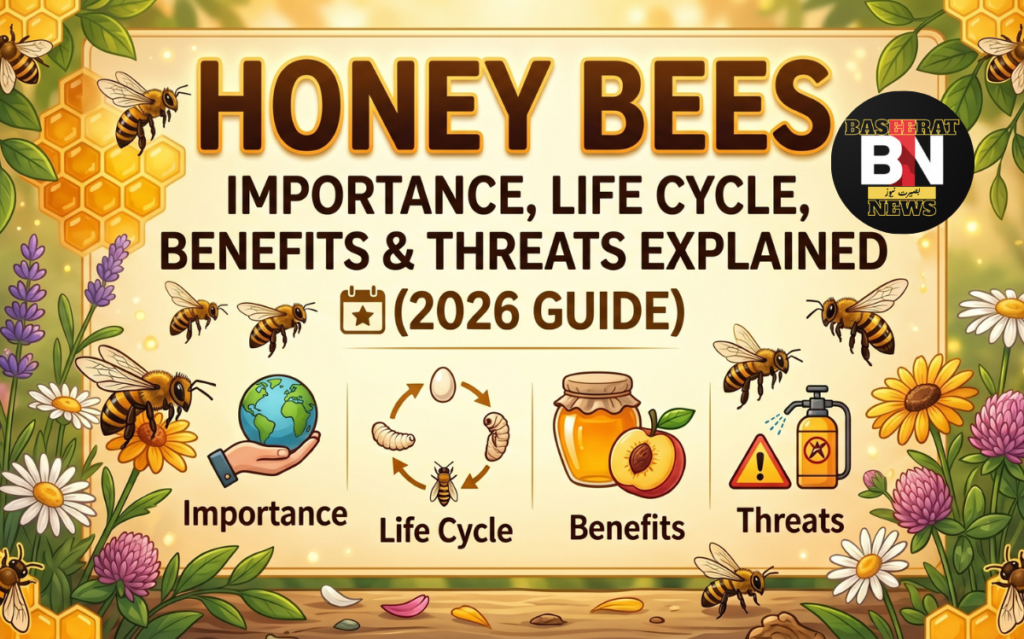
🐝 Honey Bees: Nature’s Tiny Powerhouses That Sustain Life on Earth
Introduction: A World Without Bees?
Imagine waking up one morning to a world without fruits, vegetables, or flowers. No apples, no almonds, no coffee. This isn’t a dystopian fantasy—it’s a real possibility if honey bees disappear.
Honey bees are far more than honey producers. They are critical pollinators, silent workers responsible for sustaining ecosystems and global food production. Yet, despite their importance, they are under threat.
This guide goes beyond basic information. It uncovers hidden facts, real challenges, and practical insights that most articles miss—giving you a deeper, more valuable understanding of honey bees.
What Are Honey Bees?
Honey bees are small flying insects belonging to the genus Apis. They are known for producing honey, beeswax, and for their extraordinary role in pollination.
Key Characteristics:
- Live in highly organized colonies
- Communicate through complex behaviors (like the “waggle dance”)
- Produce honey as a food reserve
- Essential for the pollination of crops and wild plants
The Fascinating Structure of a Bee Colony
A honey bee colony is not just a group of insects—it’s a perfectly organized society where every bee has a role.
👑 The Queen Bee
- The only fertile female in the colony
- Lays up to 2,000 eggs per day
- Controls the hive through pheromones
🐝 Worker Bees
- Female bees that do all the work
- Roles include cleaning, feeding larvae, collecting nectar, and guarding the hive
- Lifespan: 5–6 weeks
🐝 Drone Bees
- Male bees whose primary role is reproduction
- Do not collect nectar or defend the hive
👉 Competitor Gap Insight: Most articles stop here—but what’s often ignored is how role flexibility works. Worker bees change jobs based on age and colony needs, making the hive incredibly adaptive.
How Honey Bees Make Honey (Step-by-Step Process)
The process of making honey is both scientific and magical.
- Worker bees collect nectar from flowers
- Nectar is stored in a special “honey stomach.”
- Enzymes break down sugars
- Bees deposit nectar into honeycomb cells
- Water is evaporated by wing fanning
- Thickened nectar becomes honey
Why This Matters:
Honey isn’t just food—it’s a highly stable, antibacterial substance that can last for years without spoiling.
The Critical Role of Honey Bees in Pollination
Here’s where honey bees become truly essential.
🌼 What Is Pollination?
Pollination is the transfer of pollen from the male part of a flower to the female part, enabling fertilization.
🌍 Why Bees Are Vital:
- Responsible for pollinating 75% of global crops
- Contribute billions to the agricultural economy
- Essential for biodiversity and ecosystem stability
Crops That Depend on Bees:
- Apples 🍎
- Almonds 🌰
- Coffee ☕
- Blueberries 🫐
- Cucumbers 🥒
👉 Competitor Gap Insight: Many articles mention pollination but fail to highlight that some crops (like almonds) are almost entirely dependent on honey bees, making them irreplaceable.
Types of Honey Bees Around the World
Not all honey bees are the same. There are several species, each adapted to different environments.
Common Species:
- Apis mellifera – Western honey bee (most widely used in beekeeping)
- Apis cerana – Asian honey bee
- Apis dorsata – Giant honey bee
- Apis florea – Dwarf honey bee
Each species has unique behaviors, hive structures, and environmental adaptations.
The Intelligence of Honey Bees: More Than Just Instinct
Honey bees are surprisingly intelligent.
Amazing Abilities:
- Can recognize human faces
- Use the “waggle dance” to communicate the distance and direction of food
- Solve simple problems
- Learn from experience
👉 Competitor Gap Insight: Research shows bees can even understand basic concepts like zero, a level of cognition once thought exclusive to higher animals.
Threats Facing Honey Bees Today
Despite their importance, honey bees are declining at an alarming rate.
Major Threats:
1. Pesticides
Chemicals used in farming can harm bees’ nervous systems.
2. Climate Change
Alters flowering patterns and disrupts food supply.
3. Habitat Loss
Urbanization reduces the availability of flowers.
4. Parasites & Diseases
Varroa mites are one of the biggest threats to bee colonies.
5. Colony Collapse Disorder (CCD)
A mysterious phenomenon where worker bees suddenly disappear.
👉 Competitor Gap Insight: Many articles mention CCD but fail to explain that it’s likely caused by a combination of stress factors, not a single issue.
Why Honey Bees Matter More Than You Think
Without honey bees:
- Food production would decline drastically
- Prices of fruits and vegetables would rise
- Ecosystems would collapse
Honey bees are not just helpful—they are foundational to life as we know it.
How You Can Help Save Honey Bees
You don’t need to be a beekeeper to make a difference.
Simple Actions:
- Plant bee-friendly flowers 🌼
- Avoid using harmful pesticides
- Support local honey producers
- Provide water sources for bees
- Educate others about bee conservation
Beekeeping: A Growing Trend
Beekeeping is becoming popular worldwide, including in regions like Pakistan.
Benefits:
- Produces natural honey
- Supports pollination
- Can be a profitable business
Basic Requirements:
- Bee hive boxes
- Protective gear
- Knowledge of bee behavior
👉 Competitor Gap Insight: Many guides ignore profitability—beekeeping can generate income through honey, beeswax, and pollination services.
Health Benefits of Honey
Honey isn’t just delicious—it’s medicinal.
Key Benefits:
- Natural energy booster
- Rich in antioxidants
- Helps with cough and sore throat
- Supports digestion
- Has antibacterial properties
FAQs About Honey Bees
1. Do honey bees sting?
Yes, but only when threatened.
2. How far can bees travel?
Up to 5 kilometers in search of food.
3. How long does a bee live?
Worker bees live around 5–6 weeks.
4. Can bees recognize humans?
Yes, they can recognize faces.
5. Why are bees dying?
Due to pesticides, climate change, and diseases.
Conclusion: Protecting the Future of Bees
Honey bees may be small, but their impact is enormous. They sustain agriculture, maintain biodiversity, and support life on Earth.
If we fail to protect them, the consequences will be global and severe.
But the good news?
Even small actions—planting flowers, reducing chemicals, supporting local beekeepers—can make a real difference.
The future of honey bees is in our hands.