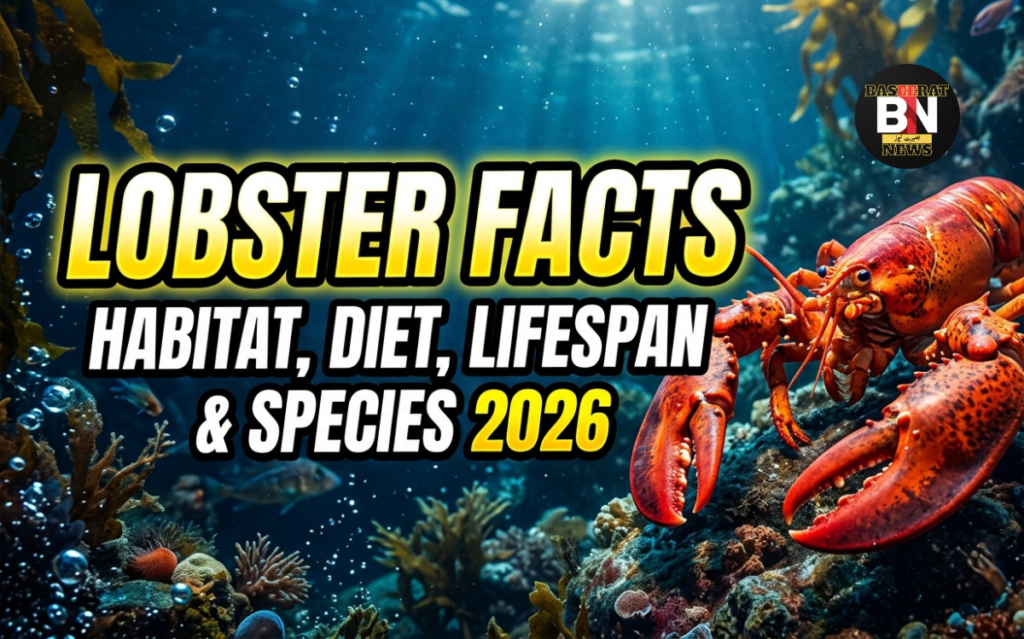
Lobster: The Ultimate Guide to the Ocean’s Armored Survivor
Imagine walking along the rocky coast of Maine at sunrise. Beneath the waves, hidden among rocks and seaweed, an ancient creature begins its daily routine. It has survived ice ages, changing oceans, and countless predators. This remarkable animal is the lobster.
Many people know lobsters as a popular seafood delicacy, but few realize how extraordinary these creatures truly are. Lobsters have existed in some form for hundreds of millions of years. They possess powerful claws, a tough armored shell, and an ability to regenerate lost limbs. Some scientists even consider them among the most successful marine animals ever to evolve.
A common question often surprises people: Can lobsters really live for more than 100 years? While the answer is complex, certain species can indeed reach impressive ages under the right conditions.
Today, lobsters are important not only for coastal economies but also for marine ecosystems. They help maintain ecological balance and serve as indicators of ocean health.
In this comprehensive guide, you’ll discover everything about lobsters—their history, anatomy, habitat, behavior, diet, life cycle, scientific discoveries, threats, conservation efforts, and fascinating facts that make them one of the ocean’s most remarkable inhabitants.
Quick Facts About Lobsters
| Fact | Details |
| Common Name | Lobster |
| Scientific Family | Nephropidae |
| Type | Marine Crustacean |
| Habitat | Oceans, rocky seabeds, coastal waters |
| Distribution | Atlantic, Pacific, and Indian Oceans |
| Length | Up to 64 cm (25 inches) or more |
| Weight | Up to 20 kg (44 lbs) |
| Lifespan | 20–100+ years depending on species |
| Diet | Omnivorous scavenger |
| Main Feature | Powerful claws and an armored shell |
| Predators | Fish, seals, octopuses, humans |
| Conservation Status | Varies by species |
What Is a Lobster?
A lobster is a marine crustacean closely related to crabs, shrimp, and crayfish. It belongs to a group of animals known as arthropods, which have segmented bodies, jointed legs, and hard external skeletons.
The lobster’s body consists of two main sections: the cephalothorax (head and chest combined) and the abdomen or tail. Covered by a protective shell called an exoskeleton, lobsters are well-equipped for life on the ocean floor.
There are two primary types of lobsters:
- Clawed lobsters
- Spiny lobsters
Clawed lobsters, such as the American lobster, possess one crusher claw and one cutter claw. Spiny lobsters lack large claws but have long antennae used for defense.
Lobsters play a crucial role in marine ecosystems by feeding on dead organisms, shellfish, worms, and small fish. In doing so, they help recycle nutrients and keep ocean habitats healthy.
Today, lobsters support billion-dollar fishing industries, particularly in the United States and Canada.
History and Origins
Lobster-like ancestors appeared over 400 million years ago. Fossil evidence suggests that ancient crustaceans were already thriving long before dinosaurs walked the Earth.
The earliest recognizable lobster relatives emerged during the Devonian Period. Over millions of years, these creatures adapted to changing oceans and diversified into many forms.
Historically, lobsters were not considered luxury food. During colonial America, they were so abundant along the New England coast that they often washed ashore in large piles. They were commonly used as fertilizer, animal feed, and inexpensive meals.
By the late nineteenth century, improvements in transportation and refrigeration transformed lobster into a sought-after delicacy.
Modern genetic research continues to reveal how lobster species evolved and adapted to different marine environments. Scientists now understand that lobsters have survived numerous mass extinction events through their flexibility and resilience.
Physical Characteristics and Main Features
The lobster’s appearance is both intimidating and fascinating.
Hard Exoskeleton
Unlike mammals, lobsters have an external skeleton made primarily of chitin and calcium compounds. This armor protects them from predators and environmental hazards.
Powerful Claws
Clawed lobsters possess two specialized claws:
- Crusher claw for breaking shells
- Cutter claw for slicing food
These claws can exert tremendous force.
Antennae
Long antennae serve as sensory tools, helping lobsters navigate dark underwater environments.
Compound Eyes
Their eyes contain thousands of tiny lenses capable of detecting movement and changes in light.
Regeneration Ability
One of the lobster’s most remarkable features is its ability to regrow lost limbs. If a claw or leg is damaged, it can often regenerate during future molts.
Molting Process
As lobsters grow, they shed their old shell and form a new one. This vulnerable period requires them to hide until the new shell hardens.
Color Variations
Most lobsters are greenish-brown, but rare color mutations occur:
- Blue lobsters
- Yellow lobsters
- Orange lobsters
- Albino lobsters
These unusual colors are extremely uncommon in nature.
Habitat, Environment, and Location
Lobsters inhabit oceans around the world, although species distributions vary significantly.
American lobsters are found primarily along the North Atlantic coast from Canada to North Carolina. They thrive in cold, rocky waters where numerous hiding places are available.
Lobsters typically live:
- Beneath rocks
- In crevices
- Inside burrows
- Along reef systems
Water temperature plays a major role in lobster distribution. Most species prefer stable environments with adequate oxygen levels.
Ecologically, lobsters help regulate populations of smaller marine organisms while serving as prey for larger predators.
Behavior and Lifestyle
Lobsters are generally solitary animals.
During daylight hours, they often remain hidden in shelters. At night, they emerge to forage for food across the seabed.
Communication
Despite lacking vocal cords, lobsters communicate through:
- Chemical signals
- Body posture
- Antenna movements
Territorial Nature
Lobsters may defend shelters against rivals, particularly larger individuals occupying prime habitat.
Survival Strategies
When threatened, lobsters can:
- Retreat quickly
- Use claws defensively
- Escape backward using tail flips
A sudden tail flip propels them rapidly through the water, often allowing them to escape predators.
Diet and Feeding Habits
Lobsters are opportunistic omnivores.
Their diet includes:
- Fish
- Mollusks
- Clams
- Mussels
- Worms
- Sea urchins
- Algae
- Dead marine animals
Using their claws, lobsters crush shells and manipulate food with remarkable precision.
Scientists have observed that lobsters contribute significantly to nutrient recycling by consuming decaying organic material.
Their feeding habits make them important members of marine food webs.
Reproduction and Life Cycle
Lobster reproduction begins when a female mates shortly after molting.
Egg Development
Females can carry thousands of eggs beneath their tails for months.
Larval Stage
After hatching, larvae drift in ocean currents as plankton.
Juvenile Stage
Young lobsters eventually settle on the ocean floor and begin a bottom-dwelling lifestyle.
Growth Through Molting
Juveniles molt frequently, allowing rapid growth.
As adults, molting becomes less frequent but continues throughout life.
Lifespan of Lobster
Many lobsters live for several decades. Some exceptionally large individuals may exceed 50 years, and estimates suggest certain lobsters could survive much longer under ideal conditions.
Latest Research and Scientific Discoveries
Recent studies have provided fascinating insights into lobster biology.
Climate Change Effects
Researchers have documented shifts in lobster distribution as ocean temperatures rise. Some populations are moving toward cooler northern waters.
Disease Monitoring
Scientists continue studying shell diseases that affect lobster populations in warming coastal ecosystems.
Genetic Research
Advanced DNA analysis helps researchers understand population structure, migration patterns, and adaptation mechanisms.
Molting Biology
Discoveries reveal how hormones regulate molting and shell formation.
Sustainable Fisheries
Modern tracking technologies allow scientists to monitor lobster populations more accurately than ever before.
Ocean Acidification Studies
Researchers are examining how increasing ocean acidity affects lobster shell development and larval survival.
Artificial Habitats
Experimental reef structures are being tested to improve juvenile lobster survival rates in certain regions.
These studies help fisheries managers develop science-based conservation strategies for future generations.
25 Fascinating Facts About Lobsters
- Lobsters are crustaceans.
- They have blue blood.
- Their blood contains copper, not iron.
- They can regenerate lost limbs.
- Lobsters molt throughout life.
- Some may live for decades.
- They can weigh over 40 pounds.
- Lobsters have compound eyes.
- They communicate chemically.
- They can swim backward rapidly.
- Female lobsters carry thousands of eggs.
- Lobsters existed before dinosaurs.
- Rare blue lobsters occur naturally.
- Yellow lobsters are extremely uncommon.
- Albino lobsters are exceptionally rare.
- Lobsters smell using antennae.
- They are mostly nocturnal.
- They prefer rocky habitats.
- They play key ecosystem roles.
- Lobsters can survive in deep water.
- Their claws have specialized functions.
- They are important commercial species.
- Juveniles molt frequently.
- They help recycle ocean nutrients.
- Lobsters remain one of the ocean’s most successful predators and scavengers.
Importance to Humans and Nature
Lobsters hold tremendous ecological and economic value.
Ecological Importance
They help control populations of marine invertebrates and recycle nutrients.
Economic Importance
The lobster industry generates billions of dollars annually and supports thousands of coastal jobs.
Cultural Significance
In New England, lobster fishing is deeply connected to local traditions and coastal heritage.
Scientific Value
Researchers study lobsters to understand aging, regeneration, marine ecology, and environmental change.
Threats and Challenges
Lobsters face several modern threats.
Climate Change
Rising ocean temperatures alter habitat suitability.
Ocean Acidification
Increasing acidity may affect shell formation.
Disease
Shell diseases and parasites can impact populations.
Overfishing
Unsustainable harvesting can reduce local abundance.
Habitat Degradation
Pollution and coastal development may damage critical habitats.
Managing these threats requires continued scientific monitoring and responsible fisheries management.
Conservation and Future Outlook
Many lobster fisheries now operate under strict regulations.
Conservation measures include:
- Size limits
- Catch quotas
- Seasonal restrictions
- Protected breeding females
- Habitat monitoring
Marine scientists remain optimistic that well-managed fisheries can maintain healthy lobster populations.
Advances in ocean monitoring, genetics, and ecosystem management continue improving conservation outcomes.
Common Myths and Misconceptions
Myth #1: Lobsters Are Immortal
Reality: Lobsters age and eventually die, although some can live remarkably long lives.
Myth #2: All Lobsters Have Large Claws
Reality: Spiny lobsters lack the giant claws seen in clawed lobsters.
Myth #3: Lobsters Are Aggressive Hunters
Reality: Most are opportunistic feeders and scavengers.
Myth #4: Lobsters Only Live in Cold Water
Reality: Different species inhabit various ocean environments worldwide.
Myth #5: Blue Lobsters Are a Separate Species
Reality: Blue coloration results from a rare genetic mutation.
Frequently Asked Questions (FAQs)
What is a lobster?
A lobster is a marine crustacean with a hard exoskeleton and jointed legs.
Where do lobsters live?
Mostly in oceans, particularly rocky coastal habitats.
What do lobsters eat?
Fish, mollusks, worms, algae, and decaying marine organisms.
How long do lobsters live?
Many live decades, with some reaching exceptional ages.
Are lobsters fish?
No, they are crustaceans.
Do lobsters have bones?
No, they have an external shell.
Can lobsters regrow claws?
Yes, they can regenerate lost limbs.
Why are lobsters blue-blooded?
Their blood uses copper-based hemocyanin.
How do lobsters communicate?
Through chemical signals and body movements.
Are lobsters nocturnal?
Mostly yes.
How many eggs can a female carry?
Thousands at a time.
Do lobsters swim?
Yes, especially when escaping danger.
Can lobsters see?
Yes, with compound eyes.
Are lobsters endangered?
Most major species are not currently endangered.
What is molting?
Shedding the old shell to grow.
Why do lobsters molt?
Their shells do not expand as they grow.
What predators eat lobsters?
Fish, seals, octopuses, and humans.
Do lobsters live alone?
Generally yes.
How large can lobsters get?
Some exceed 40 pounds.
What is a spiny lobster?
A lobster species lacking large claws.
Why are rare-colored lobsters unusual?
Genetic mutations are uncommon.
What role do lobsters play in ecosystems?
They help regulate prey populations and recycle nutrients.
Can lobsters survive in deep water?
Yes, many species inhabit deep marine environments.
How old are lobster ancestors?
More than 400 million years old.
Why are lobsters economically important?
They support valuable commercial fisheries.
Can climate change affect lobsters?
Yes, especially through warming oceans.
Are lobsters important for science?
Yes, researchers study their regeneration and biology.
Conclusion
Lobsters are far more than a famous seafood item. They are ancient survivors that have adapted to changing oceans for hundreds of millions of years. With their armored bodies, powerful claws, remarkable regenerative abilities, and complex behaviors, they represent one of nature’s most successful evolutionary stories.
From rocky Atlantic coastlines to deep offshore habitats, lobsters play an essential role in maintaining marine ecosystem health. They support coastal economies, contribute to scientific research, and continue to fascinate biologists worldwide.
As climate change and environmental pressures reshape ocean ecosystems, understanding and protecting lobster populations becomes increasingly important. Through sustainable management, conservation efforts, and ongoing research, future generations can continue to benefit from and learn about these extraordinary creatures.
Whether you admire them for their biology, ecological importance, or sheer resilience, lobsters remain one of the ocean’s most remarkable animals—a living reminder of the incredible diversity hidden beneath the waves.
Click the link below for more……