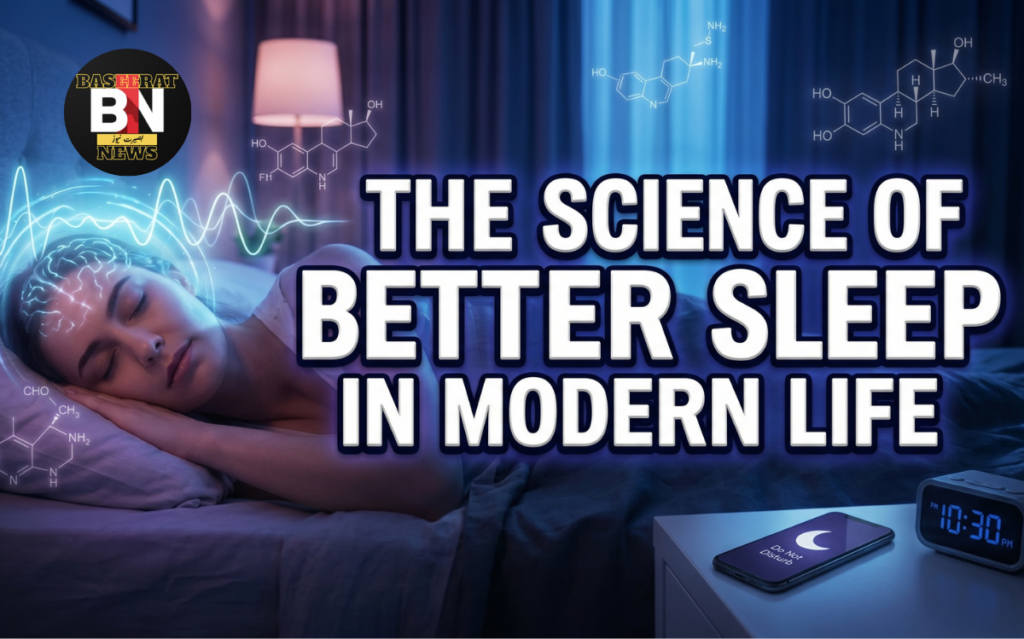
How Better Sleep Changes the Brain
At 2:13 a.m., the city still glows.
Apartment windows flicker blue from smartphones. Cars whisper across distant highways. Somewhere, a student scrolls endlessly through videos while fighting heavy eyelids. A nurse finishes a night shift under fluorescent lights. A father wakes to a crying child. A teenager lies awake replaying conversations from school.
And across the planet, millions of people stare at ceilings, unable to sleep.
Human beings have never been more connected, more entertained, or more exhausted.
Sleep once arrived naturally. Long before electricity, humans followed the rhythm of firelight, moonlight, sunrise, and darkness. Nights were quieter then. Slower. The brain knew when to rest because nature itself guided the body like an invisible clock.
But modern life changed everything.
Today, scientists describe sleep deprivation as a global health crisis. Researchers now link poor sleep to anxiety, obesity, memory loss, heart disease, weakened immunity, depression, and even shortened lifespan. Yet despite all this knowledge, modern humans continue sacrificing sleep for productivity, social media, entertainment, and stress.
Why?
What actually happens inside the brain during sleep? Why do dreams feel so real? Why do some people wake refreshed while others wake exhausted after eight hours? And why has humanity become worse at sleeping despite having the most comfortable beds in history?
The science of better sleep is no longer just about rest.
It is about survival, mental clarity, emotional healing, creativity, immunity, and the future of human health itself.
Tonight, as cities continue glowing beneath artificial stars, science is finally uncovering what sleep truly means—and why the human body can never fully live without it.
Introduction
Sleep is one of the strangest experiences in human existence.
Every night, consciousness fades. Muscles relax. Awareness disappears. For hours, the brain enters a mysterious biological state that scientists still do not completely understand. During that time, memories reorganize themselves, hormones shift, damaged cells repair, emotions stabilize, and the immune system quietly strengthens behind the scenes.
Sleep looks passive.
In reality, it is one of the most active biological processes in the human body.
For decades, researchers underestimated its importance. Modern culture celebrated sleepless ambition. Business leaders bragged about four-hour nights. Students relied on caffeine to survive exams. Social media glorified constant hustle. Rest became associated with laziness rather than intelligence.
Science now says the opposite.
Researchers from leading institutions, including Harvard Medical School, Stanford University, and the National Institutes of Health, have published extensive studies showing that chronic sleep deprivation damages nearly every major system in the body.
The effects are everywhere.
A tired brain struggles to regulate emotions. Sleep-deprived workers make more mistakes. Drivers with insufficient sleep face accident risks similar to drunk driving. Children who sleep poorly often experience attention problems and emotional instability. Even the skin ages faster under long-term sleep deprivation.
Yet humans continue drifting further away from natural sleep patterns.
Artificial lighting extends nighttime activity. Streaming platforms keep viewers awake for “one more episode.” Smartphones stimulate the brain deep into the night. Stress hormones remain elevated because modern humans rarely disconnect from work, news, or digital communication.
The result is a world that is physically awake but biologically exhausted.
Still, there is hope.
Sleep science has entered a revolutionary era. New brain imaging technologies, wearable sleep trackers, AI-driven sleep research, and circadian biology studies are transforming how humanity understands rest. Scientists are uncovering practical methods that can genuinely improve sleep quality naturally.
This is not simply a guide about sleeping longer.
It is a journey into the hidden world of human recovery, brain repair, biological timing, dreams, technology, mental health, and the future of rest itself. Better sleep does not just change nights.
It changes lives.
The History of Sleep Science
For most of human history, sleep remained a mystery wrapped in mythology.
Ancient civilizations believed dreams carried messages from gods, spirits, or ancestors. In ancient Egypt, dream temples welcomed people seeking healing visions during sleep. Greek philosophers debated whether dreams revealed hidden truths about the human soul. Across cultures, nighttime became associated with mystery, danger, and transformation.
But scientific understanding of sleep arrived surprisingly late.
During the 17th and 18th centuries, many scientists viewed sleep as a passive shutdown process. The body appeared inactive, so researchers assumed the brain simply “turned off” at night. Little attention was given to sleep’s biological importance.
Everything changed in the 20th century.
In 1924, German psychiatrist Hans Berger invented the electroencephalogram, or EEG. For the first time, scientists could monitor electrical activity inside the human brain. What they discovered shocked the scientific community.
Sleeping brains were not inactive at all.
They were alive with complex patterns of electrical activity.
By the 1950s, researchers discovered Rapid Eye Movement sleep, now known as REM sleep. During REM sleep, the brain becomes highly active while the body remains mostly paralyzed. Dreams often become vivid during this stage. Scientists realized that sleep occurred in cycles rather than one continuous state.
This discovery transformed sleep science forever.
Researchers began linking sleep to memory formation, emotional regulation, immune function, and brain development. Infants, they found, spend enormous amounts of time in REM sleep because developing brains require intense neural processing.
Then came the modern crisis.
During the Industrial Revolution, artificial lighting extended work hours deep into the night. Human sleep schedules slowly detached from natural sunlight patterns. By the late 20th century, television, computers, and smartphones accelerated the problem dramatically.
Suddenly, humans could remain stimulated 24 hours a day.
Modern sleep research expanded rapidly in response. Sleep laboratories emerged worldwide. Scientists began studying insomnia, narcolepsy, sleep apnea, circadian rhythms, and the relationship between sleep and mental health.
One of the most influential modern sleep researchers is Matthew Walker, whose work helped popularize the idea that sleep is not optional biological downtime but a foundational pillar of health.
Meanwhile, advances in brain imaging technology allowed researchers to observe sleeping brains in extraordinary detail. Scientists discovered that during sleep, the brain essentially performs nightly maintenance. Waste products are cleared away through a recently identified cleaning system known as the glymphatic system.
This finding connected sleep to neurodegenerative diseases like Alzheimer’s.
Today, sleep science stands at the center of global health research. Governments, universities, and medical organizations increasingly recognize sleep deprivation as a public health issue.
Ironically, the more modern civilization advances, the more humanity rediscovers an ancient truth:
The human body was never designed to live without deep, restorative sleep.
What Actually Happens During Sleep
The moment humans fall asleep, an extraordinary biological transformation begins.
To outside observers, sleep appears peaceful and still. Yet beneath closed eyelids, the body launches one of the most sophisticated recovery operations in nature.
The brain never truly sleeps.
Instead, it changes states.
As darkness deepens and the body relaxes, the brain gradually shifts from alert beta waves into slower alpha and theta waves. Heart rate declines. Breathing slows. Muscles loosen. Body temperature drops slightly.
This is the gateway into sleep.
Soon, the body enters non-REM sleep, which consists of several progressively deeper stages. During these phases, cellular repair accelerates. Growth hormone is released into the bloodstream. Damaged tissues begin healing. Immune cells strengthen their defenses.
Meanwhile, the brain starts organizing memories from the day.
Imagine a giant nighttime librarian silently sorting thousands of experiences into different shelves. Important information gets stored. Emotional experiences become processed. Useless details may disappear entirely.
Scientists believe this process explains why sleep improves learning and memory retention.
Then comes deep sleep.
This stage is biologically priceless.
During deep sleep, brain waves become extremely slow. Blood pressure falls. Muscles fully relax. The body prioritizes physical restoration. Athletes recover during this stage. Children grow during this stage. Immune function strengthens dramatically here.
Deep sleep is also linked to emotional resilience.
People deprived of deep sleep often become more anxious, irritable, emotionally reactive, and mentally exhausted. Researchers now believe deep sleep helps regulate emotional balance by calming stress-related brain activity.
But the strangest stage is still ahead.
After cycling through non-REM stages, the brain enters REM sleep.
Suddenly, brain activity increases dramatically.
The eyes move rapidly beneath closed lids. Heart rate becomes irregular. Breathing changes unpredictably. Dreams emerge with cinematic intensity. Some dreams feel joyful. Others become terrifying, emotional, surreal, or deeply symbolic.
Why humans dream remains one of neuroscience’s greatest mysteries.
Some scientists believe dreams help process emotions. Others suggest dreams simulate threats, allowing humans to rehearse survival situations mentally. Certain theories argue that dreams strengthen creativity by forming unusual neural connections between ideas.
Whatever their purpose, dreams appear biologically important.
People deprived specifically of REM sleep often experience memory problems, emotional instability, and cognitive decline.
One of the most fascinating discoveries in recent sleep science involves the brain’s cleaning system.
During waking hours, metabolic waste accumulates in brain tissue. Proteins associated with neurodegenerative diseases begin building up gradually. But during sleep, especially deep sleep, the brain activates the glymphatic system—a specialized cleaning network that flushes away waste products.
Scientists compare it to a nighttime sanitation crew.
Without enough sleep, this cleaning process becomes less efficient.
Over time, chronic sleep deprivation may contribute to conditions like Alzheimer’s disease, Parkinson’s disease, and cognitive decline.
The body’s hormones also shift dramatically during sleep.
Melatonin rises in darkness to promote sleepiness. Cortisol, the stress hormone, usually declines overnight before rising naturally near morning to help humans wake up. Appetite hormones fluctuate, too, explaining why sleep deprivation often increases hunger and cravings for high-calorie foods.
Even the immune system changes behavior during sleep.
Studies show that people who sleep poorly are more likely to get sick after exposure to viruses. Vaccines may even become less effective in chronically sleep-deprived individuals because immune responses weaken without proper rest.
Emotionally, sleep acts almost like overnight therapy.
Researchers found that REM sleep may help soften the emotional intensity of painful memories while preserving the memory itself. This could explain why problems often feel slightly more manageable after a good night’s sleep.
The opposite is equally true.
After sleep deprivation, the emotional centers of the brain become hyperactive. Minor frustrations feel overwhelming. Anxiety increases. Decision-making worsens.
In many ways, sleep determines how humans experience reality itself.
A well-rested brain perceives the world differently from an exhausted one.
Colors feel brighter. Emotions stabilize. Thoughts sharpen. Creativity improves. Patience increases. Focus strengthens.
The science is becoming increasingly clear:
Sleep is not the absence of activity.
It is one of the most important biological performances the human body ever conducts.
Sleep Cycles Explained
Human sleep unfolds like a carefully choreographed symphony.
Every night, the brain moves through repeating sleep cycles, each lasting roughly 90 minutes. These cycles contain different stages, each serving unique biological purposes.
Most people experience four to six cycles per night.
The first stage is light sleep.
This transitional phase feels fragile. Muscles begin relaxing, but external sounds can still wake the sleeper easily. Some people experience sudden muscle jerks or the sensation of falling during this stage.
Next comes slightly deeper non-REM sleep.
Brain activity slows further. Heart rate decreases. Body temperature drops. Conscious awareness fades more completely. The brain begins filtering external information more aggressively, allowing deeper rest to develop.
Then comes deep sleep.
This is where true restoration happens.
Deep sleep dominates the early part of the night. It is physically healing and profoundly restorative. Waking someone during deep sleep often causes grogginess and confusion because the brain is operating in extremely slow-wave patterns.
Children experience especially large amounts of deep sleep because developing bodies require intense biological repair and growth.
Athletes value deep sleep intensely,y too.
During this stage, muscles repair microscopic damage from exercise. Energy stores replenish. Recovery hormones surge. Without sufficient deep sleep, athletic performance drops significantly.
After deep sleep, the brain transitions toward REM sleep.
This stage feels almost paradoxical.
The brain becomes active again, sometimes nearly as active as during waking consciousness. Yet the body enters temporary paralysis, likely preventing humans from physically acting out dreams.
Dreams during REM sleep often feel emotional, vivid, bizarre, or cinematic.
Scientists believe REM sleep supports emotional processing, creativity, learning integration, and memory consolidation.
Throughout the night, these stages repeat in cycles.
But the balance changes.
Early cycles contain more deep sleep. Later cycles contain longer REM periods. This is why dreams often become more vivid near morning.
Interrupting these cycles can seriously reduce sleep quality.
A person might technically sleep eight hours but still wake exhausted if sleep fragmentation repeatedly disrupts deeper stages. Noise, stress, alcohol, sleep apnea, and smartphone use can all interfere with healthy cycling.
Modern lifestyles often damage these rhythms unknowingly.
Late-night screen exposure suppresses melatonin production. Irregular schedules confuse the body clock. Shift work forces people awake during biologically inappropriate hours. Social media stimulates the brain precisely when it should be slowing down.
As a result, millions of people spend enough time in bed yet fail to achieve truly restorative sleep architecture.
One fascinating area of research involves “sleep debt.”
Scientists discovered that chronic sleep deprivation accumulates like financial debt. Missing sleep repeatedly impairs cognitive function, emotional regulation, reaction time, and metabolism.
Worse, humans adapt poorly to sleep deprivation psychologically.
People often believe they are functioning normally despite measurable declines in performance.
Caffeine temporarily masks tiredness but cannot replace lost sleep cycles. Energy drinks may increase alertness briefly whilmore seriouser biological damage continues silently beneath the surface.
Researchers also study “sleep chronotypes.”
Some people naturally function better earlier in the day. Others naturally prefer later schedules. These tendencies appear partially genetic. Unfortunately, modern society often forces people into standardized schedules that conflict with their biological rhythms.
Teenagers illustrate this perfectly.
Adolescent brains naturally shift toward later sleep patterns during puberty. Yet many schools still start extremely early in the morning. Scientists argue that this mismatch contributes to chronic sleep deprivation among teenagers worldwide.
Even naps follow scientific patterns.
Short naps lasting 10–20 minutes may improve alertness without entering deep sleep. Longer naps risk sleep inertia, the groggy feeling caused by waking during deeper stages.
NASA researchers famously studied strategic napping for pilots and astronauts, finding measurable improvements in alertness and performance.
Ultimately, sleep cycles reveal an important truth:
Sleep is not one single biological state.
It is a complex sequence of neurological transformations carefully refined through millions of years of evolution.
When humans disrupt those cycles consistently, the body notices.
And eventually, the consequences appear everywhere—from mood and memory to immunity, metabolism, and mental health.
Circadian Rhythm Science
Inside every human body lives an invisible clock.
This clock does not hang on walls or glow digitally beside a bed. Instead, it exists deep within the brain, controlling sleep, hormones, body temperature, metabolism, alertness, and countless biological functions.
Scientists call it the circadian rhythm.
For thousands of years, humans followed natural light patterns. Sunrise triggered wakefulness. Darkness encouraged rest. The body evolved around Earth’s 24-hour rotation.
Then modern technology interrupted nature’s schedule.
Artificial lighting changed human behavior forever.
Today, people can flood bedrooms with light at midnight, scroll glowing screens at 2 a.m., and work overnight beneath artificial brightness. But biologically, the human brain still interprets light as a survival signal.
Light tells the brain when to stay awake.
Darkness tells it when to rest.
The master circadian clock sits inside a tiny brain region called the suprachiasmatic nucleus. This structure receives signals directly from the eyes, especially regarding light exposure.
Morning sunlight plays a crucial role.
When natural sunlight enters the eyes shortly after waking, it helps synchronize the body clock properly. Cortisol rises naturally. Alertness improves. Melatonin production decreases. The brain essentially receives confirmation that daytime has begun.
Without strong morning light exposure, circadian rhythms may drift.
This explains why people spending most of their time indoors often experience fatigue, irregular sleep patterns, or difficulty falling asleep naturally.
Blue light presents a major modern challenge.
Smartphones, tablets, televisions, and LED lighting emit blue wavelengths that strongly suppress melatonin production. The brain interprets this light similarly to daylight, delaying sleepiness.
In evolutionary terms, the brain becomes confused.
A person may lie in darkness physically while biologically receiving signals that daytime still exists.
Researchers increasingly connect circadian disruption to serious health problems. Shift workers, for example, face higher risks of cardiovascular disease, obesity, depression, diabetes, and certain cancers.
Why?
Because the human body prefers predictable timing.
Hormones are released on schedule. Digestion follows rhythms. Immune activity fluctuates by time of day. Even cognitive performance changes according to circadian timing.
Late-night eating can disrupt metabolic rhythms. Irregular sleep schedules confuse hormone production. Frequent jet lag forces the body into repeated circadian chaos.
Scientists sometimes describe modern humans as “circadian misaligned.”
People stay indoors during daylight, then expose themselves to intense artificial light at night. The result is biological confusion on a massive scale.
Teenagers again demonstrate this clearly.
Puberty naturally shifts circadian rhythms later. Adolescents become biologically inclined to sleep and wake later than children or older adults. Yet social schedules rarely accommodate this shift.
Research shows sleep-deprived teenagers often experience lower academic performance, emotional instability, anxiety, and depression.
Circadian science also explains why consistent sleep schedules matter so much.
Going to bed and waking at similar times strengthens the body clock. Irregular schedules weaken circadian stability, making sleep less restorative.
Even weekends can disrupt rhythms.
Many people accumulate “social jet lag” by staying up late and sleeping in dramatically on weekends, then struggling Monday morning when work schedules resume.
Temperature influences circadian rhythms, too.
The body naturally cools slightly before sleep. Cooler environments often improve sleep quality because they support this biological process.
Scientists are now exploring personalized circadian medicine. Future healthcare may schedule medications, therapies, meals, and work patterns according to individual biological timing.
The message from circadian science is increasingly clear:
Humans are not separate from nature.
Even inside brightly lit cities filled with technology, the ancient biological clock still quietly controls the rhythm of human life.
Why Modern Humans Sleep Worse
Modern humans live in the most comfortable sleeping environments in history.
Yet many sleep worse than ever before.
The contradiction is extraordinary.
Ancient humans slept beneath unpredictable weather, wild animal threats, and environmental dangers. Today, millions sleep in climate-controlled rooms on memory foam mattresses beneath secure roofs.
Still, exhaustion has become a defining feature of modern life.
Why?
One major reason is overstimulation.
The human brain evolved in environments with long periods of silence, darkness, and limited sensory input. Modern environments are the opposite. Notifications buzz constantly. Streaming platforms autoplay endlessly. News cycles operate 24 hours a day. Social media floods the brain with emotional stimulation late into the night.
The nervous system rarely rests.
Stress is another enormous factor.
The human stress response evolved for short-term survival threats. Ancient humans faced predators, storms, or physical danger. Once the threat disappeared, the body relaxed again.
Modern stress behaves differently.
Emails, deadlines, financial pressure, social comparison, political anxiety, and digital overload create chronic low-level stress that may never fully shut off. Cortisol remains elevated longer, making deep relaxation difficult.
Then comes artificial light.
Before electricity, darkness naturally triggered sleepiness. Today, cities glow all night. Bedroom screens beam blue light directly into the human eye, just before sleep.
Biologically, the brain struggles to distinguish midnight from midday.
Modern work culture also contributes heavily to poor sleep.
Productivity often becomes glorified while rest is treated as weakness. Many professionals sacrifice sleep for career advancement, assuming they can “catch up later.”
Science strongly disagrees.
Chronic sleep deprivation impairs judgment, creativity, emotional control, and productivity itself. Ironically, sacrificing sleep often reduces the very performance people hope to improve.
Caffeine complicates the issue further.
Coffee can improve alertness temporarily, but excessive late-day caffeine delays sleep onset significantly. Some people consume stimulants to compensate for exhaustion, then struggle to sleep because of those same stimulants.
It becomes a vicious cycle.
Technology addiction plays a growing role,e too.
Social media platforms intentionally maximize engagement. Infinite scrolling, autoplay features, algorithmic recommendations, and emotional content keep users awake longer than intended.
The brain craves stimulation even while the body desperately needs rest.
Urbanization introduces additional challenges.
Noise pollution interrupts sleep architecture subtly but repeatedly. Traffic sounds, sirens, neighbors, and city activity prevent deep restorative sleep even when people remain technically asleep.
Climate change may also affect sleep globally.
Researchers increasingly study how rising nighttime temperatures reduce sleep quality. Human bodies require slight cooling for optimal sleep. Hotter nights disrupt that process, especially in regions lacking air conditioning.
Mental health issues further worsen modern sleep problems.
Anxiety and depression frequently interfere with sleep, while poor sleep simultaneously worsens mental health symptoms. Scientists now view sleep and mental health as deeply interconnected rather than separate issues.
Loneliness may even influence sleep quality.
Humans evolved as social creatures sleeping within tribes or communities. Some researchers suggest feelings of isolation may increase nighttime vigilance unconsciously, reducing sleep depth.
Even entertainment culture affects sleep behavior.
Streaming platforms encourage binge-watching. Online gaming extends deep into the night. Global internet culture eliminates natural stopping points that once encouraged bedtime.
There is always another video.
Another message.
Another episode.
Another notification.
Meanwhile, natural sleep cues disappear.
Many people spend little time outdoors during daylight, weakening circadian synchronization. Indoor lifestyles reduce exposure to natural sunlight, which the brain needs for proper sleep timing.
Modern humans often exist in biologically confusing environments:
Bright nights.
Dim days.
Constant stimulation.
Chronic stress.
Irregular schedules.
Digital dependency.
The result is a civilization functioning against its own evolutionary biology.
And the body keeps paying the price.
Conclusion
Tonight, somewhere on Earth, billions of people will close their eyes and enter one of nature’s most extraordinary biological processes.
Some will drift peacefully into deep restorative sleep.
Others will lie awake beneath glowing screens, anxious thoughts racing through exhausted minds.
Sleep has become one of the defining health challenges of modern civilization.
For decades, humanity treated rest as optional. Productivity mattered more. Speed mattered more. Constant connectivity mattered more. But science continues revealing the same uncomfortable truth:
The human body cannot negotiate with biology forever.
Sleep is not weakness.
It is maintenance.
It is emotional recovery, memory organization, immune repair, hormonal regulation, neural cleansing, and psychological healing combined into one nightly biological masterpiece.
When sleep disappears, the effects spread everywhere. Mood changes. Focus weakens. Anxiety rises. Physical health declines. Relationships suffer. Creativity fades.
But when sleep improves, life changes too.
The mind sharpens. Emotions stabilize. Energy returns. Learning improves. The body heals more effectively. Even simple moments begin feeling different.
Morning sunlight feels warmer.
Thoughts feel clearer.
Stress becomes easier to manage.
In many ways, better sleep restores the human experience itself.
The future of sleep science looks both exciting and urgent. Researchers continue exploring AI-powered sleep analysis, personalized circadian medicine, brain stimulation therapies, and advanced sleep tracking technologies. Scientists now understand more about sleep than ever before.
Yet perhaps the most important lesson remains surprisingly simple.
Humans still belong to nature.
Despite skyscrapers, smartphones, artificial lighting, and endless digital entertainment, the brain continues following ancient biological rhythms shaped over millions of years.
Darkness still matters.
Rest still matters.
Silence still matters.
And sleep remains one of the most powerful forms of healing ever discovered.
The next revolution in health may not come from a pill, a machine, or a laboratory breakthrough.
It may begin with something humanity already possesses every single night:
The ability to sleep deeply, naturally, and well.
Frequently Asked Questions About The Science of Better Sleep
1. Why is sleep important for human health?
Sleep is essential because the body repairs itself during rest. The brain organizes memories, hormones rebalance, muscles recover, and the immune system strengthens. Without enough sleep, nearly every major system in the body begins to suffer.
2. How many hours of sleep do adults really need?
Most adults need between 7 and 9 hours of quality sleep each night. Some people function well with slightly less or more, but regularly sleeping under six hours increases health risks significantly.
3. What happens to the brain during sleep?
The brain remains highly active during sleep. It processes memories, clears metabolic waste, regulates emotions, strengthens learning pathways, and cycles through different neurological states, including REM and deep sleep.
4. What is REM sleep?
REM sleep stands for Rapid Eye Movement sleep. It is the stage where vivid dreams often occur. During REM sleep, brain activity increases while the body temporarily becomes immobile to prevent physical movement during dreams.
5. Why do humans dream?
Scientists still debate the exact purpose of dreams. Current theories suggest dreams may help process emotions, strengthen memories, improve creativity, and simulate survival situations.
6. Can lack of sleep affect mental health?
Yes. Chronic sleep deprivation is strongly linked to anxiety, depression, stress sensitivity, emotional instability, and reduced cognitive performance.
7. Why do people wake up tired even after sleeping 8 hours?
Sleep quality matters as much as sleep duration. Stress, sleep apnea, noise, poor sleep cycles, alcohol, late-night screen exposure, and fragmented sleep can reduce deep restorative sleep.
8. What is the circadian rhythm?
The circadian rhythm is the body’s internal biological clock. It regulates sleep, wakefulness, hormone production, metabolism, and energy levels based largely on light exposure.
9. How does blue light affect sleep?
Blue light from phones, tablets, and LED screens suppresses melatonin production. This confuses the brain into thinking it is still daytime, delaying sleepiness.
10. Is sleeping too much unhealthy?
Yes, excessive sleep may sometimes indicate underlying health issues such as depression, sleep disorders, chronic illness, or poor sleep quality. Consistently sleeping over 10 hours regularly may require medical evaluation.
11. What is deep sleep?
Deep sleep is the most restorative sleep stage. During this phase, the body repairs tissues, strengthens immunity, restores energy, and releases growth hormones.
12. Why is sleep important for memory?
During sleep, the brain organizes and stores information learned throughout the day. This process improves learning, concentration, and long-term memory retention.
13. Can poor sleep cause weight gain?
Yes. Sleep deprivation disrupts hunger hormones like ghrelin and leptin, increasing cravings for sugary and high-calorie foods while reducing impulse control.
14. Why do teenagers sleep late naturally?
Puberty shifts the circadian rhythm later. Teenagers naturally feel sleepy later at night and prefer waking later in the morning compared to children or older adults.
15. Does caffeine ruin sleep?
Caffeine can stay in the body for several hours. Drinking coffee or energy drinks late in the day may delay sleep and reduce the quality of deep sleep.
16. What is sleep debt?
Sleep debt is the accumulated effect of missing sleep repeatedly. Chronic sleep debt can impair mood, focus, reaction time, immunity, and overall health.
17. Can naps improve health?
Short naps lasting 10–20 minutes can improve alertness, focus, and energy. Longer naps may cause grogginess if they interrupt deeper sleep stages.
18. Why do humans sometimes wake up in the middle of the night?
Nighttime awakenings can happen because of stress, anxiety, noise, temperature changes, hormonal shifts, sleep disorders, or irregular sleep schedules.
19. Is insomnia becoming more common?
Yes. Modern lifestyles involving stress, digital overload, irregular schedules, and excessive screen exposure have increased insomnia rates globally.
20. What foods help improve sleep?
Foods rich in magnesium, melatonin, and tryptophan may support sleep. Examples include almonds, bananas, oats, kiwi, walnuts, and warm milk.
21. Can exercise improve sleep quality?
Yes. Regular physical activity improves sleep depth, reduces stress, and helps regulate circadian rhythms. However, intense exercise very late at night may delay sleep for some people.
22. What is sleep apnea?
Sleep apnea is a disorder where breathing repeatedly stops and starts during sleep. It can reduce oxygen levels and severely disrupt sleep quality.
23. Why do people snore?
Snoring happens when airflow becomes partially blocked during sleep, causing vibrations in the throat tissues. Obesity, nasal congestion, alcohol, and sleep position can worsen snoring.
24. Can stress completely prevent sleep?
Yes. High stress keeps cortisol levels elevated, making it difficult for the nervous system to relax enough for deep sleep.
25. What is the best bedroom temperature for sleep?
Most sleep experts recommend a cool room between 60–67°F (15–19°C) because the body naturally cools during sleep.
26. How does alcohol affect sleep?
Alcohol may help people fall asleep faster initially, but it disrupts REM sleep and increases nighttime awakenings, reducing sleep quality overall.
27. Why is a consistent bedtime important?
A consistent bedtime strengthens the circadian rhythm, helping the brain predict when to release sleep hormones naturally.
28. Can sleep affect immunity?
Absolutely. Sleep strengthens immune defenses. People who sleep poorly are more likely to become sick after exposure to viruses.
29. What are the biggest modern causes of poor sleep?
The biggest causes include stress, smartphone use, social media, blue light exposure, shift work, caffeine, anxiety, and irregular schedules.
30. What is the single best way to improve sleep naturally?
The most effective natural strategy is maintaining a consistent sleep routine while reducing nighttime screen exposure and getting morning sunlight daily.