Toucan: The Ultimate Guide to the Rainforest’s Most Colorful Bird
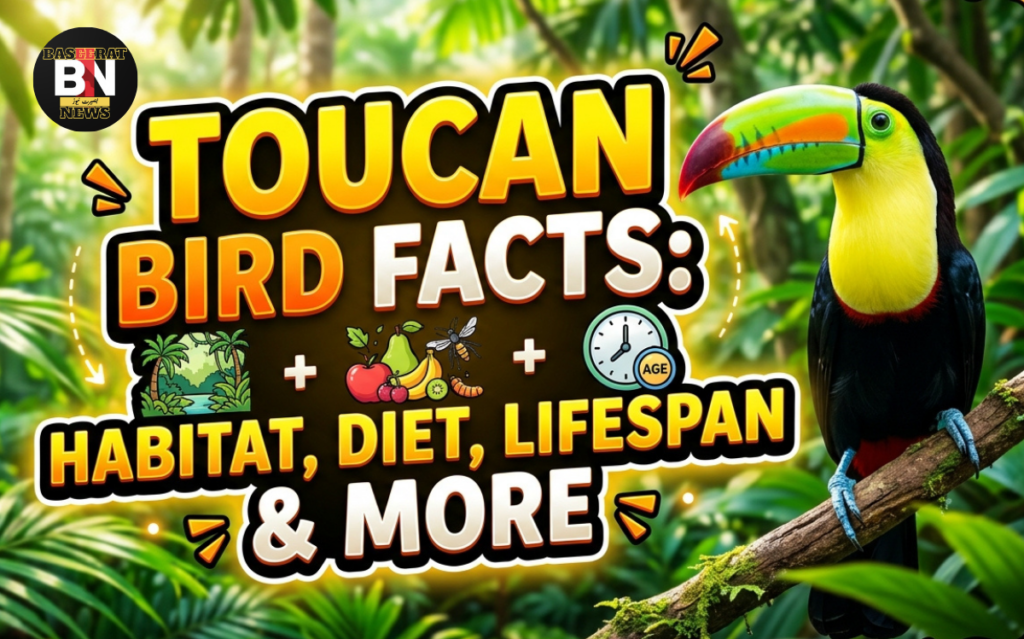
Imagine walking through a lush tropical rainforest and suddenly spotting a bird with a bill so large and colorful it almost looks unreal. That bird is a toucan, one of nature’s most extraordinary creations.
Many people assume a toucan’s enormous bill must be heavy, but surprisingly, it is incredibly lightweight. Made mostly of keratin and filled with tiny air pockets, the bill helps the bird survive in ways scientists are still studying today.
Toucans have become symbols of tropical forests across Central and South America. Their striking appearance has made them famous worldwide, yet many people know surprisingly little about their real lives in the wild.
Why do they have such huge bills? What do they eat? How do they survive in dense rainforests? And why are some species facing increasing threats?
This comprehensive guide explores everything about toucans—from their history and evolution to their behavior, reproduction, conservation, and the latest scientific discoveries.
Quick Facts Table
| Fact | Details |
| Common Name | Toucan |
| Family | Ramphastidae |
| Scientific Group | Ramphastidae |
| Origin | Central and South America |
| Habitat | Tropical and subtropical forests |
| Average Length | 30–65 cm |
| Weight | 130–680 grams |
| Lifespan | 15–25 years |
| Diet | Primarily fruit, insects, eggs, and small animals |
| Key Feature | Large colorful bill |
| Number of Species | More than 40 |
| Conservation Status | Varies by species |
What Is a Toucan?
A toucan is a tropical bird belonging to the family. These birds are famous for their oversized, colorful bills, vibrant feathers, and distinctive appearance.
Found primarily in tropical forests, toucans play a critical ecological role. They are among the rainforest’s most effective seed dispersers, helping maintain forest diversity and regeneration.
The best-known species is the, recognized by its bright orange bill and black-and-white plumage.
Unlike parrots, toucans are generally less skilled at mimicking sounds. Instead, they communicate using croaks, clicks, and rattling vocalizations.
Today, toucans are important indicators of rainforest health. Healthy toucan populations often signal healthy forest ecosystems.
History and Origins
Scientists believe toucans evolved millions of years ago in the tropical forests of South America.
Fossil evidence suggests their ancestors developed alongside expanding rainforest ecosystems during the Miocene Epoch, roughly 23 to 5 million years ago.
As forests diversified, birds that could efficiently access fruit from difficult locations gained an advantage. Over time, natural selection favored larger, specialized bills.
Researchers studying toucan evolution have discovered that the bill likely served multiple purposes rather than evolving for a single reason. Besides feeding, it became useful for temperature regulation, courtship displays, defense, and social communication.
Modern toucans diversified into more than 40 species spread across various habitats from southern Mexico to northern Argentina.
Genetic studies continue to reveal relationships among toucan species and provide insights into how climate shifts influenced their evolution.
Physical Characteristics and Main Features
The most remarkable feature of a toucan is its enormous bill, which can account for nearly one-third of its total body length.
Despite its size, the bill is surprisingly light because it contains a honeycomb-like structure filled with air spaces.
Appearance
Most toucans possess:
- Black body feathers
- Brightly colored bills
- White throat patches
- Strong feet
- Short wings
- Long tails
Special Abilities
Temperature Control
Recent studies show that a toucan’s bill acts like a biological radiator. Blood flow to the bill can increase or decrease to help regulate body temperature.
Fruit Collection
The long bill allows toucans to reach fruit located on thin branches that would otherwise not support their weight.
Defense and Display
Bright bills also help attract mates and establish dominance among rivals.
Unique Traits
Few birds are as instantly recognizable as toucans. Their colorful appearance has made them icons of tropical biodiversity worldwide.
Habitat, Environment, and Geographic Range
Toucans inhabit tropical and subtropical forests throughout Central and South America.
Major populations occur in:
Most species spend their lives in forest canopies where fruit is abundant.
As seed dispersers, toucans contribute significantly to forest regeneration by spreading seeds across large distances.
Behavior and Lifestyle
Toucans are highly active during daylight hours.
They often travel in small family groups, moving through forest canopies while searching for food.
Daily Activities
A typical day includes:
- Feeding
- Social interactions
- Grooming
- Vocal communication
- Nest maintenance
Social Behavior
Many species enjoy social living. Small groups help improve predator detection and resource sharing.
Communication
Toucans communicate through:
- Croaks
- Clicks
- Rattles
- Bill tapping
Survival Methods
Predators include snakes, raptors, and mammals. Toucans rely on vigilance, flight, and group awareness to avoid danger.
One fascinating behavior is sleeping with the bill tucked beneath the wings while the tail folds over the body, creating a compact resting posture.
Diet and Feeding Habits
Toucans are primarily frugivores, meaning fruit forms most of their diet.
Favorite foods include:
- Figs
- Berries
- Palm fruits
- Guavas
However, they are opportunistic feeders and also consume:
- Insects
- Spiders
- Small reptiles
- Bird eggs
- Nestlings
Their large bills enable them to pluck fruit from otherwise inaccessible branches.
By transporting seeds away from parent plants, toucans help forests maintain genetic diversity.
Reproduction and Life Cycle
Breeding seasons vary by region.
Courtship
Males often perform displays involving:
- Bill movements
- Food sharing
- Vocalizations
Nesting
Toucans nest in tree cavities, often using abandoned woodpecker holes.
Eggs
Females usually lay:
- 2 to 4 eggs
Both parents participate in incubation.
Chick Development
Newly hatched chicks are:
- Blind
- Featherless
- Highly dependent on parents
Feathers gradually develop over several weeks.
Lifespan
Wild toucans typically live 15–20 years, while some captive individuals may exceed 25 years.
Latest Research and Scientific Discoveries
Recent research has expanded our understanding of toucan biology.
Bill Thermoregulation
Scientists confirmed that toucan bills function as advanced heat-exchange systems, helping regulate body temperature efficiently.
Seed Dispersal Research
Ecologists have shown that toucans play a major role in maintaining rainforest plant diversity through long-distance seed transport.
Climate Change Studies
Researchers are investigating how changing temperatures and rainfall patterns may affect fruit availability and breeding success.
Forest Fragmentation
Studies indicate that habitat fragmentation reduces movement between populations, potentially affecting genetic diversity.
Technological Tracking
Modern GPS monitoring allows scientists to map toucan movement patterns more accurately than ever before.
Conservation Genetics
DNA analysis is helping researchers identify vulnerable populations requiring protection.
These discoveries continue to highlight the ecological importance of toucans throughout tropical ecosystems.
25 Fascinating Facts About Toucans
- There are more than 40 toucan species.
- Their bill can reach over 20 cm long.
- The bill is surprisingly lightweight.
- Toucans are related to barbets.
- Most species live in rainforests.
- They cannot fly long distances.
- Fruit is their primary food.
- They help spread seeds.
- Their bill helps regulate heat.
- They nest in tree cavities.
- Both parents raise chicks.
- Many species are social.
- They communicate with croaks.
- Their tongues can be nearly 15 cm long.
- Some species have rainbow-colored bills.
- They sleep curled into a ball.
- Their feet are adapted for climbing.
- They can catch insects in flight.
- Young chicks hatch blind.
- Forest loss threatens several species.
- Their feathers repel rain efficiently.
- Bills are made of keratin.
- They are symbols of tropical biodiversity.
- Ecotourists often seek them out.
- They remain among the world’s most recognizable birds.
Importance to Humans and Nature
Toucans are ecological engineers.
Their seed-dispersal activities help maintain rainforest diversity and support countless plant species.
Economically, toucans contribute to ecotourism industries throughout Latin America.
Culturally, they appear in artwork, folklore, advertising, and educational programs.
Scientifically, their remarkable bill structure inspires studies in thermoregulation, biomechanics, and evolutionary biology.
Threats and Challenges
Major threats include:
Habitat Loss
Deforestation remains the greatest danger to many toucan populations.
Climate Change
Changing weather patterns can affect fruit production and nesting success.
Illegal Wildlife Trade
Although regulations exist, illegal capture still occurs in some areas.
Forest Fragmentation
Roads, agriculture, and development divide habitats into isolated patches.
Human Expansion
Urban growth continues to reduce suitable habitat.
Conservation and Future Outlook
Conservation organizations work to protect rainforest habitats critical for toucan survival.
Key strategies include:
- Protected reserves
- Sustainable forestry
- Wildlife monitoring
- Community education
- Ecotourism initiatives
Future success depends on preserving large connected forests that allow toucans to move, feed, and reproduce naturally.
Common Myths and Misconceptions
Myth #1: Toucan bills are heavy.
Reality: Their bills are lightweight and filled with air pockets.
Myth #2: Toucans only eat fruit.
Reality: They also consume insects, eggs, and small animals.
Myth #3: All toucans look the same.
Reality: More than 40 species display different colors and sizes.
Myth #4: Toucans are parrots.
Reality: They belong to a completely different bird family.
Myth #5: Large bills make flying difficult.
Reality: Their lightweight structure minimizes flight problems.
Frequently Asked Questions (30 FAQs)
What is a toucan?
A tropical bird famous for its large,e colorful bill.
Where do toucans live?
Central and South American forests.
What do toucans eat?
Mostly fruit, insects, eggs, and small animals.
How long do toucans live?
Typically 15–25 years.
Why are their bills so large?
For feeding, temperature regulation, and communication.
Are toucans endangered?
Some species face conservation concerns.
Can toucans fly?
Yes, but usually over short distances.
Are toucans social?
Many species live in small groups.
How many species exist?
Over 40.
Do toucans migrate?
Most do not.
How big are toucans?
30–65 cm long, depending on species.
What is the largest species?
The Toco Toucan.
What predators hunt toucans?
Snakes, raptors, and mammals.
Do toucans nest in trees?
Yes.
How many eggs do they lay?
Usually 2–4.
Are toucans intelligent?
They show complex behaviors and learning abilities.
Do toucans make sounds?
Yes, including croaks and rattles.
Why are they important?
They disperse seeds and support rainforest health.
Can toucans swim?
Not well.
Are toucans friendly?
Generally non-aggressive.
What colors are toucans?
Black, white, yellow, orange, red, blue, and green.
Do males and females look alike?
Often yes.
How fast can they fly?
Moderate speeds through forest canopies.
What is their scientific family?
Ramphastidae.
Do toucans use their bills for fighting?
Sometimes during displays.
Can they survive outside rainforests?
Some species inhabit woodland habitats.
How do they stay cool?
By regulating blood flow through their bills.
What role do they play in ecosystems?
Seed dispersal and forest regeneration.
Are toucans protected?
Many species receive legal protection.
What is the future of toucans?
Conservation efforts offer hope if habitats remain protected.
Conclusion
The toucan is far more than a colorful rainforest bird. Its remarkable bill, complex behaviors, ecological importance, and evolutionary history make it one of the most fascinating animals on Earth.
From dispersing seeds that help forests grow to inspiring scientists with its unique biology, the toucan plays a vital role in maintaining tropical ecosystems. Yet these birds face increasing challenges from habitat destruction, climate change, and human activities.
Protecting toucans means protecting entire rainforest ecosystems that support countless other species. As research continues and conservation efforts expand, there is reason to be optimistic about the future of these remarkable birds.
Whether admired for their rainbow-colored bills or valued for their ecological contributions, toucans remain among nature’s most extraordinary ambassadors of the rainforest.
Click the link below for more…..