The Night Cricket Changed Forever
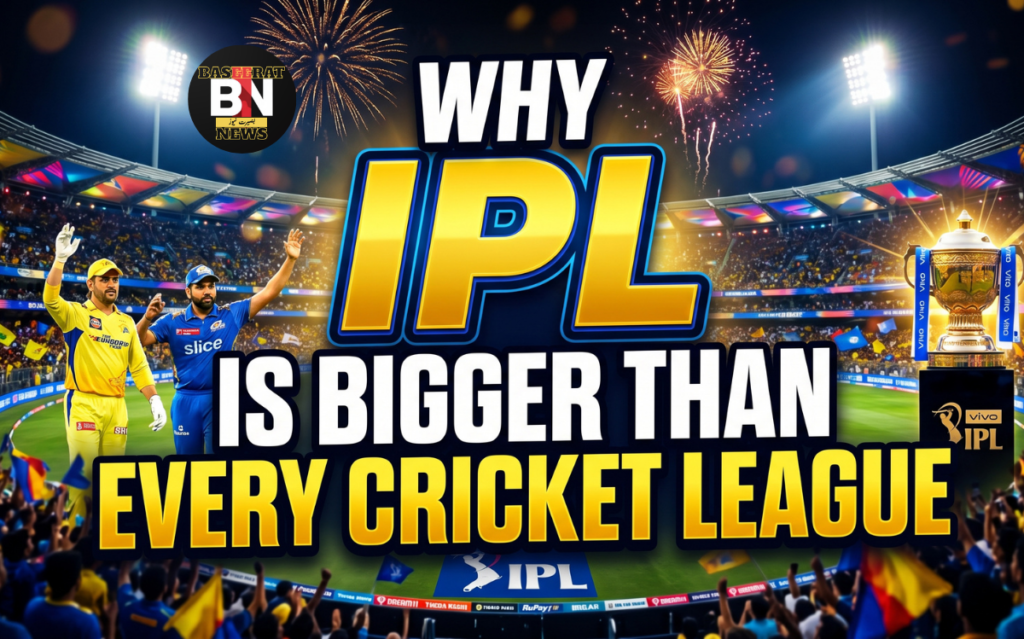
The floodlights glow over a packed stadium in Mumbai. Drums echo through the crowd. Thousands of fans wave jerseys in blue, yellow, red, and purple. Fireworks explode above the sky while millions more watch from homes, cafés, airports, and smartphones around the world.
For a few hours, everyday life pauses.
This is not just cricket anymore.
This is the Indian Premier League.
The IPL is more than a sports tournament. It is a cultural event, a business empire, a digital revolution, and an emotional ritual repeated every year across continents. Children imitate their favorite players in narrow streets. Families organize dinner around match timings. Social media erupts with memes, celebrations, debates, and heartbreak.
No cricket league in history has ever captured attention at this scale.
How did a domestic T20 tournament become one of the most valuable sporting leagues on Earth? Why do people who barely watch Test cricket suddenly become obsessed with IPL every summer? And how did the tournament transform cricket from a gentleman’s game into a global entertainment machine?
The answers lie in a mixture of timing, technology, psychology, money, storytelling, and pure human emotion.
The IPL arrived when the world wanted faster entertainment. It gave fans heroes, rivalries, drama, glamour, and unforgettable last-over finishes. It merged Bollywood-style spectacle with elite sports competition. Every match became a movie. Every player became a character. Every season became a new chapter.
But beneath the bright lights is a deeper story.
A story about how modern audiences consume sports. A story about how digital media reshaped fan culture. A story about cities fighting for pride and players chasing immortality. And perhaps most importantly, a story about why humans everywhere love competition, identity, and shared emotional experiences.
This is the story of why IPL became the most-watched cricket league in the world.
Powerful Introduction
In many ways, the IPL arrived at the perfect moment in history.
The world was changing fast. Attention spans were shrinking. Smartphones were beginning to dominate everyday life. Audiences wanted shorter entertainment, faster excitement, and emotionally intense experiences.
Traditional cricket, especially Test matches, often demanded patience. A Test could last five days. Even One Day Internationals stretched for hours. Younger audiences were drifting toward quicker forms of entertainment like YouTube clips, reality television, and social media.
Then came T20 cricket.
Suddenly, cricket became explosive.
Matches lasted only a few hours. Batsmen attacked from the first ball. Stadiums became louder. Cheerleaders danced. Music blasted beyond boundaries. Everyone felt important. The sport transformed from slow strategy into adrenaline-fueled entertainment.
The IPL took that format and turned it into a global spectacle.
Launched in 2008 by the Board of Control for Cricket in India, the league introduced city-based franchises, mega auctions, international superstars, corporate ownership, and entertainment-driven presentation, unlike anything cricket had seen before.
Fans instantly connected with the idea.
People were no longer supporting only national teams. They now had local identities inside cricket. A fan from Chennai could passionately support the Chennai Super Kings. Someone from Kolkata proudly backed the Kolkata Knight Riders. Mumbai became emotionally attached to the Mumbai Indians.
The league also brought together impossible combinations.
Indian legends played alongside Australian rivals. Young, unknown players shared dressing rooms with global icons. Fans witnessed dream partnerships they had never imagined.
At the same time, television production improved dramatically. Camera angles became cinematic. Commentary became energetic. Graphics became modern. Social media amplifies every moment instantly.
The IPL did not simply grow cricket.
It redefined how cricket was consumed.
Today, IPL viewership reaches hundreds of millions across television and digital platforms. Sponsorship deals are enormous. Broadcasting rights are worth billions. Stadiums sell out within minutes. International players prioritize IPL contracts. Young cricketers dream not just of representing their country, but of becoming IPL stars.
And with every season, the spectacle grows larger.
The Birth of IPL
The IPL was born from both opportunity and fear.
During the mid-2000s, cricket authorities realized the sport faced a serious challenge. Younger audiences were becoming harder to retain. Other entertainment industries were evolving rapidly, while cricket risked appearing old-fashioned.
Then came the 2007 ICC T20 World Cup in South Africa.
Nobody expected the tournament to become such a massive success.
The shorter format created instant drama. Crowds loved the aggressive batting and unpredictable finishes. Television ratings exploded. Most importantly, India’s national cricket team won the tournament under the leadership of MS Dhoni.
India went into celebration mode.
The BCCI quickly recognized a business opportunity unlike anything cricket had seen before.
Soon after, businessman Lalit Modi helped design a franchise-based T20 competition modeled partly on American sports leagues and European football structures. Cities would own teams. Players would be auctioned. Private investors and celebrities would buy franchises.
It sounded risky.
Traditional cricket fans questioned whether the format would damage the spirit of the game. Critics argued cricket should remain traditional and dignified. Others worried entertainment would overpower sportsmanship.
But the IPL launched anyway in 2008.
The opening match itself became legendary.
Brendon McCullum smashed an unbelievable 158 runs for the Kolkata Knight Riders against the Royal Challengers Bengaluru.
That innings changed everything.
The match felt cinematic. Explosive batting, packed crowds, loud music, and television excitement combined into a completely new sporting atmosphere. Audiences instantly realized this was not ordinary cricket.
The IPL quickly became a national obsession.
Bollywood stars bought franchises. Business tycoons invested billions. Brands rushed to sponsor teams. International cricketers joined eagerly because salaries were far higher than those in many national contracts.
The league also democratized opportunity.
Unknown domestic players suddenly found themselves sharing dressing rooms with world-class athletes. A young uncapped player could become famous overnight through one brilliant innings.
This created emotional storytelling.
Fans love discovering heroes. The IPL constantly produced them.
Every season introduced new stars, new rivalries, and new unforgettable moments. That unpredictability became central to the league’s appeal.
T20 Format Changed Everything
Cricket traditionally rewarded patience.
Test cricket required endurance, tactical discipline, and concentration over five long days. While purists loved the format, many casual viewers struggled to stay engaged.
T20 cricket flipped the formula completely.
Now every ball mattered.
Batsmen attacked immediately. Bowlers experimented creatively. Fielding became athletic and dramatic. Captains made rapid decisions under pressure. Momentum shifted constantly.
For modern audiences, this format was perfect.
A full IPL match could fit into an evening schedule. Families could watch after work. Students could stream matches on phones. Viewers no longer needed entire days to follow cricket.
This convenience mattered enormously.
The IPL also transformed cricket psychologically.
In Test cricket, caution often dominates strategy. In IPL cricket, aggression becomes survival. Players take risks continuously because the format rewards boldness.
That creates drama.
Fans remember sixes, impossible catches, last-ball finishes, and emotional celebrations. T20 cricket generates highlight moments constantly, making it ideal for television and social media.
The shorter format also made cricket accessible globally.
New viewers unfamiliar with complex cricket traditions could still enjoy fast scoring and exciting finishes. The IPL became easier for international audiences to understand compared to longer formats.
Another major factor was unpredictability.
In T20 cricket, weaker teams can upset stronger opponents more easily. One explosive innings can change everything. This uncertainty keeps audiences emotionally invested until the final ball.
Modern entertainment thrives on suspense.
The IPL mastered it.
Every season delivers miracle chases, shocking collapses, dramatic super overs, and unexpected heroes. Fans keep watching because they know anything can happen.
That emotional unpredictability is one reason IPL became addictive.
Star Players Make IPL Huge
Sports leagues become global when they create heroes.
The IPL understood this from the beginning.
Fans do not only watch cricket for technical excellence. They watch for personalities, emotions, rivalries, redemption stories, and unforgettable moments.
The IPL turned cricketers into superstars.
When Virat Kohli walks onto the field, crowds roar with emotional intensity. When Rohit Sharma captains a chase, millions feel hope and tension simultaneously. When AB de Villiers played impossible shots, fans witnessed creativity that felt almost unreal.
These players became larger than sports.
The IPL also created unique combinations that international cricket rarely allowed. Rivals from different countries suddenly became teammates. Fans loved seeing international stars collaborate.
Imagine watching Australian legends supporting Indian icons. Imagine English players celebrating alongside Pakistani-born overseas talent in franchise environments. The IPL blurred traditional cricket boundaries.
Young players benefited enormously, too.
A teenager performing well in one IPL season could instantly become internationally recognized. Unknown domestic players suddenly gained massive fan followings, sponsorships, and national team opportunities.
The league constantly creates emotional narratives:
- The veteran chasing one final trophy
- The young player is proving doubters wrong
- The captain is carrying fan expectations
- The underdog franchise shocking giants
- The comeback after injury or failure
Audiences connect deeply with these human stories.
That emotional investment keeps viewership incredibly high.
IPL Is More Than Cricket — It Is Entertainment
The IPL succeeded because it understood a powerful truth:
Modern audiences want experiences, not just matches.
From the beginning, the league embraced entertainment aggressively. Stadiums featured music, fireworks, celebrity appearances, giant screens, and high-energy presentations.
Every IPL night feels like a festival.
Bollywood involvement amplified this further. Owners like Shah Rukh Khan brought glamour and mainstream attention. Film stars attending matches attracted audiences beyond traditional cricket fans.
The production quality also became cinematic.
Slow-motion replays captured emotional reactions beautifully. Crowd shots created an atmosphere. Commentary teams built narratives around players and rivalries. Dramatic music increased tension.
The IPL essentially transformed cricket into episodic storytelling.
Each season feels like a television series filled with heroes, villains, plot twists, redemption arcs, and emotional finales.
Fans become emotionally attached because they follow these stories for months.
Merchandise strengthened identity further.
Jerseys, flags, chants, and fan communities gave supporters a sense of belonging. People began identifying themselves through IPL franchises, similarly to football supporters worldwide.
This cultural integration mattered enormously.
The IPL stopped being just a tournament.
It became part of everyday life.
Digital Streaming Revolution
One of the biggest reasons behind IPL’s explosive growth is digital streaming.
Television made the IPL famous.
Smartphones made it unstoppable.
A decade ago, fans mostly watched cricket from living rooms. Today, millions stream matches while traveling, studying, working, or socializing. The IPL adapted perfectly to mobile-era consumption.
This flexibility changed everything.
Streaming platforms allowed audiences to watch anywhere. Younger viewers especially preferred mobile access over traditional television.
The rise of affordable internet in India accelerated this transformation dramatically.
Suddenly, cricket became accessible to hundreds of millions of additional viewers.
Digital platforms also created personalized viewing experiences. Fans could choose commentary languages, replay highlights instantly, share clips online, and engage socially during matches.
This interactivity deepened emotional involvement.
Social media algorithms amplified IPL content constantly. Viral sixes spread globally within minutes. Memes exploded after dramatic moments. Player interviews circulated endlessly.
The IPL became impossible to ignore online.
Another important factor was data analytics.
Streaming companies tracked viewer behavior carefully. They understood which moments generated maximum engagement. This helped improve presentation styles, advertising strategies, and content distribution.
Modern sports success depends heavily on digital ecosystems.
The IPL mastered them faster than most global leagues.
Short-form video content became especially important. Clips of catches, celebrations, and sixes spread rapidly across platforms, attracting even non-cricket audiences.
This created a cycle:
- Viral moments increased interest
- Interest increased viewership
- Viewership increased sponsorship value
- Sponsorship improved production quality
- Better production generated more viral moments
The ecosystem fed itself continuously.
The IPL also benefited from multilingual broadcasting. Fans across regions could enjoy commentary in their preferred language, making the tournament feel deeply local despite its global scale.
Streaming transformed cricket from scheduled viewing into a constant digital conversation.
And the IPL dominated that conversation.
IPL’s Massive Business Model
The IPL is not only a sports tournament.
It is one of the most powerful sports businesses in the world.
Broadcasting rights alone are worth billions of dollars. Major corporations compete aggressively for sponsorships because IPL exposure reaches enormous audiences.
Why do companies spend so much?
Because attention is modern currency.
The IPL delivers massive attention consistently.
Every match creates millions of impressions across television, streaming, social media, news coverage, and digital discussions. Brands understand that association with IPL increases visibility dramatically.
Franchises themselves operate like global businesses.
Teams earn money through:
- Sponsorships
- Merchandise sales
- Ticket revenue
- Broadcasting shares
- Licensing deals
- Digital partnerships
Player auctions also create excitement.
Unlike traditional sports drafts, IPL auctions feel theatrical and emotional. Fans watch franchises bid millions for players, creating headlines before the season even begins.
This keeps the league relevant year-round.
The IPL also helped professionalize cricket economics.
Domestic players who once struggled financially now earn life-changing contracts. Young athletes see cricket as a viable professional career pathway.
This improves talent development nationwide.
Infrastructure investments increased, too. Stadiums modernized. Training facilities improved. Grassroots cricket expanded.
Economically, the IPL became a self-sustaining machine.
And because India has one of the world’s largest populations and fastest-growing digital audiences, the league’s commercial ceiling continues rising.
Fan Loyalty and City Rivalries
Humans naturally seek identity and belonging.
The IPL understood this psychology perfectly.
City-based franchises transformed cricket fandom emotionally. Supporters no longer watched as neutral spectators. They represented hometown pride, culture, and regional identity.
This created fierce rivalries.
Matches between the Mumbai Indians and Chennai Super Kings often feel emotionally explosive. Fans debate endlessly about legacy, trophies, and player greatness.
These rivalries generate emotional investment beyond statistics.
People remember where they watched iconic matches. They remember heartbreak after defeats and celebrations after victories.
Sports become memory-making machines.
The IPL also benefits from generational fandom. Children grow up supporting teams because parents do. Friend groups develop traditions around matches. Offices organize viewing parties.
Over time, franchises become cultural symbols.
This emotional attachment guarantees long-term audience retention.
Social Media Made IPL Bigger
Before social media, sports conversations mostly happened after matches.
Now they happen every second.
The IPL thrives in this environment.
Twitter debates, Instagram reels, YouTube highlights, memes, reaction videos, fantasy leagues, podcasts, and live stream discussions keep IPL constantly active online.
Even people not watching live matches encounter IPL content repeatedly.
Social media also humanized players.
Fans now see behind-the-scenes moments, practice clips, locker-room celebrations, and personal interactions. This strengthens emotional connections between audiences and athletes.
Memes became especially powerful.
A funny reaction, dropped catch, or emotional celebration can dominate internet culture within minutes. IPL moments spread far beyond cricket communities.
Influencers and content creators amplified this further. Entire digital careers now revolve around IPL analysis, comedy, fantasy cricket, and match reactions.
This ecosystem keeps audiences engaged continuously.
The IPL is no longer only watched.
It is discussed, shared, remixed, debated, and emotionally experienced online every day.
IPL vs Other Cricket Leagues
Many countries attempted to replicate the IPL formula.
Some succeeded partially.
None matched IPL’s scale.
Leagues like Australia’s Big Bash League, Pakistan’s Pakistan Super League, and England’s The Hundred developed strong fanbases.
Yet the IPL remains dominant.
Why?
First, India’s population creates an enormous audience advantage. Even a fraction of Indian cricket fans represents huge numbers globally.
Second, the IPL arrived earlier and established brand power before competitors matured.
Third, financial strength matters enormously.
The IPL pays higher salaries than most rival leagues. As a result, top international players prioritize IPL participation whenever possible.
Fourth, production quality remains elite.
Broadcast visuals, commentary standards, stadium atmosphere, and marketing campaigns operate at global entertainment levels.
Fifth, emotional intensity differs.
Indian cricket culture is deeply passionate. Victories and defeats carry enormous emotional significance. This intensity transfers naturally into IPL fandom.
Other leagues may produce quality cricket.
But the IPL produces spectacle.
Another major difference is global media attention. International cricket news cycles heavily focus on IPL performances. Strong IPL seasons can influence national team selections and player reputations worldwide.
The league also benefits from timing.
It occupies a major window in the global cricket calendar, allowing concentrated international attention.
Critically, the IPL combines three things better than competitors:
- Elite talent
- Entertainment value
- Emotional storytelling
That combination is difficult to replicate.
Some leagues excel technically. Others offer strong local support. But the IPL merges sports, business, celebrity culture, and digital entertainment into one massive ecosystem.
That is why it remains unmatched.
Criticism of IPL
Despite its success, the IPL faces criticism.
Some traditional cricket fans believe T20 leagues damage longer formats like Test cricket. They worry that younger players prioritize money and entertainment over technical development.
Others argue that the tournament creates scheduling conflicts internationally.
There are also concerns about commercialization.
Critics claim excessive advertising, sponsorships, and entertainment elements distract from pure cricket. Some believe the sport risks becoming more spectacle than competition.
Player workload is another issue.
Modern cricketers play enormous amounts of cricket annually. IPL intensity can contribute to injuries and mental fatigue.
Financial inequality between cricket nations also became more visible because of IPL wealth. Smaller cricket boards struggle to compete economically.
The league has also faced controversies involving governance issues, betting scandals, and franchise disputes over the years.
Yet despite criticism, viewership continues growing.
Why?
Because audiences ultimately prioritize emotional engagement and entertainment quality. The IPL delivers both consistently.
The Future of IPL
The future of IPL looks enormous.
Technology will likely reshape viewing experiences dramatically. Artificial intelligence, augmented reality, personalized camera feeds, and immersive broadcasting could make future matches feel interactive.
Global expansion may increase, too.
More international players will join. Overseas fanbases will grow further. Franchise ownership models could evolve globally.
Women’s cricket is also expanding rapidly through the Women’s Premier League, potentially creating another major sports revolution.
Data analytics will become even more influential. Teams already use advanced statistics heavily for strategy and player recruitment.
Fan experiences may become increasingly personalized.
Imagine viewers selecting player-focused camera angles, live analytics overlays, or virtual stadium environments through VR technology.
The IPL may also inspire deeper integration between entertainment industries and sports globally.
Environmental sustainability will likely become important too. Large sporting events face pressure to reduce waste and carbon impact.
Another fascinating possibility is global franchise networks, where IPL brands expand internationally across different cricket competitions.
One thing seems certain:
The IPL is no longer merely a cricket tournament.
It is a global entertainment institution.
And its influence will continue shaping sports culture worldwide.
Circadian Rhythm Science and Night Cricket
One fascinating reason IPL thrives involves human psychology and circadian rhythm science.
Most IPL matches occur during evening hours when people naturally seek relaxation and entertainment after work or school. This timing aligns perfectly with modern viewing habits.
Night sports create an emotional atmosphere differently from daytime events.
Floodlights, cooler temperatures, dramatic visuals, and packed evening crowds intensify sensory experiences. Psychologically, nighttime entertainment often feels more immersive and cinematic.
Researchers studying sports viewership frequently observe that emotionally stimulating evening events create stronger memory formation. This partly explains why iconic IPL moments remain culturally unforgettable.
The brain also responds strongly to suspense and unpredictability.
Close IPL finishes trigger adrenaline and dopamine responses similar to thriller movies. Fans become emotionally hooked because uncertainty activates reward pathways psychologically.
Digital behavior patterns reinforce this further.
Most social media engagement peaks during evening hours, exactly when IPL conversations explode online. Fans simultaneously consume live cricket and digital interaction, strengthening collective emotional participation.
The IPL unknowingly optimized itself around modern human behavioral rhythms.
That timing advantage matters far more than many realize.
Why Modern Humans Watch Sports Differently
Modern audiences consume sports differently from previous generations.
Earlier, fans mostly experienced cricket through radio commentary or television broadcasts. Today’s audiences expect interaction, personalization, and instant emotional stimulation.
Attention economies changed entertainment permanently.
People now compete against endless digital distractions:
- Short-form videos
- Streaming platforms
- Gaming
- Social media
- Podcasts
- Influencer content
To survive, sports leagues must constantly maintain emotional intensity.
The IPL excels here because every few minutes, something dramatic happens.
Modern viewers also prefer narrative-driven entertainment. Fans follow player journeys, team rivalries, controversies, memes, and emotional storylines continuously across digital platforms.
The IPL functions almost like serialized entertainment.
Each season develops ongoing narratives that audiences emotionally invest in over time.
This mirrors how modern humans consume television shows and cinematic universes.
Sports increasingly operate as storytelling ecosystems.
The IPL understood this transformation earlier than most leagues worldwide.
Timeline of IPL History
2007 — T20 Revolution Begins
The ICC T20 World Cup becomes a global sensation after India wins dramatically under MS Dhoni.
2008 — IPL Officially Launches
The first IPL season begins. Brendon McCullum scored 158 in the opening match, instantly electrifying audiences.
2010 — Global Attention Explodes
International players increasingly prioritize IPL participation. Sponsorship values rise rapidly.
2013 — Spot-Fixing Controversy
The league faces major criticism after betting and corruption allegations emerge, challenging its reputation.
2016 — Virat Kohli’s Historic Season
Virat Kohli scores a record-breaking run tally, creating one of IPL’s greatest individual seasons.
2020 — Pandemic Cricket Era
The IPL successfully operates in bio-secure environments, proving the league’s organizational power during a global crisis.
2022 — Mega Media Rights Deal
Broadcasting rights reach extraordinary financial levels, confirming IPL as one of the world’s most valuable leagues.
2023–2026 — Digital Era Dominance
Streaming audiences surge massively. Social media integration and mobile viewing reshape global cricket consumption permanently.
Fascinating Facts About IPL
- The IPL is among the richest sports leagues globally.
- Players from multiple continents participate every season.
- Some IPL finals attract viewership comparable to major global sporting events.
- The league helped revolutionize cricket broadcasting technology.
- Young domestic players often become overnight celebrities after strong performances.
- IPL auctions themselves attract massive audiences.
- Fantasy cricket apps exploded in popularity because of IPL engagement.
- Cricket tourism increased significantly during IPL seasons.
- Franchise valuations rose dramatically over time.
- IPL content dominates sports trends across South Asia every season.
- International cricket boards closely monitor IPL economics.
- T20 strategies developed in IPL now influence global cricket tactics.
- The league transformed fielding standards through athletic expectations.
- IPL created new career opportunities in sports media and digital content creation.
- Several future international stars were first discovered through IPL performances.
Conclusion
The IPL became the world’s most-watched cricket league because it understood something fundamental about human nature.
People crave emotion.
They crave stories, heroes, suspense, rivalry, belonging, identity, celebration, heartbreak, and unforgettable shared experiences.
The IPL delivers all of them simultaneously.
It arrived during the perfect technological era. It embraced digital culture earlier than its competitors. It transformed cricket into cinematic entertainment without completely losing sporting intensity.
Every season becomes a giant emotional festival.
Children discover heroes. Families create traditions. Cities unite behind colors and chants. Social media erupts with passion. Unknown players become legends overnight.
That emotional ecosystem is incredibly powerful.
The IPL is not merely successful because of money or marketing.
It succeeds because fans genuinely care.
They remember impossible sixes under floodlights. They remember last-over heartbreaks. They remember celebrating victories with friends and family late into the night.
Those memories become part of people’s lives.
And perhaps that is the real reason the IPL became unstoppable.
It turned cricket into emotion on a massive scale.
As technology evolves and global audiences grow, the league will likely become even bigger. But the core reason behind its dominance will remain simple:
The IPL makes people feel something unforgettable.
And in modern entertainment, that is the most valuable thing of all.
FAQs About IPL
1. What does IPL stand for?
IPL stands for the Indian Premier League.
2. When was IPL founded?
The IPL officially began in 2008.
3. Why is IPL so popular?
Its fast-paced T20 format, entertainment value, star players, and digital reach make it hugely popular.
4. Which country hosts IPL?
India hosts the IPL.
5. Which IPL team has the biggest fanbase?
Teams like the Chennai Super Kings and Mumbai Indians are considered among the most popular.
6. Why do international players join IPL?
The league offers elite competition, global exposure, and major financial rewards.
7. Is IPL bigger than other T20 leagues?
Yes, in terms of revenue, viewership, and global influence.
8. Who was the first IPL superstar?
Brendon McCullum became an early IPL icon after his explosive opening-match innings.
9. Why do fans love T20 cricket?
Because it is fast, dramatic, and filled with action.
10. How does IPL make money?
Through broadcasting rights, sponsorships, ticket sales, and merchandise.
11. What role does social media play in IPL?
It spreads highlights, memes, discussions, and player content instantly worldwide.
12. Which player is strongly associated with IPL?
Virat Kohli is among the most iconic IPL players.
13. Why are IPL rivalries important?
They create emotional investment and fan passion.
14. Is IPL only popular in India?
No, it has global audiences across many countries.
15. Why do brands invest heavily in IPL?
Because the league delivers enormous visibility and engagement.
16. Has IPL changed cricket strategy?
Yes, especially batting aggression and tactical innovation.
17. Why are IPL auctions famous?
Because franchises spend millions building teams dramatically in public.
18. Which format does IPL use?
It uses the T20 cricket format.
19. Does IPL help young players?
Yes, it provides exposure and career opportunities.
20. Why is IPL called entertainment cricket?
It mixes sports with music, celebrity culture, and spectacle.
21. Can IPL surpass global football leagues?
Financially, it is growing rapidly, though football remains globally dominant.
22. How important is streaming for IPL?
Extremely important for younger mobile audiences.
23. What criticism does IPL face?
Commercialization, workload concerns, and impact on traditional cricket.
24. What is the future of IPL?
Further digital expansion, global influence, and technological innovation.
25. Why do people emotionally connect with IPL?
Because the league creates memories, identities, and dramatic storytelling.
26. Which IPL match types attract the most viewers?
High-pressure rivalry games and finals usually attract the biggest audiences.
27. How did IPL affect cricket economics?
It dramatically increased player salaries and league revenues.
28. Is IPL influencing world sports culture?
Yes, especially in franchise-based cricket entertainment.
29. Why do younger audiences prefer IPL?
It matches modern fast-paced entertainment habits.
30. What makes IPL unique?
Its blend of cricket, celebrity culture, technology, emotion, and spectacle.