UK Heatwave 2026: Britain Braces for Record Temperatures and Extreme Heat
The United Kingdom is experiencing one of its most significant heat events in recent memory as temperatures soar across England and Wales. After several days of unusually hot weather, forecasters have warned that parts of the country could see temperatures nearing 40°C, a level once considered almost unimaginable for Britain.
The intense heat has triggered widespread concern among health officials, schools, transport operators, and local authorities. Extreme heat warnings have been issued across large parts of the country, urging residents to take precautions as the heatwave reaches its peak.
For many people, sunshine and warm weather are usually welcome. Parks fill with families, beaches become crowded, and outdoor events thrive. However, when temperatures climb to dangerous levels, the risks quickly outweigh the benefits.
The summer of 2026 may be remembered as a defining moment in Britain’s changing climate story. From strained transport networks to public health concerns and record-breaking forecasts, the current heatwave highlights how extreme weather is becoming a growing challenge for the UK.
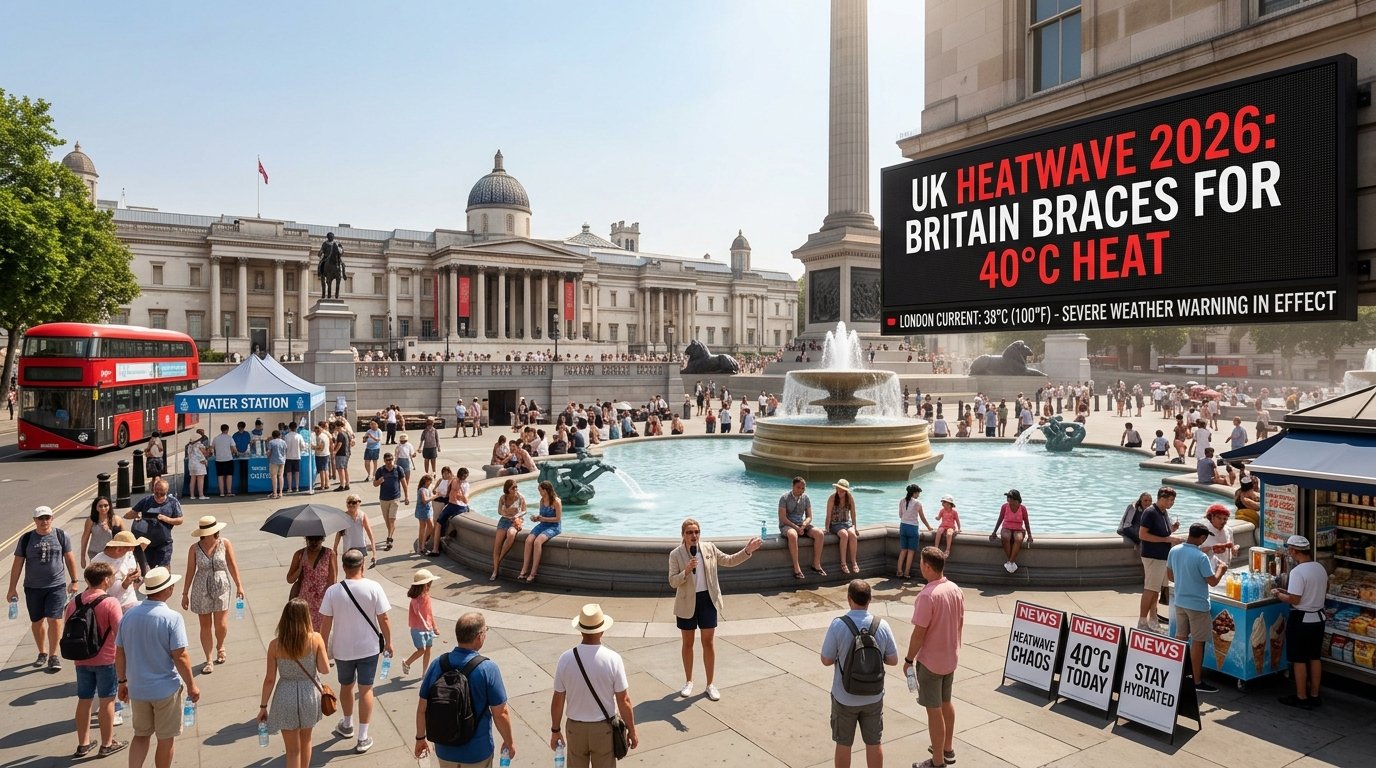
In this article, we’ll explore what’s happening, why temperatures are rising so dramatically, how communities are responding, and what this could mean for the future.
Why Is the UK Experiencing Such Extreme Heat?
The current heatwave is being driven by a combination of meteorological factors.
A large area of high pressure has settled over western Europe, allowing hot air from southern regions to move northward. This weather pattern has created stable atmospheric conditions with clear skies and prolonged sunshine.
Without significant cloud cover or rainfall, temperatures have continued to build day after day. Ground surfaces, roads, and urban areas absorb heat during daylight hours and release it slowly overnight, preventing temperatures from dropping sufficiently.
This phenomenon is especially noticeable in major cities, where concrete and asphalt trap heat and create what experts call the “urban heat island” effect.
As a result, many areas are experiencing not only scorching daytime temperatures but also uncomfortable nights, making it harder for people to recover from the heat.
UK Temperatures Approaching Historic Levels
Britain has seen major heatwaves before, but the 2026 event is drawing comparisons with some of the hottest periods ever recorded.
Forecasters have warned that temperatures could approach 40°C in some locations. Even areas that do not reach these extremes are expected to experience temperatures well above seasonal averages.
For context, average June temperatures across much of the UK are typically between 18°C and 23°C. Temperatures climbing into the mid-to-high 30s represent a dramatic departure from normal conditions.
The possibility of approaching the 40°C mark has attracted national attention because such temperatures were once considered exceptionally rare in the British climate.
Meteorologists are closely monitoring developments as weather models continue to assess how high temperatures may climb.
Met Office Issues Extreme Heat Warnings
One of the clearest signs of the seriousness of the situation is the issuance of extreme heat warnings.
These warnings are designed to alert the public, healthcare providers, emergency services, and local authorities about potentially dangerous weather conditions.
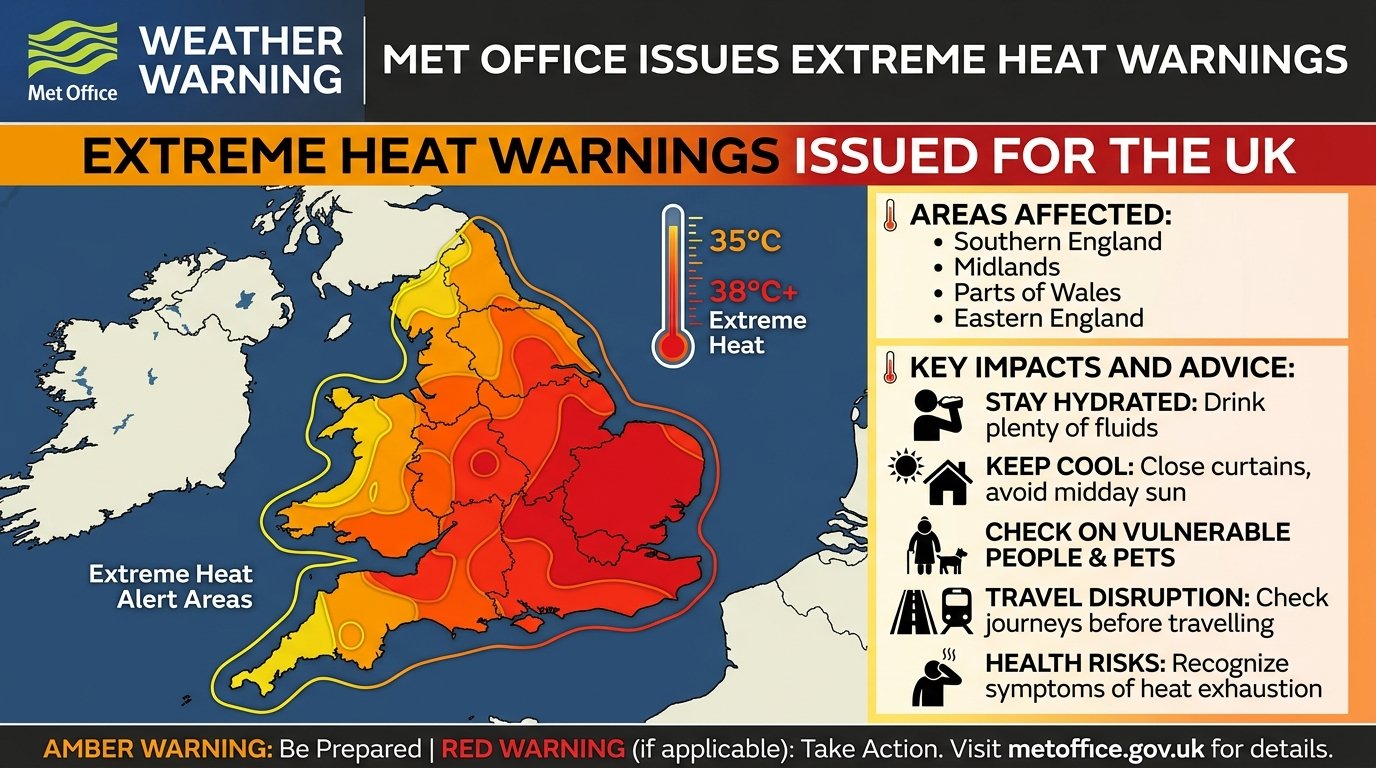
Unlike ordinary warm-weather alerts, extreme heat warnings indicate a higher likelihood of impacts, including:
- Increased health risks
- Pressure on hospitals and healthcare services
- Travel disruption
- Power and infrastructure challenges
- Risks to vulnerable populations
Officials have emphasised that heat can be just as dangerous as severe storms or winter weather events.
Many people underestimate the risks associated with high temperatures, particularly in countries where extreme heat is less common.
Health Risks During the Heatwave
The greatest concern surrounding the heatwave is its impact on public health.
Heat-related illnesses can affect anyone, but certain groups face a much higher risk.
These include:
- Older adults
- Young children
- Pregnant women
- People with chronic health conditions
- Individuals taking certain medications
- Outdoor workers
Common heat-related conditions include dehydration, heat exhaustion, and heatstroke.
Signs of Heat Exhaustion
Symptoms may include:
- Heavy sweating
- Dizziness
- Headaches
- Weakness
- Nausea
- Rapid heartbeat
If left untreated, heat exhaustion can develop into heatstroke, a potentially life-threatening medical emergency.
Heatstroke Symptoms
Warning signs include:
- Confusion
- Loss of consciousness
- High body temperature
- Seizures
- Lack of sweating despite intense heat
Medical experts are encouraging people to remain hydrated, avoid strenuous activities during peak heat hours, and check on vulnerable family members and neighbours.
UK Schools and Education Impact
One of the most visible consequences of the heatwave has been its impact on schools.
Many educational facilities across the UK were not designed to cope with temperatures approaching 40°C.
Classrooms can become extremely uncomfortable and, in some cases, unsafe for students and staff.
Schools have implemented various measures, including:
- Relaxed uniform policies
- Earlier finishing times
- Increased water breaks
- Outdoor activity restrictions
- Temporary closures in some cases
Parents and teachers have raised concerns about how children can effectively learn in overheated classrooms.
The situation has renewed discussions about the need to improve school infrastructure to withstand increasingly frequent heatwaves.
Travel Disruption Across the Country
The UK’s transport system is also feeling the effects of the extreme heat.
High temperatures can cause significant challenges for infrastructure that was originally designed for a cooler climate.
Rail Networks
Rail operators have introduced speed restrictions in some areas to reduce the risk of track damage.
Steel railway tracks expand when heated, and excessive temperatures can lead to track distortion.
Even minor distortions can create safety concerns and cause delays.
Roads
Road surfaces may soften or become damaged under prolonged exposure to intense heat.
Maintenance crews are monitoring conditions closely in areas experiencing the highest temperatures.
Airports
Air travel can also be affected by extreme heat.
Although major airports are equipped to handle warm weather, unusually high temperatures may require operational adjustments.
Passengers have been advised to check travel information before starting journeys.
How Businesses Are Responding
The heatwave is having mixed effects on businesses.
Some sectors are benefiting from increased consumer activity, while others face operational challenges.
Businesses Seeing Increased Demand
- Ice cream vendors
- Beverage companies
- Air conditioning suppliers
- Retailers selling fans
- Holiday destinations
- Outdoor leisure venues
Businesses Facing Challenges
- Construction firms
- Agricultural operations
- Logistics companies
- Public transport providers
Employers are being encouraged to review workplace safety procedures and ensure staff have access to adequate hydration and rest breaks.
Impact on Agriculture
Farmers across the UK are monitoring conditions closely as prolonged heat affects crops and livestock.
While sunshine can support growth in some circumstances, extreme temperatures may create additional challenges.
Potential concerns include:
- Water shortages
- Reduced crop yields
- Heat stress in animals
- Increased irrigation demands
Livestock require additional care during heatwaves, particularly cattle and poultry, which can be highly sensitive to extreme temperatures.
Agricultural organisations continue to guide farmers dealing with rapidly changing conditions.
Water Demand and Conservation Concerns
As temperatures rise, water consumption typically increases.
People use more water for:
- Drinking
- Gardening
- Showers
- Swimming pools
- Cooling systems
Water companies are encouraging customers to use water responsibly.
Although there is currently no widespread crisis, sustained hot and dry conditions can place pressure on supplies.
Experts note that future summers may require more robust water management strategies as climate patterns evolve.
The Climate Change Connection
Whenever Britain experiences an extreme weather event, discussions about climate change quickly follow.
Scientists are careful not to attribute any single weather event solely to climate change. However, research increasingly shows that rising global temperatures are making heatwaves more frequent, intense, and longer-lasting.
Several decades ago, temperatures approaching 40°C in Britain would have been considered extraordinarily unlikely.
Today, such temperatures are becoming increasingly plausible.
Climate researchers point to several long-term trends:
- More frequent heatwaves
- Warmer average temperatures
- Increased risk of drought
- More extreme rainfall events
- Greater weather variability
The current heatwave is likely to become part of a broader conversation about how the UK adapts to changing climate realities.
How Communities Are Coping
Across the country, communities are finding ways to stay safe while making the most of the sunshine.
Local authorities have opened cooling spaces in some areas.
Community organisations are checking on vulnerable residents.
Families are adjusting daily routines to avoid the hottest periods of the day.
Many people are choosing to:
- Exercise early in the morning
- Stay indoors during peak afternoon heat
- Increase fluid intake
- Wear lightweight clothing
- Seek shade whenever possible
Public awareness campaigns have played an important role in helping people understand heat-related risks.
Tips for Staying Safe During Extreme Heat
If temperatures continue to rise, the following precautions can help reduce risk:
Stay Hydrated
Drink water regularly throughout the day, even if you do not feel thirsty.
Keep Homes Cool
Close curtains and blinds during the hottest part of the day.
Avoid Midday Sun
Try to stay indoors during peak heat hours.
Wear Appropriate Clothing
Choose light-colored, loose-fitting clothing.
Check on Vulnerable People
Older relatives, neighbours, and individuals with health conditions may need extra support.
Never Leave Children or Pets in Vehicles
Temperatures inside parked cars can rise rapidly and become life-threatening within minutes.
Could More Heatwaves Be Coming?
Many experts believe Britain should prepare for more frequent heatwaves in the future.
Long-term climate projections suggest that hot weather events are likely to become increasingly common.
As a result, governments, businesses, and communities may need to rethink how infrastructure is designed and managed.
Areas likely to receive greater attention include:
- Building design
- School construction
- Transport resilience
- Water management
- Public health planning
The 2026 heatwave may ultimately serve as a reminder that adaptation is becoming just as important as mitigation.
What This Heatwave Means for the Future
The current heatwave is more than just a weather story.
It is a test of how modern Britain responds to increasingly extreme conditions.
From healthcare systems and schools to rail networks and local communities, every sector is being challenged by temperatures that would once have seemed extraordinary.
While many people will enjoy the sunshine, the event also highlights important questions about resilience, preparedness, and long-term planning.
The decisions made today could shape how effectively the UK handles future heatwaves in the years ahead.
Frequently Asked Questions
How hot will the UK get during the 2026 heatwave?
Some forecasts suggest temperatures could approach 40°C in parts of England, making it one of the hottest June periods on record.
Why is the heatwave happening?
A persistent area of high pressure is allowing hot air to move northward into the UK, creating prolonged periods of sunshine and high temperatures.
Are heatwaves becoming more common in Britain?
Research indicates that climate change is increasing the frequency and intensity of heatwaves across many parts of the world, including the UK.
Who is most at risk during extreme heat?
Older adults, young children, pregnant women, and people with chronic health conditions are among the most vulnerable groups.
How can people stay safe?
Stay hydrated, avoid excessive sun exposure, keep indoor spaces cool, and check on vulnerable individuals.
Conclusion
The UK heatwave of 2026 is shaping up to be one of the most significant weather events of the year. With temperatures pushing toward record territory, health officials, meteorologists, and local authorities are urging the public to take the situation seriously.
While bright skies and summer sunshine may seem appealing, extreme heat can have far-reaching consequences. From public health concerns and travel disruption to climate discussions and infrastructure challenges, the effects are being felt across the country.
As Britain navigates this remarkable period of hot weather, one thing is becoming increasingly clear: extreme heat is no longer an occasional anomaly. It is becoming an important part of the nation’s climate reality, and preparation will be key to meeting the challenges ahead.
CLICK the link below for more……

CLICK the link below for more

CLICK the link below for more……