Deer: Complete Scientific Guide to Species, Behavior, Habitat, and Survival
Deer are among the most widely recognized wild mammals on Earth, yet their biology, behavior, and ecological importance are often underestimated. Found across forests, grasslands, mountains, and even semi-urban regions, they represent one of the most adaptable herbivore lineages in the animal kingdom. From silent forest movement to complex communication systems and seasonal migration patterns, deer are far more sophisticated than their graceful appearance suggests.
In recent wildlife research, deer have become a key model for studying ecosystem balance, climate adaptation, and human-wildlife interaction. Their population dynamics directly influence vegetation cycles, predator populations, and even forest regeneration patterns. Despite being common in many regions, several species are now facing increasing pressure from habitat fragmentation and environmental change.
This article provides a complete scientific exploration of deer, including their biology, evolution, behavior, diet, reproduction, and the latest research findings shaping our understanding of them today.
Quick Facts Table
| Fact | Details |
| Scientific Classification | Family Cervidae |
| Common Name | Deer |
| Habitat | Forests, grasslands, tundra, mountains |
| Distribution | Asia, Europe, the Americas, and parts of Africa |
| Diet | Herbivorous (grass, leaves, shoots, bark) |
| Lifespan | 6–20 years depending on species |
| Key Feature | Antlers (males in most species) |
| Behavior Type | Social, herd-based, migratory in some species |
What Is a Deer?
A deer is a hoofed herbivorous mammal belonging to the family Cervidae. They are characterized by long, slender legs, a compact body, a short tail, and most notably, branched antlers that are typically grown by males and shed annually in most species.
Deer evolved as highly specialized grazing and browsing animals adapted to survive in diverse ecosystems ranging from dense forests to open plains. Their evolutionary success is largely due to their speed, agility, heightened senses, and ability to adapt to changing environments.
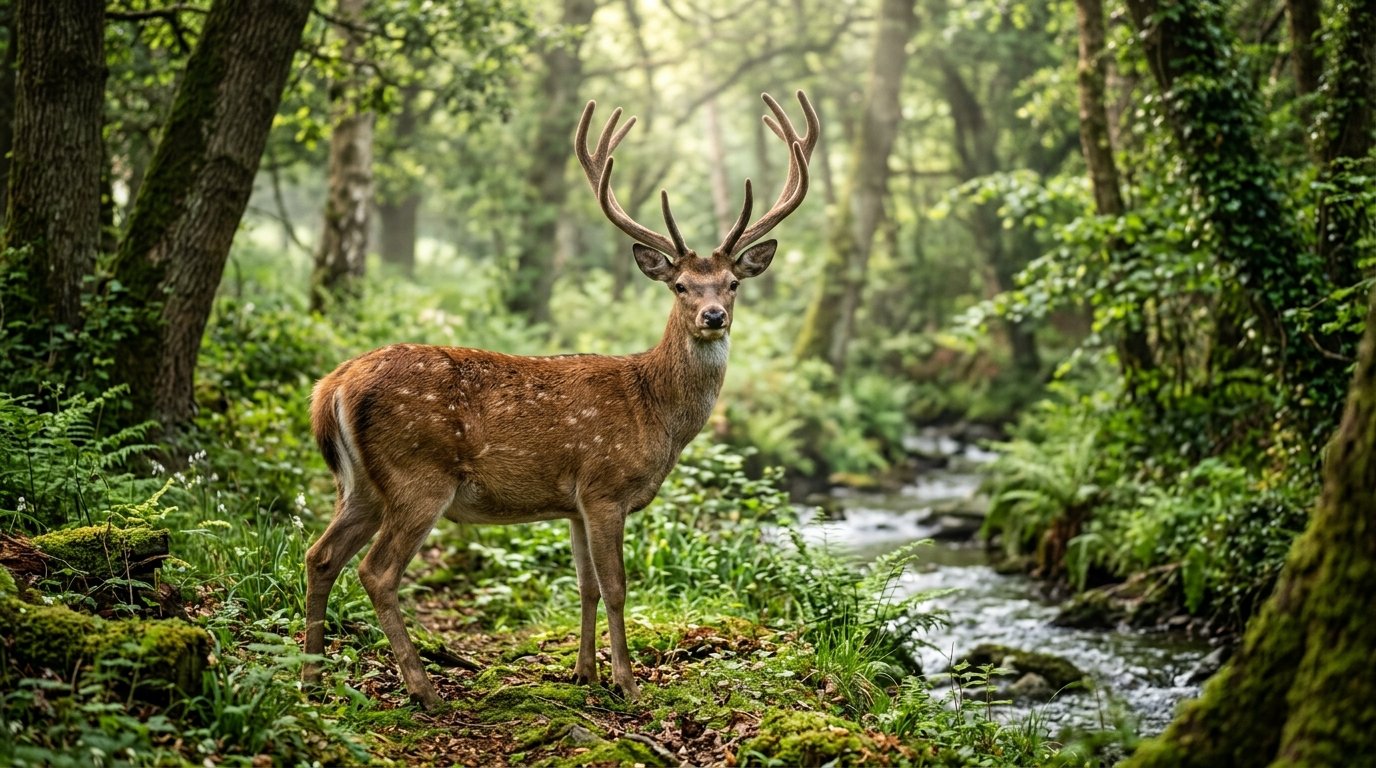
What makes deer especially significant in modern ecology is their role as “keystone herbivores.” By feeding on vegetation, they shape plant growth patterns, influence forest regeneration, and indirectly affect countless other species.
In simple terms, deer are not just forest animals—they are ecosystem engineers that help maintain ecological balance.
History and Origins of Deer
Fossil evidence suggests that early deer ancestors appeared approximately 20–25 million years ago during the Miocene epoch. These primitive deer-like mammals were small, horned creatures that gradually evolved into the diverse species we see today.
The earliest members of the Cervidae family were primarily found in Eurasia. Over time, they spread across continents through land bridges, especially into North America during periods of lower sea levels.
Key evolutionary milestones include:
- Development of antlers for mating competition
- Expansion into open grasslands
- Increased speed and limb specialization
- Advanced herd behavior for predator defense
Modern deer species evolved different survival strategies depending on geography. For example, forest deer developed stealth and agility, while open-plains species evolved endurance and group vigilance.
Recent genetic research has revealed that deer diversification is still ongoing, meaning evolution within the Cervidae family has not stopped.
Physical Characteristics and Main Features
Deer exhibit a wide range of physical adaptations that make them efficient survivors.
Body Structure
They have lightweight bodies designed for speed and agility. Long legs allow them to run at high speeds and jump significant distances when escaping predators.
Antlers
One of the most distinctive features is antlers. Unlike horns, antlers are made of bone and are shed annually. They grow rapidly and are primarily used for mating competition and dominance displays.
Senses
Deer possess highly developed senses:
- Exceptional hearing for detecting predators
- Strong sense of smell for food and danger detection
- Wide field of vision due to side-placed eyes
Coat and Coloration
Their fur provides seasonal camouflage. In winter, coats become thicker and duller for insulation, while summer coats are lighter and more breathable.
Speed and Agility
Some deer species can reach speeds of up to 60–80 km/h, making them among the fastest land mammals in forest environments.
Habitat and Distribution
Deer are highly adaptable and inhabit a wide range of environments across the globe.
Natural Habitats:
- Dense forests
- Temperate woodlands
- Grasslands and savannas
- Mountain regions
- Arctic tundra (caribou/reindeer species)
Geographic Distribution:
Deer are found on every continent except Antarctica and Australia (wild populations).
Environmental Adaptation:
Different species adapt uniquely:
- Forest deer rely on camouflage and stealth
- Mountain deer develop stronger hooves for climbing
- Arctic deer develop thick fur and fat layers
Human expansion has pushed some deer species into suburban and agricultural landscapes, where they often adapt surprisingly well.
Behavior and Lifestyle
Deer are social and intelligent animals with complex behavioral patterns.
Social Structure
Most deer live in herds, although group size varies by species and season. Females and young often stay together, while males may form separate bachelor groups outside breeding season.
Communication
Deer communicate using:
- Body posture
- Tail movement
- Vocal sounds (grunts, bleats)
- Scent marking
Daily Activity
They are primarily crepuscular, meaning most active during dawn and dusk when predators are less active.
Survival Behavior
When threatened, deer rely on:
- Sudden bursts of speed
- Zigzag running patterns
- Freezing behavior to avoid detection
Mini observation from wildlife studies shows that deer often memorize predator patterns and adjust their movement routes accordingly, showing adaptive learning behavior.
Diet and Feeding Habits
Deer are herbivores with a highly flexible diet.
Primary Food Sources:
- Grass
- Leaves
- Shoots
- Bark
- Fruits
- Nuts
Seasonal Diet Changes:
In spring and summer, deer prefer fresh vegetation. In winter, they shift to bark and woody plants.
Feeding Behavior:
Deer are selective feeders, often choosing nutrient-rich plants while avoiding toxic species. They also play an important role in seed dispersal and vegetation control.
Their digestive system includes a multi-chambered stomach, allowing them to efficiently break down cellulose through microbial fermentation.
Reproduction and Life Cycle
Deer reproduction follows a seasonal cycle influenced by daylight and climate.
Mating Season (Rut)
Male deer compete for females through antler battles. Dominant males secure mating rights.
Gestation
Females carry offspring for about 6–8 months, depending on the species.
Birth and Early Life
Fawns are usually born in secluded areas. They rely on camouflage spots for protection.
Growth Stages:
- Fawn (0–6 months)
- Juvenile (6–12 months)
- Sub-adult (1–2 years)
- Adult (2+ years)
Lifespan varies:
- Wild deer: 6–14 years
- Protected environments: up to 20 years
Latest Research and Scientific Discoveries
Recent wildlife studies (2023–2026) have revealed new insights into deer biology:
Behavioral Intelligence
Deer show stronger spatial memory than previously thought, allowing them to avoid predator hotspots.
Climate Adaptation
Research shows deer are shifting migration routes due to rising temperatures and habitat fragmentation.
Urban Adaptation
In some regions, deer are adapting to suburban environments, altering feeding habits and movement patterns.
Genetic Studies
Modern DNA sequencing shows unexpected diversity within deer populations, suggesting ongoing evolutionary divergence.
Disease Ecology
Studies are focusing on how deer contribute to tick-borne disease cycles, making them important in public health ecology.
These discoveries are reshaping how scientists view deer—not as simple herbivores, but as dynamic ecological participants.
20 Fascinating Facts About Deer
- Deer can run up to 60–80 km/h
- Antlers grow faster than any other bone tissue
- Only male deer usually grow antlers (except reindeer)
- Deer have nearly 310-degree vision
- They are excellent swimmers
- Fawns are born with white spots for camouflage
- Deer can rotate their ears independently
- They communicate using scent glands
- Some species migrate over 1,000 km annually
- Deer can jump over 10 feet high
- They have four-chambered stomachs
- Antlers are shed every year
- Deer are most active at dawn and dusk
- They can detect human scent from far distances
- Deer form matriarchal herds
- They can survive extreme cold climates
- Reindeer are domesticated in some regions
- Deer play a key role in forest regeneration
- They recognize predator patterns
- Some species are excellent climbers
Importance to Humans and Nature
Deer play a crucial ecological role.
Ecological Importance
- Control plant overgrowth
- Support predator populations
- Aid seed dispersal
Economic Importance
- Hunting (regulated in some regions)
- Eco-tourism
- Wildlife photography industries
Cultural Significance
Deer appear in mythology, spiritual symbolism, and traditional folklore across many cultures, often representing gentleness, awareness, and natural harmony.
Threats and Challenges
Despite their adaptability, deer face multiple threats:
Habitat Loss
Urban expansion and deforestation reduce natural habitats.
Climate Change
Shifting weather patterns disrupt migration and breeding cycles.
Human Conflict
Road accidents and agricultural conflicts are increasing.
Overpopulation in Some Areas
In predator-free regions, deer populations can grow excessively, damaging ecosystems.
Disease Spread
Tick-borne diseases and infections are increasing in some populations.
Conservation and Future Outlook
Conservation efforts include:
- Protected forest reserves
- Wildlife corridors for migration
- Population control programs in overpopulated regions
- Anti-poaching enforcement
Organizations worldwide are studying deer to balance conservation with ecosystem stability. The future of deer depends heavily on habitat management and climate adaptation strategies.
Myths and Misconceptions
Myth 1: Deer are always harmless
Reality: While generally peaceful, males can become aggressive during mating season.
Myth 2: All deer shed antlers at the same time
Reality: Shedding time varies by species and age.
Myth 3: Deer are weak animals
Reality: They are highly adapted survivors with advanced sensory systems.
Frequently Asked Questions (FAQs)
- What is a deer?
A herbivorous mammal from the Cervidae family. - Where do deer live?
Forests, grasslands, mountains, and tundra regions. - What do deer eat?
Grass, leaves, shoots, bark, and fruits. - How long do deer live?
6–20 years, depending on species and environment. - Do all deer have antlers?
No, mostly males except the reindeer species. - Are deer dangerous?
Generally, no, but males can be aggressive during the rut. - How fast can deer run?
Up to 60–80 km/h. - Why do deer shed antlers?
For regrowth and mating cycles. - What is a baby deer called?
A fawn. - Are deer social animals?
Yes, they often live in herds. - Can deer swim?
Yes, many species are strong swimmers. - What is deer rut season?
The mating period. - How many species of deer exist?
Around 40–50 species. - Do deer migrate?
Some species do long seasonal migrations. - What eats deer?
Wolves, big cats, bears, and humans. - Are deer nocturnal?
Mostly crepuscular. - Why are deer important?
They maintain ecosystem balance. - Can deer survive winter?
Yes, with adapted coats and behavior. - Do deer recognize humans?
They can recognize patterns and threats. - How do deer communicate?
Through scent, sounds, and body signals. - Do deer have good eyesight?
Yes, especially wide-angle vision. - What is the biggest deer species?
Moose (the largest member of the deer family). - Are deer endangered?
Some species are threatened. - Can deer live in cities?
Yes, some adapt to suburban areas. - How do deer protect themselves?
Speed, camouflage, and herd behavior.
Conclusion
Deer represent one of nature’s most successful evolutionary designs. Their ability to adapt across continents, climates, and ecosystems highlights their biological resilience. Far from being simple forest animals, deer function as ecological regulators, shaping vegetation patterns and supporting biodiversity at multiple levels.
Modern research continues to uncover new layers of intelligence, adaptability, and environmental interaction within deer populations. At the same time, increasing human pressure demands more responsible conservation strategies.
Understanding deer is ultimately about understanding balance in nature itself—how herbivores, predators, plants, and climate interact in a constantly shifting system. Their survival is deeply connected to the health of global ecosystems, making their protection a shared ecological responsibility.
Click the link below for more….

https://baseeratnews.com/inside-the-secret-life-of-the-black-panther/
Click the link below for more…