Pink Katydid: Rarity, Genetics, Camouflage, and the 2026 Discovery That Changed Insect Science
In the dense green layers of forests, insects rely on camouflage as their primary survival strategy. Most blend seamlessly into leaves, bark, or soil. Yet occasionally, nature produces something that appears to defy logic: a bright pink katydid resting openly on foliage, seemingly exposed, almost artificial in appearance.
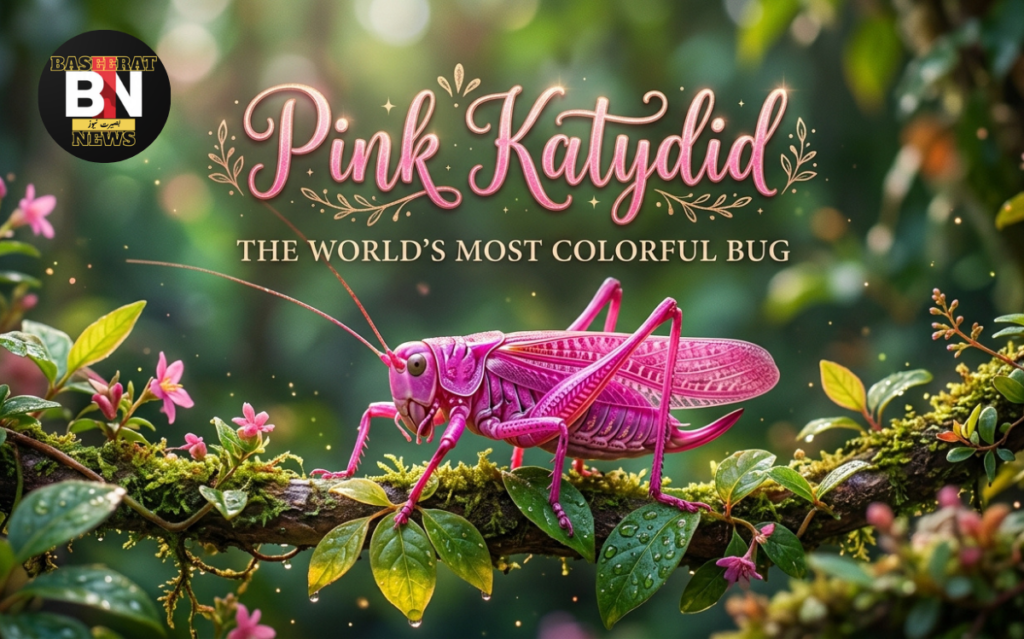
The pink katydid has fascinated entomologists, photographers, and nature enthusiasts for decades because it represents one of the rarest visible color variations in orthopteran insects. Unlike typical green katydids that disappear into vegetation, pink individuals stand out dramatically, raising a biological question that has long puzzled scientists: why would evolution produce an insect that appears more visible rather than hidden?
For years, the dominant explanation was simple—erythrism, a rare genetic mutation that reduces green pigmentation and enhances red or pink tones. However, emerging research in 2026 has challenged this assumption. Field observations and controlled habitat studies now suggest that at least some pink katydids may not be permanently pink at all. Instead, they may transition between pink and green depending on environmental factors, developmental stage, or physiological conditions.
This potential color-shifting ability is reshaping how scientists understand camouflage, insect adaptation, and even the genetic stability of coloration in katydids. It raises a deeper evolutionary question: are pink katydids truly mutants, or are they part of a more flexible survival system than previously believed?
To understand this phenomenon, it is essential to explore what pink katydids are, how they live, why they appear in such unusual coloration, and what modern science is now uncovering about their biology.
What Is a Pink Katydid?
A pink katydid is a rare color variant of insects belonging to the family Tettigoniidae, commonly known as katydids or bush crickets. These insects are closely related to grasshoppers and crickets and are widely distributed across vegetated ecosystems worldwide.
Katydids are characterized by their long antennae, leaf-like wings, and strong hind legs adapted for jumping. They are primarily nocturnal and rely heavily on camouflage for protection from predators such as birds, reptiles, and small mammals.
The pink katydid is not a separate species but rather a color morph that occurs within several katydid species. The most commonly observed genera include Microcentrum and Amblycorypha, both known for their excellent leaf mimicry.
Katydids differ from grasshoppers in several key ways:
- Antennae: Katydids have extremely long, thread-like antennae, often exceeding their body length, while grasshoppers have shorter antennae.
- Activity pattern: Katydids are mostly nocturnal; grasshoppers are diurnal.
- Sound production: Katydids produce sound by rubbing their wings together (stridulation), while grasshoppers rub their legs against their wings.
- Body structure: Katydids are generally more leaf-shaped and slender, improving camouflage.
The pink variant disrupts this natural camouflage pattern, making it one of the most visually striking insect anomalies in the natural world.
Why Are Some Katydids Pink?
The primary explanation for pink coloration in katydids has traditionally been attributed to erythrism, a rare genetic condition that affects pigment expression.
Erythrism Genetic Mutation
Erythrism occurs when the normal balance of pigments—especially green pigments like chlorophyll-mimicking compounds and carotenoids—is disrupted. This leads to an overexpression of reddish, pinkish, or orange hues.
In katydids, green coloration is usually produced through a combination of dietary pigments and structural coloration in the cuticle. When pigment synthesis pathways are altered, the insect may fail to develop green coloration, resulting in pink or reddish appearances.
Pigment Changes and Biological Mechanisms
Recent biochemical studies suggest that pigment expression in katydids is influenced by:
- Diet composition during nymph stages
- Hormonal regulation during molting
- Genetic expression controlling chromatophore-like cells
- Environmental temperature and humidity
These variables may determine whether an individual develops standard green coloration or rare pink pigmentation.
Evolutionary Theories
From an evolutionary standpoint, pink coloration seems disadvantageous because it reduces camouflage efficiency. However, some hypotheses suggest:
- Pink individuals may thrive in flower-rich environments where pink blends better than green
- The mutation may persist at low frequency due to neutral selection rather than strong negative selection
- Predation pressure may not consistently eliminate pink morphs in all habitats
Despite these theories, pink katydids remain extremely rare in nature.
Scientific Explanation Summary
The consensus remains that most pink katydids are the result of genetic mutation, but the stability of this mutation has recently come under scientific reconsideration.
The 2026 Discovery That Surprised Scientists
One of the most significant developments in entomology in recent years came from field observations reported in 2026, where researchers documented katydids initially identified as pink gradually shifting toward green coloration over time.
Pink-to-Green Color Change
In controlled forest observation zones, some individuals that hatched with pink coloration were later observed developing green pigmentation after successive molts. This suggests that coloration may not be fixed in all cases.
This phenomenon contradicts the long-held assumption that erythrism is permanent and purely genetic.
Rainforest Camouflage Adaptation
Researchers hypothesize that this color transition may be an adaptive camouflage response. In environments with dense green foliage, green pigmentation offers a survival advantage. If an organism can adjust its coloration, even partially, it gains a significant evolutionary benefit.
Research Findings
Preliminary findings indicate:
- Color change may occur during nymph-to-adult transitions
- Light exposure and plant diet may influence pigment reactivation
- Hormonal changes during molting cycles may regulate color expression
- Not all pink katydids show this ability, suggesting genetic subgroups
Impact on Insect Biology
If confirmed broadly, this discovery challenges foundational assumptions in entomology:
- Color morphs may not always be fixed genetic states
- Insects may possess hidden phenotypic plasticity
- Camouflage systems may be more dynamic than previously believed
This research is still developing, but it has already reshaped scientific discussions about insect adaptation.
Physical Characteristics
Pink katydids share the same general morphology as other katydids, with subtle but notable variations in appearance.
- Size: Typically ranges from 4 to 10 cm, depending on species
- Wings: Broad, leaf-shaped wings used for camouflage rather than flight
- Antennae: Extremely long sensory organs, often exceeding body length
- Color: Pink, magenta, or reddish hues replacing typical green pigmentation
- Body shape: Flattened and leaf-like to mimic foliage
Their physical structure is optimized for disguise, making the pink coloration particularly unusual in evolutionary terms.
Habitat and Distribution
Katydids, including pink variants, are widely distributed across vegetated regions.
- North America: Particularly in the eastern and southern United States
- Central America: Tropical forests with high biodiversity
- South America: Amazon basin and surrounding rainforest regions
They thrive in:
- Dense forests
- Shrublands
- Agricultural gardens
- Tropical vegetation zones
Pink katydids are most often reported in warm, humid environments where plant diversity supports their dietary needs and camouflage strategies.
Diet and Feeding Habits
Katydids are primarily herbivorous, feeding on plant-based material.
Their diet includes:
- Leaves (primary food source)
- Flowers and petals
- Soft fruits
- Occasionally, small insects or insect eggs (opportunistic feeding)
Feeding behavior is mostly nocturnal, reducing predation risk. Their mandibles are strong enough to chew tough plant matter, and their diet can influence pigmentation indirectly through nutrient intake.
Life Cycle
The life cycle of a katydid follows incomplete metamorphosis:
Egg Stage
Eggs are laid in plant stems, soil, or bark crevices. They remain dormant until favorable conditions trigger hatching.
Nymph Stage
Nymphs resemble miniature adults but lack fully developed wings. They undergo multiple molts, gradually increasing in size and complexity.
Adult Stage
Adults develop full wings and reproductive capability. This is also the stage where coloration becomes most visible and stable—or potentially variable in light of recent discoveries.
Lifespan
Most katydids live between 6 months and 1 year, depending on species and environmental conditions.
Defense Mechanisms
Despite their fragile appearance, katydids possess effective survival strategies:
- Camouflage: Leaf mimicry is their primary defense
- Color matching: Green or pink hues blend with vegetation or flowers
- Nocturnal activity: Reduces exposure to daytime predators
- Stillness behavior: Remaining motionless to avoid detection
Pink katydids, however, rely more heavily on environmental blending in floral regions.
Are Pink Katydids Rare?
Yes, extremely rare.
Population Estimates
Exact numbers are unknown, but field observations suggest pink morphs represent a very small fraction of katydid populations, likely less than 1%.
Why Sightings Are Uncommon
- Natural camouflage hides most individuals
- Pink coloration may increase predation risk
- Short adult lifespan limits visibility
- Habitat density makes observation difficult
Survival Challenges
Pink katydids may face:
- Higher predation rates in green environments
- Reduced camouflage efficiency
- Genetic rarity limits reproduction
Despite this, their persistence suggests they are not entirely disadvantageous in all environments.
Pink Katydid vs Grasshopper
| Feature | Pink Katydid | Grasshopper |
| Appearance | Leaf-like, pink/green | Compact, green/brown |
| Behavior | Nocturnal | Diurnal |
| Sound | Wing stridulation | Leg rubbing |
| Habitat | Dense vegetation | Open fields |
Katydids are generally more specialized for camouflage and stealth.
Interesting Facts About Pink Katydids
- Pink coloration is one of the rarest insect color morphs
- They are not a separate species
- Most belong to the Microcentrum or Amblycorypha genera
- Their antennae can exceed body length
- They are mostly nocturnal
- They can regenerate legs during early life stages
- Their camouflage mimics leaves with extreme accuracy
- Some individuals may shift color over time (2026 research)
- Females are often larger than males
- They produce sound by rubbing their wings
- Their hearing organs are located on the legs
- They are widespread but rarely seen
- They rely heavily on humidity-rich environments
- Their eggs can survive harsh conditions
- They are closely related to crickets
- They play a role in plant population control
- They can survive several weeks without food
- Their coloration may depend on diet
- They are highly sensitive to vibration
- They are often mistaken for leaves
- Pink individuals are more frequently photographed than studied
- They may appear in both forests and gardens
- They have been documented across multiple continents
- They are part of complex food webs
- Their survival depends heavily on camouflage success
Conservation and Future Research
While pink katydids are not currently classified as endangered, they are affected by broader environmental pressures:
- Deforestation
- Habitat fragmentation
- Climate change
- Pesticide exposure
Scientific Importance
Pink katydids provide valuable insights into:
- Evolution of camouflage
- Genetic pigment regulation
- Phenotypic plasticity
- Environmental adaptation
Future research is focused on confirming whether color change is widespread or limited to specific populations.
Conclusion
The pink katydid stands as one of nature’s most visually striking contradictions—an insect designed for camouflage that appears openly conspicuous. For decades, it was believed that this coloration was purely a genetic anomaly, a rare but static mutation.
However, emerging 2026 research suggests a more complex reality. Some individuals may not be permanently pink at all, but capable of transitioning between color states under environmental or developmental influences. If confirmed, this would redefine scientific understanding of insect coloration and challenge long-standing assumptions about genetic rigidity in camouflage systems.
Whether rare mutation or dynamic adaptation, the pink katydid remains a symbol of biological mystery—an organism that continues to blur the line between what is fixed in nature and what is capable of change.
FAQs
- What is a pink katydid?
A rare color variation of katydid insects with pink or reddish pigmentation. - Is it a separate species?
No, it is a color morph of an existing katydid species. - Why are they pink?
Mostly due to genetic pigment variation known as erythrism. - Are pink katydids rare?
Yes, extremely rare in natural populations. - Where are they found?
North, Central, and South American vegetated regions. - Can they change color?
Recent research suggests some may shift from pink to green. - What do they eat?
Leaves, flowers, fruits, and occasionally small insects. - Are they dangerous?
No, they are harmless to humans. - How big are they?
Typically 4–10 cm depending on species. - How long do they live?
Around 6–12 months. - Do they fly?
They can glide but are not strong fliers. - Why are they hard to find?
They are nocturnal and highly camouflaged. - What is their main defense?
Camouflage and stillness. - Do they make sound?
Yes, through wing rubbing. - Are they related to grasshoppers?
Yes, but they belong to a different family. - Do they live alone?
Mostly solitary. - Can they survive in captivity?
Yes, under controlled conditions. - What threatens them most?
Habitat loss and predators. - Are they studied often?
Yes, but sightings are rare. - Do males and females look different?
Females are usually larger. - Why is pink coloration unusual?
It reduces camouflage in green environments. - What is erythrism?
A genetic condition causing red or pink pigmentation. - Do they migrate?
No, they are non-migratory. - Are they nocturnal?
Yes, mostly active at night. - What is their ecological role?
They help regulate plant growth and serve as prey. - Can they regenerate limbs?
Partially during early development stages. - Are they beneficial to ecosystems?
Yes, they contribute to food webs. - Do they live in groups?
No, they are generally solitary. - Why are they popular online?
Because of their unusual bright pink color. - What makes them scientifically important?
Their coloration may reveal new insights into insect adaptation and evolution.
Click the link below for more …..

https://baseeratnews.com/complete-guide-to-butterflies/
Click the link below for more