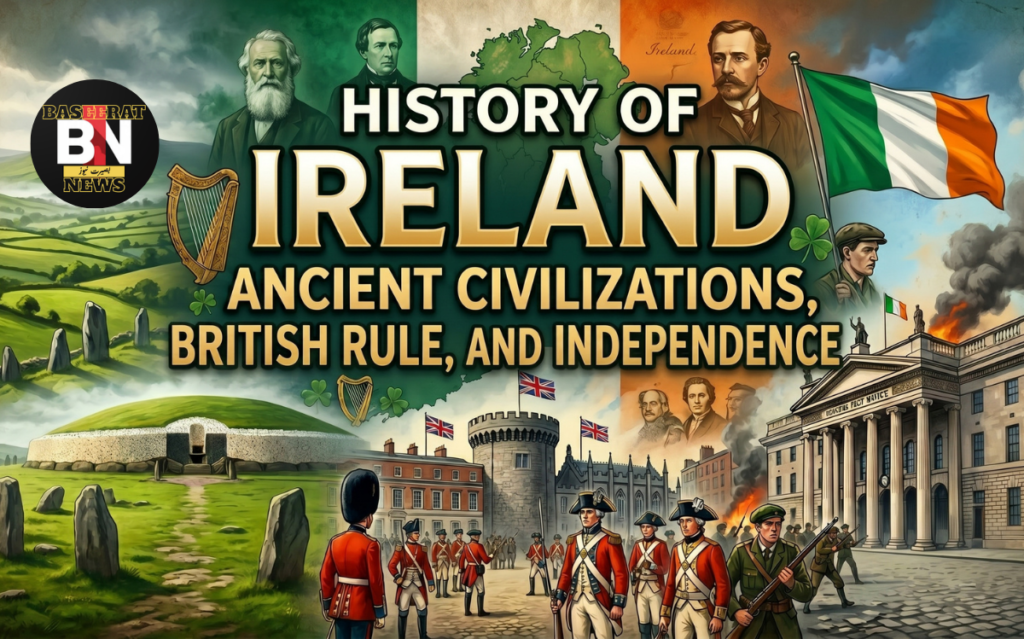
History of Ireland — Ancient Civilizations, British Rule, and Independence
The Island That Refused to Disappear
On the western edge of Europe sits an island wrapped in mist, poetry, rebellion, and memory. Ireland is not a large country, yet its history echoes across the world. Its people carried stories through invasions, famine, colonial rule, and civil conflict. They crossed oceans with almost nothing, but they brought with them music, language, faith, and an unbreakable sense of identity.
The history of Ireland does not move in a straight line. It feels more like the Atlantic Ocean crashing against the cliffs of the west coast — powerful, emotional, and unpredictable. Ancient Celtic tribes once ruled green valleys where stone circles still stand today. Viking ships later arrived from the north, changing trade and warfare forever. Christian monks copied manuscripts by candlelight while Europe collapsed into chaos after the fall of Rome.
Then came centuries of English control, land confiscations, religious division, and violent uprisings. Entire generations suffered under political oppression and economic hardship. The Great Famine of the 1840s transformed Ireland forever, killing millions and forcing countless families to flee abroad. Yet despite tragedy after tragedy, Ireland survived.
Today, modern Ireland is known for technology, literature, music, education, tourism, and global influence. Cities like Dublin mix medieval streets with modern innovation. Irish culture has become a global culture. Saint Patrick’s Day is celebrated from New York to Sydney. Irish writers changed world literature. Irish musicians shaped modern music. Irish communities helped build nations far beyond their homeland.
But beneath the modern success lies a deep historical memory. Ireland remembers everything.
This is the story of Ireland — an island of warriors, monks, poets, revolutionaries, and survivors.
Introduction: Understanding Ireland’s Historical Identity
To understand Ireland, one must first understand geography. Ireland is an island in northwestern Europe, separated from the United Kingdom by the Irish Sea. Though small in size, its location shaped centuries of invasion, migration, and political struggle.
For thousands of years, Ireland remained relatively isolated from mainland Europe. That isolation allowed unique traditions and cultural systems to develop. Ancient clans ruled territories long before modern countries existed. Oral storytelling became a central part of life. Poets and historians held positions of great importance. Nature itself became sacred in many early Irish traditions.
The earliest humans arrived in Ireland around 8000 BCE after the Ice Age ended. Archaeological discoveries show communities building settlements, farming land, and creating ceremonial structures thousands of years before written history began. Massive stone tombs like Newgrange still stand today, older than the pyramids of Egypt.
Ireland later became associated with the Celts, whose influence shaped language, mythology, music, and identity. The Irish language, known as Gaeilge, evolved from these ancient Celtic roots. Legends of heroes like Cú Chulainn and Finn McCool passed through generations as living history.
Christianity arrived during the fifth century and transformed Ireland deeply. Monasteries became centers of learning and literacy. While much of Europe struggled during the so-called Dark Ages, Irish monks preserved classical knowledge and produced remarkable illuminated manuscripts.
Yet Ireland’s story also became one of conquest and resistance. Viking raiders attacked monasteries before eventually settling in coastal towns. English involvement began during the medieval period but expanded dramatically under Tudor and Stuart rule. Land ownership changed hands repeatedly. Religious conflict intensified between Catholics and Protestants.
By the nineteenth century, Ireland was fully integrated into the British political system, but inequality remained severe. Poverty and dependence on potatoes made the population vulnerable. When potato crops failed during the Great Famine, catastrophe followed. Millions died or emigrated. Entire villages disappeared.
The twentieth century brought revolution. Irish nationalists fought for independence from Britain. The island was eventually divided into two political entities: the independent Irish state in the south and Northern Ireland, remaining within the United Kingdom.
Modern Ireland emerged from hardship into prosperity. The country became known for economic growth, cultural creativity, and international diplomacy. Yet the past continues to shape politics, identity, and memory on both sides of the border.
Ireland’s history is emotional because it is deeply human. It is filled with ordinary people facing extraordinary circumstances. Farmers, monks, rebels, immigrants, writers, and workers all contributed to the nation’s identity.
As Irish poet William Butler Yeats once wrote:
“There are no strangers here; only friends you haven’t yet met.”
That warmth and resilience remain central to Ireland even today.
Timeline of Irish History
| Period | Major Events |
| 8000 BCE | First human settlers arrive |
| 3200 BCE | Newgrange tomb constructed |
| 500 BCE | Celtic culture spreads |
| 432 CE | Saint Patrick begins a Christian mission |
| 795 CE | Viking raids begin |
| 1169 CE | Norman invasion of Ireland |
| 1541 CE | England declares the Kingdom of Ireland |
| 1607 CE | Flight of the Earls |
| 1695 CE | Penal Laws imposed |
| 1845–1852 | Great Irish Famine |
| 1916 CE | Easter Rising |
| 1921 CE | Anglo-Irish Treaty signed |
| 1949 CE | The Republic of Ireland was formally established |
| 1998 CE | Good Friday Agreement |
Early History of Ireland
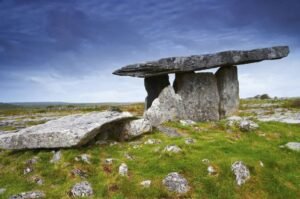
Long before castles and cathedrals appeared across Ireland, prehistoric communities were already thriving on the island. Archaeologists believe humans first arrived around 8000 BCE, likely traveling from Britain across land bridges or narrow sea crossings after the last Ice Age.
These early settlers were hunter-gatherers. They lived near rivers, lakes, and coastlines where food was plentiful. Over time, farming transformed Irish society. Communities began cultivating crops and raising animals. Permanent settlements slowly emerged across the countryside.
One of the most extraordinary achievements of prehistoric Ireland was the construction of megalithic tombs. The most famous is Newgrange in County Meath. Built around 3200 BCE, this massive stone structure predates both Stonehenge and the Egyptian pyramids.
Newgrange was carefully aligned with the winter solstice. Every year, sunlight enters the chamber at dawn during the shortest day of winter. This demonstrates remarkable engineering and astronomical knowledge among ancient Irish communities.
Bronze Age Ireland later developed extensive trade networks. Gold jewelry, weapons, and tools from this era reveal skilled craftsmanship. Archaeological evidence suggests trade connections with continental Europe were already active thousands of years ago.
The island was divided into kingdoms ruled by local chieftains. Power depended on kinship, land control, and military strength. Unlike centralized empires elsewhere, Ireland remained politically fragmented for centuries.
Yet despite divisions, early Irish society shared common cultural traditions. Storytelling, law, poetry, and ritual connected communities across the island. Much of what later became “Irish identity” began during these ancient centuries.
Ancient Ireland and the Celtic World
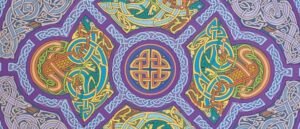
Around 500 BCE, Celtic influence became dominant across Ireland. The Celts were not a single empire but a network of tribes spread across Europe. In Ireland, Celtic culture blended with local traditions and shaped the island permanently.
The Irish language evolved from Celtic origins. So did many myths, symbols, and artistic designs associated with Ireland today. Intricate knotwork patterns, warrior legends, and harp music all trace their roots back to the Celtic era.
Celtic society valued oral tradition highly. Druids served as religious leaders, judges, historians, and advisers. Since much knowledge was spoken rather than written, storytelling became essential for preserving history.
Irish mythology from this era remains famous worldwide. Stories of the Tuatha Dé Danann described supernatural beings connected to magic and nature. Heroic tales celebrated warriors such as Cú Chulainn, whose bravery became legendary.
Clan loyalty shaped daily life. Families lived within tribal territories controlled by kings. Cattle represented wealth and status. Raids between kingdoms were common, though alliances constantly shifted.
Unlike the Roman Empire, which conquered much of Europe, Ireland was never fully occupied by Rome. Roman traders and influence reached the island, but direct rule never happened. This allowed Celtic culture in Ireland to survive more independently than in many other European regions.
Even today, traces of ancient Celtic Ireland remain visible in language, folklore, music, sports, and festivals. The past never truly disappeared from Irish culture. It simply adapted and survived.
Christianity and the Transformation of Ireland
The arrival of Christianity changed Ireland forever. According to tradition, Saint Patrick arrived during the fifth century to spread Christian teachings across the island.
Though Patrick became Ireland’s most famous saint, Christianity likely existed before his arrival. Still, his missionary work became central to Irish national identity. Legends describe him using the shamrock to explain the Holy Trinity and driving snakes from Ireland — though historians view these stories symbolically.
Christianity spread rapidly because monasteries became powerful social institutions. Irish monasteries were not only religious centers; they also functioned as schools, libraries, and places of scholarship.
During the early medieval period, Ireland became known as the “Land of Saints and Scholars.” Monks copied religious texts and preserved classical works that might otherwise have vanished during Europe’s political instability.
The most famous surviving manuscript from this era is the Book of Kells, an illuminated gospel manuscript celebrated for its extraordinary artistic detail.
Irish monks also traveled abroad as missionaries. They founded monasteries in parts of modern France, Germany, and Italy. Their influence extended far beyond Ireland itself.
Christianity blended with older Celtic traditions rather than completely replacing them. Sacred wells, seasonal festivals, and local legends often merged with Christian practices. This mixture created a distinct Irish religious culture.
Monasteries became wealthy and politically influential. Kings supported religious institutions in exchange for legitimacy and prestige. Some monasteries controlled large territories and trade routes.
However, these wealthy monasteries also attracted unwanted attention.
Beginning in the late eighth century, Viking raiders attacked coastal settlements repeatedly. Monasteries filled with gold, silver, and valuable manuscripts became major targets.
The peaceful age of Irish monastic learning would soon face violent disruption.
Vikings in Ireland
The first recorded Viking raid in Ireland occurred in 795 CE. Longships appeared suddenly along the coast, bringing warriors from Scandinavia who attacked monasteries and settlements.
At first, the Vikings came mainly to raid. They targeted religious communities because monasteries contained treasures and were poorly defended. Stories of burning churches and stolen relics spread fear throughout Ireland.
Yet the Vikings were more than raiders. Over time, they became traders, settlers, and city-builders. They established permanent settlements along the coast, including what later became major Irish cities such as Dublin, Cork, and Limerick.
Dublin began as a Viking slave-trading center before developing into an important commercial city. Trade networks connected Ireland with Scandinavia, Britain, and continental Europe.
Conflict between Irish kingdoms and Viking groups continued for centuries. Some Irish rulers fought against the Vikings, while others formed alliances with them.
One of the most famous battles in Irish history was the Battle of Clontarf in 1014. High King Brian Boru defeated Viking forces near Dublin. Though often portrayed as a simple Irish-versus-Viking conflict, the reality was more complex, involving shifting political alliances.
By the end of the Viking age, many Scandinavian settlers had integrated into Irish society. Intermarriage and cultural exchange blurred distinctions between native Irish and Viking communities.
The Vikings left a permanent mark on Ireland through trade, urban development, and maritime culture. Modern Irish cities owe much of their early growth to Viking foundations.
English Rule and the Changing Political Landscape
English involvement in Ireland began seriously during the twelfth century. In 1169, Norman forces from Wales landed in Ireland after being invited by a local Irish king seeking military support.
This invasion gradually expanded English influence across the island. Initially, English control remained limited to certain territories around Dublin known as “The Pale.” Beyond these areas, Gaelic Irish rulers maintained authority.
However, the Tudor monarchs of England later pushed for stronger control. Under Henry VIII, Ireland was formally declared a kingdom under English rule in 1541.
Religious conflict intensified during this period. England became Protestant after the Reformation, while most Irish people remained Catholic. Religion soon became deeply connected with political loyalty and land ownership.
English authorities confiscated land from Irish clans and gave it to Protestant settlers, particularly in Ulster. These plantations changed demographics and created long-lasting tensions.
Irish resistance continued repeatedly. Rebellions erupted against English rule throughout the sixteenth and seventeenth centuries. Harsh punishments followed failed uprisings.
One symbolic moment came in 1607 with the “Flight of the Earls,” when leading Gaelic nobles left Ireland for continental Europe. Many historians view this as the end of the traditional Gaelic political order.
By the late seventeenth century, British power dominated Ireland more completely than ever before.
Rebellions and the Fight Against British Control
Ireland’s history under British rule was marked by resistance. Rebellion became woven into Irish political culture because many people believed their land, religion, and rights had been taken away.
The seventeenth century saw devastating wars and political upheaval. Under Oliver Cromwell, brutal military campaigns caused enormous suffering across Ireland. Entire towns were destroyed. Land confiscations accelerated dramatically.
Later, the Penal Laws restricted the rights of Catholics. Irish Catholics faced limitations on land ownership, education, voting, and public office. These laws deepened inequality for generations.
In 1798, inspired partly by the French Revolution and American independence, the United Irishmen launched a major rebellion seeking an independent Irish republic. Protestants and Catholics briefly united under the revolutionary movement.
The rebellion ultimately failed, but its memory remained powerful.
During the nineteenth century, nationalist movements grew stronger. Leaders such as Daniel O’Connell campaigned for Catholic emancipation and greater Irish self-government.
Cultural nationalism also expanded. Organizations promoted Irish language revival, traditional sports, and literature. National identity became tied not only to politics but also to culture and heritage.
The desire for independence grew steadily. Yet before revolution fully emerged, Ireland faced one of the darkest disasters in its history.
The Great Famine — Ireland’s Deepest Tragedy
The Great Famine of 1845–1852 remains one of the defining events in Irish history. It changed Ireland demographically, politically, emotionally, and culturally forever.
At the time, much of the rural population depended heavily on potatoes for survival. Poor tenant farmers relied on the crop because it could feed large families from small plots of land.
When potato blight struck in 1845, crops began rotting in the fields. The disease returned repeatedly over several years, destroying food supplies across the country.
The results were catastrophic.
Around one million people died from starvation and disease. Another million emigrated abroad, especially to the United States, Canada, Britain, and Australia.
Entire communities disappeared. Families were evicted from farms when they could not pay rent. Workhouses became overcrowded. Fever and malnutrition spread rapidly.
The British government’s response remains deeply controversial. Some relief efforts existed, but many Irish people believed authorities failed to provide adequate support during the crisis.
Food continued to be exported from Ireland even while people starved. This became a lasting symbol of injustice in Irish memory.
The famine transformed global migration patterns. Irish emigrants carried their culture overseas and built strong communities abroad. Cities like New York City and Boston developed large Irish populations.
The emotional scars of the famine lasted generations. Songs, poems, and family stories preserved memories of suffering and exile.
Population decline continued long after the famine ended. Ireland’s population today still has not returned to pre-famine levels.
More than a natural disaster, the Great Famine became a turning point in Irish nationalism. Many people increasingly connected British rule with Irish suffering. Calls for independence grew stronger in the decades that followed.
The Road to Independence
By the early twentieth century, Irish nationalism had become a powerful political force. Debates about “Home Rule,” or limited self-government within the United Kingdom, dominated politics.
However, many nationalists believed full independence was necessary.
In 1916, during World War I, a small group of Irish republicans launched the Easter Rising in Dublin. Rebels seized important buildings and declared an Irish Republic.
The uprising was crushed within days by British forces. Many leaders were executed afterward.
Ironically, these executions increased public sympathy for the nationalist cause.
Political tensions escalated into the Irish War of Independence between 1919 and 1921. Guerrilla warfare erupted between Irish Republican Army fighters and British forces.
One central figure during this period was Michael Collins, who organized intelligence and military operations against British authorities.
The conflict ended with the Anglo-Irish Treaty in 1921. Ireland was partitioned into two entities:
- The Irish Free State in the south
- Northern Ireland remaining within the United Kingdom
The partition created lasting division. Many nationalists opposed the treaty because it accepted separation and required allegiance to the British Crown.
This disagreement led to the Irish Civil War between former nationalist allies. The conflict left deep political wounds that influenced Irish politics for decades.
Eventually, the Irish state evolved into the modern Republic of Ireland. In 1949, it formally became a republic outside the British Commonwealth.
Independence had been achieved, but the question of Northern Ireland remained unresolved.
Modern Ireland
The twentieth century brought enormous change to Ireland. For much of the early independent era, the country remained economically poor and heavily rural. Emigration continued as many young Irish people sought opportunities abroad.
However, transformation accelerated during the late twentieth century.
Economic reforms, education investment, and membership in the European Union helped modernize the country. During the 1990s and early 2000s, Ireland experienced rapid economic growth known as the “Celtic Tiger.”
Technology companies established major operations in Dublin and other cities. Ireland became internationally connected and economically dynamic.
At the same time, peace efforts in Northern Ireland made historic progress. Decades of violence known as “The Troubles” had caused thousands of deaths between nationalist and unionist communities.
The 1998 Good Friday Agreement became a major turning point, helping reduce violence and establish power-sharing institutions.
Today, Ireland is known for innovation, tourism, literature, music, and diplomacy. Yet historical memory remains central to national identity.
Modern Ireland balances tradition and globalization in a uniquely Irish way.
Irish Culture and Global Influence
Irish culture has traveled far beyond the island itself. Migration spread Irish traditions across the world, especially after the Great Famine.
Irish literature became globally influential through writers such as James Joyce, Samuel Beckett, and Oscar Wilde.
Music also became deeply associated with Irish identity. Traditional instruments like fiddles, flutes, and uilleann pipes continue to shape folk music today.
Sport plays an important cultural role as well. Gaelic football and hurling remain central parts of Irish community life. These games are organized by the Gaelic Athletic Association.
Irish pubs became symbols of social culture worldwide. Storytelling, humor, and music remain central to Irish social traditions.
Saint Patrick’s Day evolved into a global celebration of Irish heritage. Cities around the world hold parades honoring Irish culture every March.
Despite modernization, many Irish people continue to value family history, local identity, and connection to the land.
Ireland’s cultural power comes partly from resilience. The nation transformed suffering into art, memory, and creativity.
Fascinating Facts About Ireland
- Ireland has one of the oldest literary traditions in Europe.
- Halloween originated from the ancient Celtic festival of Samhain.
- The harp is Ireland’s national symbol.
- The Book of Kells is over 1,200 years old.
- Irish monks helped preserve classical texts during the medieval period.
- Newgrange is older than the pyramids of Egypt.
- Over 70 million people worldwide claim Irish ancestry.
- The Titanic was built in Belfast.
- Ireland has won multiple Nobel Prizes in literature.
- Gaelic football is one of the fastest field sports in the world.
Conclusion: Ireland’s Story of Survival
The history of Ireland is ultimately a story of endurance.
Few nations experienced such repeated cycles of invasion, resistance, migration, famine, and political conflict while still preserving such a strong cultural identity. Ireland lost millions of people to hunger and emigration, yet Irish culture spread across continents rather than disappearing.
The island’s history contains extraordinary contrasts. It produced peaceful monasteries and fierce rebellions. It gave the world poets and revolutionaries, saints and political prisoners, musicians and migrants.
Ireland’s landscape itself feels historical. Ancient ruins stand beside modern highways. Medieval castles overlook technology offices. Traditional music still echoes through city streets filled with young students and international visitors.
What makes Irish history especially powerful is its emotional continuity. Stories matter deeply in Ireland. Memory matters deeply. Family history, local identity, and historical injustice remain part of everyday conversation.
Even modern political debates often connect back to centuries-old events. The Great Famine, British rule, partition, and the Troubles still influence cultural identity and public memory.
Yet Ireland today is not trapped by its past. The country transformed itself into a modern democratic society with global influence far beyond its size. Irish literature, film, music, education, and business continue shaping international culture.
Visitors often arrive expecting beautiful scenery. They leave remembering the people, the stories, and the atmosphere of historical depth that exists almost everywhere across the island.
Perhaps that is why Ireland fascinates so many people around the world.
Its history is not only about kings, wars, or governments. It is about survival through impossible conditions. It is about communities rebuilding after tragedy. It is about preserving language, songs, and identity against enormous pressure.
Ireland teaches that small nations can leave enormous marks on world history.
And after thousands of years of hardship, conflict, migration, and change, Ireland still stands — proud, creative, and unforgettable.
Frequently Asked Questions About Irish History
1. Who were the first people in Ireland?
The first settlers arrived around 8000 BCE after the Ice Age.
2. What is Newgrange?
Newgrange is a prehistoric passage tomb older than the pyramids of Egypt.
3. Who were the Celts?
The Celts were tribal groups whose culture strongly shaped ancient Ireland.
4. Did the Romans conquer Ireland?
No, Ireland was never fully conquered by the Roman Empire.
5. Who brought Christianity to Ireland?
Saint Patrick is traditionally credited with spreading Christianity in Ireland.
6. Why is Saint Patrick famous?
He became Ireland’s patron saint and symbol of Irish Christianity.
7. When did the Vikings arrive in Ireland?
The first recorded Viking raid occurred in 795 CE.
8. Did the Vikings found Dublin?
Yes, the Vikings established Dublin as a trading settlement.
9. Why did England invade Ireland?
Political power, land control, and strategic interests drove English expansion.
10. What were the Penal Laws?
They restricted the rights of Irish Catholics during British rule.
11. What caused the Great Famine?
Potato blight destroyed crops between 1845 and 1852.
12. How many died during the famine?
Approximately one million people died.
13. Why did so many Irish emigrate?
Famine, poverty, and political conditions forced many to leave.
14. What was the Easter Rising?
A 1916 rebellion against British rule in Dublin.
15. Who was Michael Collins?
An Irish revolutionary leader during the independence struggle.
16. Why was Ireland divided?
The partition created Northern Ireland within the UK and an Irish state in the south.
17. What was the Irish Civil War?
A conflict between supporters and opponents of the Anglo-Irish Treaty.
18. What were the Troubles?
A violent conflict in Northern Ireland from the late 1960s to the 1990s.
19. What is the Good Friday Agreement?
A 1998 peace agreement helped end major violence in Northern Ireland.
20. Is Irish still spoken today?
Yes, Irish Gaelic remains an official language.
21. What is Ireland famous for culturally?
Literature, music, dance, storytelling, and festivals.
22. Why is Saint Patrick’s Day celebrated worldwide?
Irish migration spread Irish culture globally.
23. What sports are popular in Ireland?
Gaelic football, hurling, rugby, and soccer.
24. Why is Irish history considered unique?
Because of its blend of mythology, colonialism, migration, and cultural survival.
25. What is the biggest lesson from Irish history?
That cultural identity can survive even through centuries of hardship.
Thank you for spending your valuable time with us.
Tap the link below to unlock the complete article and exciting information.