Saffron
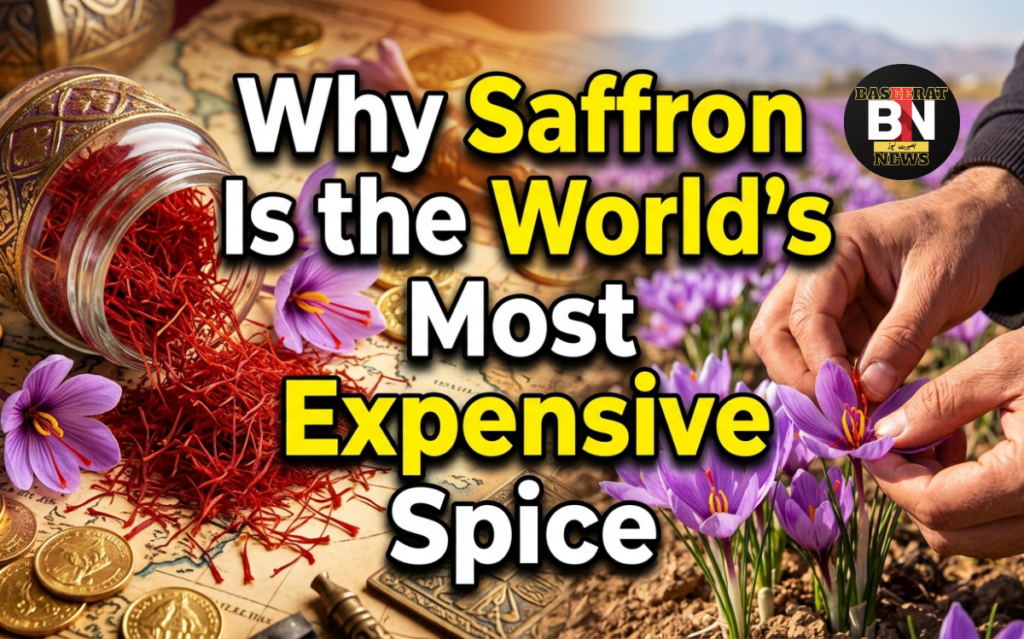
A single kilogram of pure saffron can cost more than gold in some markets. Thousands of delicate flowers must be harvested by hand to produce just one kilogram of this legendary spice.
Nutritional Profile of Saffron
Despite being used in very small quantities, saffron contains a remarkable collection of bioactive compounds that have attracted the attention of researchers worldwide. Unlike many spices valued primarily for flavor, saffron combines culinary appeal with a unique chemical composition that may contribute to its growing popularity in the wellness industry.
The three most important compounds found in saffron are crocin, safranal, and picrocrocin.
These natural substances are responsible for saffron’s color, aroma, and taste.
Crocin: The Source of Saffron’s Golden Color
Crocin is a powerful carotenoid pigment that gives saffron its vibrant golden-yellow hue when soaked in water, milk, or broth.
Researchers have studied crocin extensively because of its antioxidant properties. Antioxidants help protect cells from oxidative stress, a process linked to aging and various chronic health conditions.
The concentration of crocin is one of the key indicators used to evaluate saffron quality.
Safranal: The Aroma Compound
The distinctive fragrance of saffron comes primarily from safranal.
This naturally occurring compound develops during the drying process and contributes to saffron’s sweet, floral aroma.
Scientists continue to investigate how safranal may influence mood, relaxation, and neurological function, although more large-scale studies are needed before definitive conclusions can be reached.
Picrocrocin: The Flavor Molecule
Picrocrocin is responsible for saffron’s characteristic slightly bitter taste.
During drying and storage, part of the picrocrocin converts into safranal, further enhancing saffron’s aroma.
Together, crocin, safranal, and picrocrocin create the unique sensory profile that distinguishes authentic saffron from all other spices.
Other Nutrients Found in Saffron
Although saffron is consumed in tiny amounts, it contains:
- Vitamin A
- Vitamin C
- Potassium
- Magnesium
- Iron
- Manganese
- Natural antioxidants
- Plant-based flavonoids
Its nutritional value is less about calorie content and more about its concentration of biologically active compounds.
Health Benefits of Saffron
Modern interest in saffron extends far beyond the kitchen.
Researchers across Europe, Asia, and North America have explored saffron’s potential role in wellness, mental health, eye health, and cardiovascular support. While many findings are promising, experts emphasize that saffron should not be viewed as a replacement for professional medical treatment.
Instead, it is best understood as a traditional botanical ingredient undergoing modern scientific evaluation.
Saffron and Brain Health
The human brain is particularly vulnerable to oxidative stress because it consumes a significant amount of the body’s energy.
Researchers have investigated whether saffron’s antioxidant compounds may help support healthy brain function.
Several studies suggest that crocin and safranal may influence neurological pathways involved in memory, learning, and cognitive performance. Scientists are particularly interested in understanding whether these compounds could play a supportive role in healthy aging.
Although results are encouraging, larger clinical trials are needed before firm recommendations can be made.
Saffron and Mood Support
One of the most widely studied areas of saffron research involves emotional well-being.
Researchers have examined whether saffron extracts may influence neurotransmitters associated with mood regulation.
Some clinical studies have reported positive findings, leading scientists to continue investigating saffron as a potential complementary wellness ingredient.
Experts caution that individuals experiencing mental health concerns should always consult qualified healthcare professionals rather than relying solely on dietary supplements.
Saffron and Stress Management
Modern life has created unprecedented levels of stress for many people.
Because saffron has traditionally been associated with relaxation and emotional balance, researchers have explored its potential effects on stress-related symptoms.
Early evidence suggests saffron may help promote feelings of calmness and overall well-being in certain individuals. However, responses can vary significantly from person to person.
Saffron and Sleep Quality
Sleep quality has become a major public health topic worldwide.
Some preliminary research suggests saffron supplementation may support healthy sleep patterns and nighttime relaxation.
Scientists believe this effect may be related to saffron’s influence on mood and stress management pathways.
Although the findings are promising, sleep quality is influenced by numerous factors, including lifestyle, diet, physical activity, and overall health.
Saffron and Heart Health
Cardiovascular disease remains one of the leading health concerns globally.
Researchers have explored whether saffron’s antioxidant compounds may contribute to cardiovascular wellness.
Antioxidants help neutralize free radicals that can damage cells and tissues. Because oxidative stress is linked to cardiovascular health, scientists continue to investigate how saffron’s bioactive compounds may interact with these processes.
Current evidence remains an active area of research.
Saffron and Eye Health
Eye health is another field attracting growing interest from saffron researchers.
Some studies suggest saffron compounds may help support retinal function and visual performance.
Researchers have specifically explored saffron’s potential role in protecting cells within the eye from oxidative damage.
As populations age worldwide, interest in nutritional strategies for maintaining vision continues to grow.
Saffron and Weight Management
Weight management remains one of the most searched wellness topics online.
Researchers have investigated whether saffron may influence appetite control and eating behaviors.
Some studies suggest saffron supplementation could help reduce snacking tendencies in certain individuals, potentially supporting broader weight-management strategies.
However, saffron should never be viewed as a quick-fix solution. Sustainable weight management depends on balanced nutrition, regular physical activity, and healthy lifestyle habits.
Saffron and Immune Support
The immune system relies on numerous nutrients and protective compounds to function effectively.
Because saffron contains antioxidants and plant-based bioactive substances, researchers have explored whether it may contribute to overall immune support.
While no single food or spice can guarantee immunity, diets rich in antioxidant-containing foods may help support general wellness.
This area continues to attract scientific attention as researchers seek to better understand the relationship between nutrition and immune function.
Saffron in Traditional Medicine
Long before laboratories began studying saffron, ancient civilizations viewed it as a valuable medicinal resource.
Its use spans thousands of years and multiple medical traditions.
Saffron in Ayurveda
Ayurveda, one of the world’s oldest systems of traditional medicine, has incorporated saffron for centuries.
Practitioners historically used saffron in various herbal preparations designed to support vitality, digestion, and overall wellness.
Saffron was often considered a premium ingredient reserved for special formulations.
Persian Traditional Medicine
Persia is widely regarded as saffron’s historical homeland.
Traditional Persian medical texts describe saffron as a valuable botanical ingredient used in numerous remedies.
Because saffron played such a central role in Persian culture, its medicinal applications became deeply intertwined with everyday life.
Traditional Chinese Medicine
Traditional Chinese Medicine also recognized saffron’s value.
Historical records indicate that saffron was used in certain herbal practices intended to promote circulation and general balance within the body.
Although modern scientific approaches differ from traditional medical systems, many contemporary researchers draw inspiration from these historical uses when designing new studies.
Saffron in Cooking: A Culinary Treasure
Few ingredients have influenced global cuisine as profoundly as saffron.
Its ability to transform color, aroma, and flavor makes it one of the most sought-after spices in the culinary world.
A tiny amount of saffron can dramatically enhance an entire dish.
Biryani
Across South Asia and the Middle East, saffron is often used in premium biryani recipes.
The spice contributes a rich golden color and luxurious fragrance that elevates rice dishes to another level.
For many chefs, saffron is considered the signature ingredient of celebratory biryani preparations.
Paella
Spain’s famous paella owes much of its visual appeal to saffron.
The spice creates the distinctive golden color associated with authentic traditional recipes.
Without saffron, paella loses one of its defining characteristics.
Risotto alla milanese
Italy’s renowned Risotto alla Milanese showcases saffron as the star ingredient.
The spice gives the creamy rice dish its elegant color and delicate flavor profile.
This centuries-old recipe remains one of the world’s most famous saffron dishes.
Saffron Tea
Saffron tea has gained popularity among wellness enthusiasts seeking aromatic herbal beverages.
Often combined with honey, cardamom, or cinnamon, saffron tea offers a unique sensory experience.
Desserts and Sweets
From Persian desserts to Indian sweets and Middle Eastern pastries, saffron frequently appears in premium confectionery products.
Its subtle floral notes complement milk-based desserts particularly well.
Cooking Tips for Maximum Flavor
To maximize saffron’s effectiveness:
- Soak threads before use.
- Use warm water or milk.
- Avoid excessive heat.
- Store in airtight containers.
- Purchase from reputable suppliers.
Because saffron is highly concentrated, even a small quantity can provide remarkable results.
Its extraordinary ability to connect flavor, aroma, color, and tradition explains why chefs continue to regard saffron as one of the most valuable ingredients in the culinary world.
Here is Part 3, covering farming, market trends, authenticity, beauty uses, safety, facts, FAQs, and the conclusion.
Saffron: The Red Gold of the World (Part 3)
How Saffron Is Grown
Behind every gram of saffron lies months of careful cultivation and an intense harvesting process that has changed very little over the centuries. While modern agriculture has mechanized many crops, saffron remains one of the few products that still depend heavily on skilled human labor.
The saffron plant, Crocus sativus, grows from a bulb-like structure called a corm. Farmers typically plant these corms during late summer and wait for the flowering season, which usually occurs in autumn.
Soil Requirements
Saffron thrives in:
- Well-drained soil
- Sandy or loamy textures
- Moderate organic matter
- Good aeration
Poor drainage can damage corms and reduce productivity.
Climate Conditions
Saffron prefers:
- Hot, dry summers
- Cold winters
- Moderate rainfall
- Plenty of sunlight
This combination explains why only certain regions of the world can produce premium-quality saffron.
Irrigation Management
Although saffron is relatively drought-tolerant, proper irrigation remains essential.
Farmers carefully manage water levels because excessive moisture can harm the crop, while insufficient water may reduce flowering and yield.
Recent agricultural research continues to explore optimal irrigation strategies that maximize productivity while conserving water resources.
Flowering Season
One of saffron’s greatest challenges is its short flowering period.
The flowers may bloom for only a few weeks each year. During this brief window, farmers must harvest blossoms daily, often during the early morning hours.
Timing is critical because flowers quickly lose quality if left uncollected.
Harvesting the Stigmas
Once harvested, workers carefully separate the three red stigmas from each flower.
This delicate process requires patience, precision, and experience.
After separation, the stigmas are dried under controlled conditions to preserve their aroma, color, and flavor.
The result is the saffron spice sold in markets worldwide.
Saffron Farming and Climate Change
Climate change is becoming one of the biggest challenges facing saffron producers.
Because saffron cultivation depends on specific environmental conditions, shifts in weather patterns can significantly affect production.
Water Scarcity
Many saffron-growing regions already face water shortages.
Reduced rainfall and prolonged droughts can stress plants and lower yields.
Farmers are increasingly adopting water-efficient irrigation methods to address these challenges.
Rising Temperatures
Temperature changes can influence:
- Flowering cycles
- Plant growth
- Soil moisture levels
- Overall productivity
Even small climatic shifts may affect saffron quality and quantity.
Soil Salinity
Increasing soil salinity is another concern in arid agricultural regions.
Excess salt can reduce plant health and negatively impact yields.
Researchers continue investigating cultivation methods that help saffron withstand saline conditions.
Adapting to the Future
Agricultural scientists are exploring:
- Improved irrigation systems
- Climate-resilient cultivation techniques
- Soil management practices
- Alternative growing regions
These innovations may help protect saffron production as environmental conditions continue to evolve.
Can Saffron Be Grown Outside Kashmir?
For decades, many consumers associated premium saffron almost exclusively with Kashmir, Iran, and a few other traditional growing regions.
Today, however, farmers and entrepreneurs are testing saffron cultivation in new locations.
Expansion Into New Regions
Trials have been reported in:
- Punjab
- Himachal Pradesh
- Uttarakhand
- Various parts of Europe
- Controlled greenhouse environments
The goal is to determine whether high-quality saffron can be produced beyond traditional growing zones.
Indoor Farming Possibilities
Advances in controlled-environment agriculture have opened new possibilities.
Greenhouses and indoor farms allow growers to regulate:
- Temperature
- Humidity
- Irrigation
- Light exposure
This level of control may help overcome some environmental limitations.
Challenges Remain
Despite promising results, consistency remains a challenge.
Factors such as soil composition, climate, and local expertise continue to influence saffron quality.
Traditional growing regions still enjoy significant advantages due to generations of accumulated knowledge and ideal environmental conditions.
Nevertheless, the expansion of saffron cultivation could help increase global supply in the coming years.
Global Saffron Market Trends 2026
The saffron market is experiencing remarkable growth.
Once viewed primarily as a luxury spice, saffron is now attracting interest from multiple industries, including food, wellness, cosmetics, and pharmaceuticals.
Growing Consumer Demand
Several trends are driving demand:
- Natural wellness products
- Premium food experiences
- Botanical skincare
- Functional beverages
- Dietary supplements
Consumers increasingly seek products with traditional roots and modern scientific support.
Wellness Industry Expansion
Saffron supplements have become one of the fastest-growing segments of the market.
Manufacturers are promoting saffron-based products aimed at:
- Mood support
- Relaxation
- General wellness
As research continues, consumer awareness is expected to grow further.
Cosmetic Industry Growth
Luxury beauty brands are incorporating saffron into:
- Face creams
- Serums
- Oils
- Masks
The ingredient’s premium image makes it particularly attractive within high-end skincare markets.
Major Producing Countries
Iran
Iran remains the world’s dominant saffron producer and exporter.
The country supplies the majority of global saffron production.
India
India’s Kashmiri saffron enjoys a reputation for exceptional quality and distinctive characteristics.
Spain
Spanish saffron maintains strong recognition in European culinary markets.
Afghanistan
Afghanistan has emerged as an increasingly important saffron-producing nation.
Many agricultural development programs have encouraged saffron cultivation as a high-value crop.
Market Outlook
Industry forecasts suggest continued growth through the next decade as demand expands across multiple sectors.
Saffron’s combination of tradition, luxury, and scientific interest positions it as one of the most fascinating agricultural products in the global marketplace.
Real vs Fake Saffron
Because saffron commands premium prices, counterfeit products are unfortunately common.
Learning how to identify authentic saffron can help consumers avoid fraud.
Water Test
Place a few saffron threads in warm water.
Authentic saffron gradually releases a golden-yellow color over several minutes.
Fake saffron often releases color almost instantly.
Smell Test
Real saffron has a complex aroma combining:
- Floral notes
- Honey-like sweetness
- Earthy undertones
Artificial products frequently smell overly sweet or chemical-like.
Thread Structure
Genuine saffron threads:
- Are trumpet-shaped at one end
- Have slight variations in appearance
- Are not perfectly uniform
Counterfeit products often look suspiciously identical.
Color Test
Authentic saffron threads remain red even after soaking.
Fake products may lose color rapidly.
Common Adulteration Methods
Unscrupulous sellers sometimes mix saffron with:
- Dyed corn silk
- Dyed fibers
- Safflower petals
- Artificial coloring agents
Purchasing from trusted suppliers remains the best defense against counterfeit saffron.
Saffron for Skin and Beauty
Saffron’s reputation in beauty care dates back centuries.
Today, it has become a popular ingredient in luxury skincare formulations.
Traditional Beauty Uses
Historical beauty traditions often used saffron in:
- Face masks
- Herbal oils
- Skin treatments
- Bath rituals
Its association with beauty and elegance spans numerous cultures.
Modern Skincare Interest
Contemporary skincare brands promote saffron-based products for:
- Radiance
- Hydration
- Premium botanical care
Its rich color and luxurious image make saffron a highly marketable ingredient.
Why Beauty Brands Love Saffron
Saffron offers:
- Strong consumer recognition
- Traditional heritage
- Premium positioning
- Natural ingredient appeal
As demand for plant-based skincare grows, saffron’s popularity within the beauty industry is likely to continue expanding.
Side Effects and Safety Considerations
For most people, saffron is considered safe when used in typical culinary amounts.
However, moderation remains important.
Excessive Intake
Very high quantities may cause unwanted effects.
Consumers should follow recommended serving guidelines when using saffron supplements.
Allergic Reactions
Although uncommon, allergic reactions can occur.
Individuals experiencing symptoms should discontinue use and seek professional advice.
Pregnancy Considerations
Pregnant individuals should consult healthcare professionals before using saffron supplements or concentrated extracts.
Supplement Quality
Not all saffron supplements are created equal.
Consumers should choose reputable brands that provide quality testing and ingredient transparency.
Fascinating Facts About Saffron
- Saffron is often called “Red Gold.”
- It is one of the world’s most expensive spices.
- Every saffron thread is harvested by hand.
- A single flower produces only three stigmas.
- Thousands of flowers are needed for small quantities of saffron.
- Saffron has been used for more than 3,000 years.
- Ancient civilizations used saffron as medicine, perfume, and dye.
- Iran produces most of the world’s saffron.
- Kashmiri saffron is considered among the finest varieties.
- Saffron appears in some of the world’s most famous dishes.
Frequently Asked Questions About Saffron
1. What is saffron?
Saffron is a spice made from the dried stigmas of the Crocus sativus flower.
2. Why is saffron so expensive?
Because harvesting is done entirely by hand, and yields are extremely low.
3. Which country produces the most saffron?
Iran.
4. What does saffron taste like?
Earthy, floral, slightly sweet, and mildly bitter.
5. What color should real saffron be?
Deep red.
6. How is saffron harvested?
By hand from saffron crocus flowers.
7. Can saffron expire?
Yes, though proper storage extends shelf life.
8. How should saffron be stored?
In an airtight container away from light and moisture.
9. Is saffron used in tea?
Yes.
10. Is saffron used in desserts?
Yes.
11. What is crocin?
A carotenoid responsible for saffron’s color.
12. What is safranal?
The compound responsible for saffron’s aroma.
13. What is picrocrocin?
The compound responsible for saffron’s taste.
14. Is saffron farming profitable?
It can be highly profitable under suitable conditions.
15. Can saffron grow in warm climates?
Yes, if other environmental requirements are met.
16. How many flowers make one kilogram?
Approximately 150,000–200,000 flowers.
17. Is saffron good for cooking?
Yes.
18. Is saffron used in skincare?
Increasingly, yes.
19. What is Kashmiri saffron?
A premium saffron variety from Kashmir.
20. What is Spanish saffron?
A respected saffron variety used widely in European cuisine.
21. Can saffron be grown indoors?
In some controlled environments.
22. Does saffron have antioxidants?
Yes.
23. What is the flowering season?
Typically autumn.
24. Is saffron a flower?
The spice comes from a flower.
25. What is saffron tea?
A beverage made by steeping saffron threads.
26. Can saffron be fake?
Yes.
27. How do I test saffron quality?
Use water, smell, and thread-structure tests.
28. What industries use saffron?
Food, cosmetics, wellness, and pharmaceuticals.
29. Is saffron demand growing?
Yes.
30. Why is saffron called Red Gold?
Because of its deep red color and extraordinary value.
Conclusion
Few natural products possess the history, beauty, economic value, and scientific intrigue of saffron. From the ancient civilizations of Persia and Egypt to modern laboratories and luxury markets, saffron has maintained its reputation as one of the world’s most treasured agricultural products.
Its journey from delicate purple flower to valuable crimson thread represents an extraordinary combination of nature and human craftsmanship. Every harvest reflects centuries of agricultural knowledge, while every thread carries a legacy of culture, trade, medicine, and culinary artistry.
Today, saffron stands at the intersection of tradition and innovation. Researchers continue exploring its bioactive compounds, farmers are adapting to climate challenges, and global industries are discovering new applications in wellness, beauty, and premium foods.
Despite technological advances, saffron remains fundamentally unchanged. It is still harvested by hand, still prized for its rarity, and still regarded as a symbol of luxury around the world.
As consumer interest in natural ingredients, sustainable agriculture, and botanical wellness continues to grow, saffron’s future appears exceptionally bright. Whether appreciated for its rich history, unique flavor, potential health benefits, or economic importance, saffron remains deserving of its legendary title:
The Red Gold of the World.
Click the link below for more
https://baseeratnews.com/roses-biology-cultivation-uses-science-and-global-importance/