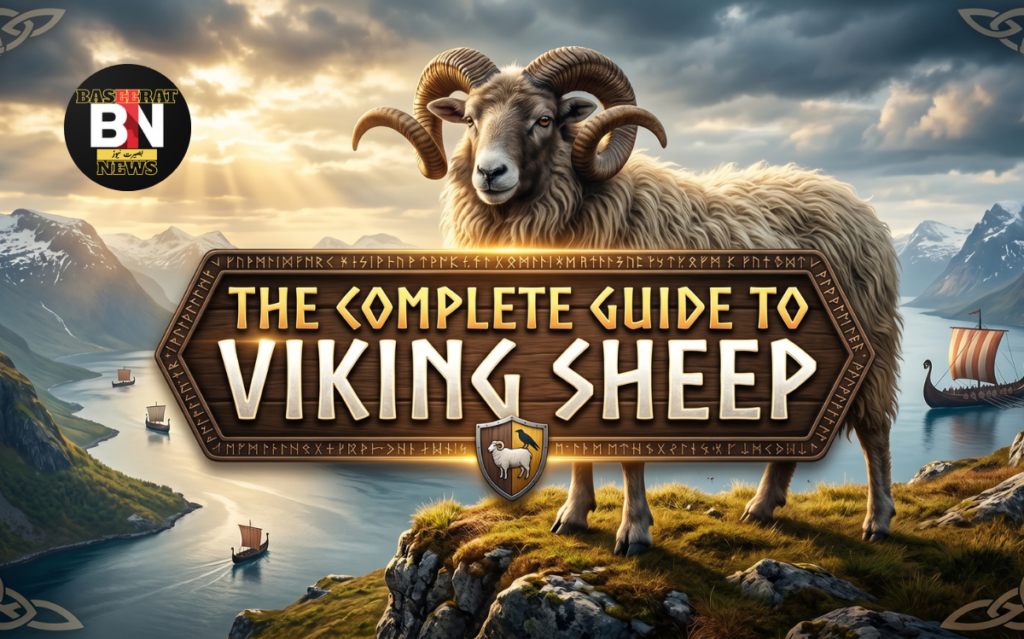
Viking Sheep: The Ancient Livestock That Helped Build the Norse World
Imagine standing on a windswept Scandinavian coastline more than a thousand years ago. The air is cold, the sea is restless, and a small Norse settlement clings to survival against the forces of nature. Long before modern agriculture and advanced technology, Viking families relied on a handful of animals that could withstand the harsh northern climate. Among these animals, sheep were perhaps the most valuable.
While Viking warriors and longships often dominate popular images of the Viking Age, sheep quietly played a vital role in Norse society. They provided food during difficult winters, produced wool for clothing and sails, and represented wealth within farming communities. Without sheep, many Viking settlements may never have survived the challenging environments of Scandinavia, Iceland, and Greenland.
The term “Viking sheep” does not refer to a single breed. Instead, it describes a group of ancient Nordic sheep breeds that share ancestry with the animals raised by Norse settlers during the Viking Age. Many of these breeds still exist today and retain characteristics developed over centuries of adaptation to rugged northern landscapes.
From the volcanic fields of Iceland to the remote islands of Scotland, descendants of Viking sheep continue to graze much as their ancestors did a thousand years ago. Their story is one of resilience, survival, and cultural heritage.
This article explores the fascinating history, characteristics, and modern importance of Viking sheep, revealing how these remarkable animals helped shape one of history’s most influential civilizations.
What Are Viking Sheep?
Viking sheep are ancient Nordic sheep breeds descended from livestock raised throughout Scandinavia during the Viking Age. These animals evolved in some of the harshest climates in Europe and developed traits that allowed them to thrive where many other breeds struggled.
Unlike many modern commercial sheep breeds, Viking sheep were selected primarily for survival rather than maximum production. Farmers needed animals that could find food on rough terrain, resist disease, survive cold winters, and produce useful wool.
Several modern breeds are considered close descendants of Viking-era sheep:
Icelandic Sheep
Perhaps the best-known Viking sheep breed, Icelandic sheep, arrived with Norse settlers around the ninth century. Because Iceland remained geographically isolated for centuries, these sheep preserved many ancient genetic traits.
Faroe Sheep
Found in the Faroe Islands, these sheep are adapted to cliffs, rocky hillsides, and strong Atlantic winds.
Shetland Sheep
Native to Scotland’s Shetland Islands, these small but hardy sheep are renowned for their fine wool and adaptability.
Norwegian Spælsau
This ancient Norwegian breed retains many characteristics associated with Viking livestock and remains popular among heritage farmers.
Key Characteristics
- Double-coated fleece
- Strong disease resistance
- Excellent grazing ability
- High fertility
- Adaptability to harsh weather
- Efficient use of poor-quality forage
These qualities made Viking sheep indispensable to Norse communities and continue to attract farmers today.
The History of Viking Sheep
Before the Viking Age
The ancestors of Viking sheep likely originated from early domesticated sheep introduced into Northern Europe thousands of years ago. Over generations, farmers selected animals capable of surviving cold climates and limited food supplies.
As these sheep adapted to Scandinavia’s challenging environment, they gradually developed the hardy characteristics associated with Viking breeds.
During the Viking Age (793–1066 AD)
The Viking Age saw unprecedented expansion across Europe and the North Atlantic. Wherever Norse settlers traveled, sheep followed.
When Vikings established settlements, sheep were often among the first livestock brought ashore. These animals provided a reliable source of food and materials essential for survival.
Iceland
Norse settlers introduced sheep to Iceland around 874 AD. The isolated island environment helped preserve ancient genetic characteristics that remain visible today.
Greenland
Despite Greenland’s severe climate, Viking settlers brought sheep and other livestock to support their farming communities.
British Isles
Vikings influenced sheep populations throughout Scotland, Ireland, and northern England.
Why Vikings Needed Sheep
Food
Sheep supplied meat, milk, and dairy products.
Wool
Wool provided insulation against northern winters.
Trade
Wool and textiles became valuable trade commodities.
Clothing
Almost every Viking household depended on woolen garments.
Ship Supplies
Wool was even used in producing sails, one of the most important technologies of the Viking world.
Because sheep fulfilled so many essential functions, ownership often symbolized wealth and social status.
Viking Farming and Sheep Husbandry
Raising sheep required careful management throughout the year.
Seasonal Grazing
During the summer, sheep grazed freely in mountain pastures and open grazing lands.
These highland areas provided abundant vegetation while preserving lower fields for crops.
Winter Sheltering
As winter approached, farmers gathered sheep into protected enclosures and barns.
Stored hay became critical during months when fresh forage was unavailable.
Shepherding Techniques
Viking farmers used communal grazing systems in many regions.
Shepherds monitored flocks, protected them from predators, and guided seasonal movements.
Surviving Harsh Climates
Viking sheep evolved to withstand:
- Heavy snowfall
- Strong winds
- Cold temperatures
- Limited food resources
Their ability to survive difficult conditions made them highly valuable in northern farming systems.
Physical Characteristics of Viking Sheep
Size
Most Viking sheep breeds are medium-sized animals with strong, athletic bodies.
Weight
Adult ewes generally weigh between 60 and 80 kilograms, while rams often exceed 90 kilograms.
Horns
Many ancient Nordic breeds naturally grow horns.
Some breeds have both horned and polled varieties.
Coat Colors
Viking sheep display remarkable color diversity.
Common colors include:
- White
- Black
- Brown
- Gray
- Spotted patterns
Double-Coated Wool
One of their most distinctive features is a double-coated fleece.
Outer Coat
Long guard hairs protect against rain and wind.
Inner Coat
A soft insulating layer traps heat close to the body.
This combination creates wool ideally suited to cold and wet environments.
Viking Wool: The Treasure of the North
Among all products obtained from Viking sheep, wool was arguably the most valuable.
Importance of Wool
Viking households relied heavily on wool for daily life.
It was used to create:
- Clothing
- Cloaks
- Blankets
- Bedding
- Rope
- Sailcloth
Why Viking Wool Was Valuable
Warmth
The insulating undercoat protected people from freezing temperatures.
Durability
The outer fibers resisted wear and tear.
Water Resistance
Natural oils helped repel moisture.
These qualities made Viking wool exceptionally practical.
Traditional Processing
Shearing
Farmers removed fleece annually.
Washing
Wool was cleaned to remove dirt and lanolin.
Spinning
Fibers were spun into yarn using hand spindles.
Weaving
The yarn was woven into textiles using traditional looms.
Creating a large Viking sail required enormous quantities of wool and labor. Historians estimate that sail production represented one of the largest textile projects undertaken by Viking communities.
Viking Sheep in Norse Culture and Mythology
Livestock occupied a central place in Norse life.
Symbolism
Sheep symbolized:
- Wealth
- Prosperity
- Stability
- Survival
A large flock indicated economic success and social standing.
Seasonal Traditions
Agricultural festivals often celebrated successful lambing seasons and harvests.
Communities depended on healthy livestock to survive the coming winter.
Cultural Importance
Because farming formed the foundation of Viking society, sheep influenced daily routines, traditions, and local customs across the Norse world.
Viking Sheep Around the World Today
The descendants of Viking sheep can now be found far beyond Scandinavia.
Countries where these breeds thrive include:
- Iceland
- Norway
- Sweden
- Denmark
- Scotland
- Canada
- United States
Heritage Farming
Interest in heritage agriculture has increased significantly.
Many farmers choose Viking sheep because of their hardiness and genetic diversity.
Sustainable Agriculture
These sheep often perform well on marginal land where intensive breeds struggle.
As sustainable farming grows in popularity, Viking sheep are gaining renewed attention.
Conservation of Ancient Viking Breeds
Although several Viking sheep breeds remain healthy, some face challenges.
Modern Threats
Crossbreeding
Mixing heritage breeds with commercial sheep can reduce unique genetic traits.
Industrial Farming
Large-scale agriculture often favors high-production breeds.
Loss of Genetics
Rare bloodlines may disappear if populations decline.
Conservation Efforts
Organizations worldwide work to preserve ancient Nordic sheep.
Efforts include:
- Genetic preservation programs
- Heritage breed registries
- Research initiatives
- Sustainable farming projects
These programs help ensure that Viking sheep remain part of our agricultural heritage.
Benefits of Raising Viking Sheep Today
Modern farmers appreciate Viking sheep for many reasons.
Hardy Animals
They tolerate difficult weather conditions remarkably well.
Efficient Grazers
They utilize rough forage effectively.
Easy Lambing
Many Viking breeds experience relatively few birthing complications.
Quality Wool
Their unique fleece attracts hand spinners and textile artisans.
Adaptability
They perform well on small farms and homesteads.
Ideal For
- Sustainable agriculture
- Heritage farms
- Hobby farms
- Fiber production
- Conservation grazing
Their versatility makes them valuable even in the modern agricultural world.
Interesting Facts About Viking Sheep
- Some Viking sheep breeds are more than 1,000 years old.
- Icelandic sheep remain genetically similar to animals introduced by Norse settlers.
- Viking sails often required wool from hundreds of sheep.
- Sheep represented wealth in many Viking communities.
- Ancient Nordic breeds display more natural color variation than many commercial sheep.
- Some Viking sheep can thrive on vegetation unsuitable for modern breeds.
- Double-coated fleece evolved specifically for harsh northern climates.
- Heritage sheep are increasingly important in conservation farming.
Frequently Asked Questions
What breed did Vikings raise?
Vikings raised several types of Nordic sheep rather than a single breed. The ancestors of modern Icelandic sheep, Faroe sheep, Shetland sheep, and Norwegian Spælsau are among the closest descendants of Viking-era livestock. These breeds developed characteristics that enabled survival in harsh northern climates.
Are Icelandic sheep Viking sheep?
Yes. Icelandic sheep are widely considered one of the closest living descendants of Viking sheep. Norse settlers brought them to Iceland during the ninth century, and the island’s isolation helped preserve their ancient genetics.
Because relatively little outside genetic influence occurred, Icelandic sheep retain many characteristics associated with Viking livestock.
Why was wool important to Vikings?
Wool was essential to Viking society because it provided materials for clothing, blankets, cloaks, ropes, and sails.
Northern Europe experiences long, cold winters, making warm textiles critical for survival. Wool also became an important trade commodity, contributing to local economies.
Without wool production, Viking settlements would have faced significant challenges.
Are Viking sheep endangered?
Some Viking-descended breeds have stable populations, while others require conservation support.
Heritage breed organizations work to preserve genetic diversity and prevent the loss of rare bloodlines. Although not all Viking sheep breeds are endangered, maintaining their unique characteristics remains an important conservation goal.
Can Viking sheep be raised on modern farms?
Absolutely.
Many farmers choose Viking sheep because they are hardy, productive, and adaptable.
These breeds are particularly popular among:
- Small-scale farmers
- Homesteaders
- Fiber producers
- Sustainable agriculture advocates
Their ability to utilize rough grazing land makes them valuable in modern farming systems.
What makes Viking wool unique?
Viking wool contains two distinct fiber layers.
The outer layer consists of long, strong fibers that repel moisture and protect against weather.
The inner layer contains soft insulating fibers that trap heat.
This combination creates a warm, durable, and versatile wool ideally suited to northern climates.
The structure of Viking wool remains highly valued by artisans and textile producers today.
Conclusion
Viking sheep were far more than simple farm animals. They played a fundamental role in the survival, expansion, and prosperity of Norse society. Providing food, clothing, trade goods, and raw materials for ships, these resilient animals helped support one of history’s most remarkable civilizations.
Their descendants continue to thrive across Scandinavia and beyond, preserving ancient genetics that connect modern agriculture with the Viking world. Through conservation programs, heritage farming initiatives, and growing interest in sustainable agriculture, Viking sheep remain as relevant today as they were a thousand years ago.
Their story is a reminder that great civilizations are built not only by explorers and warriors but also by the animals that sustain daily life.
Click the link below for more…….

https://baseeratnews.com/history-of-dinosaurs/
Click the link below for more…….