Cuscus: The Gentle Tree-Dwelling Marsupial of the Rainforest
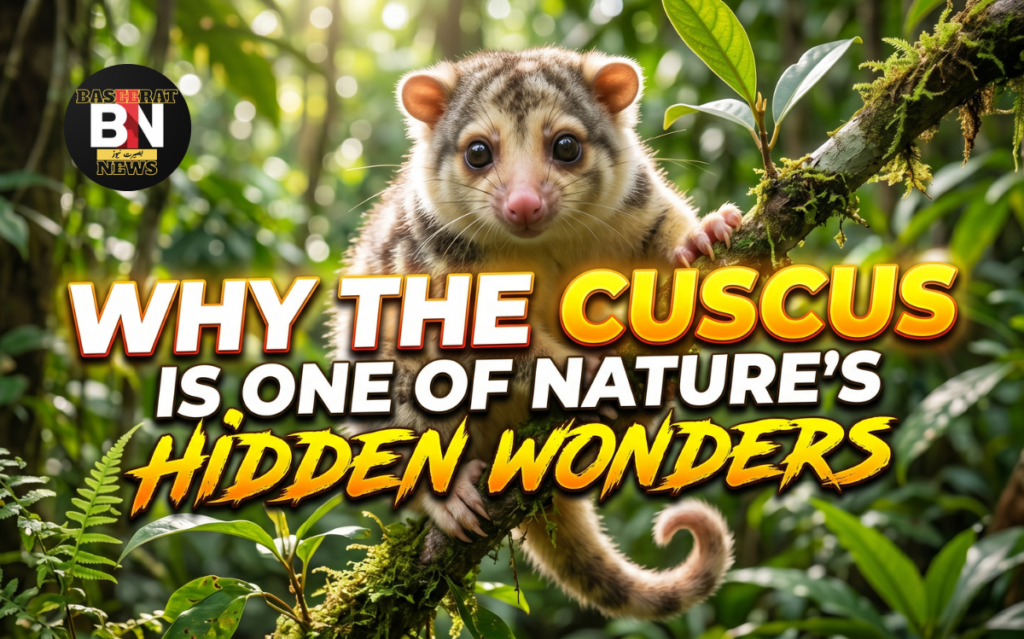
Deep within the lush rainforests of New Guinea, Indonesia, and nearby islands lives one of the world’s most fascinating yet overlooked mammals—the cuscus. With its large, round eyes, thick fur, strong grasping tail, and slow, deliberate movements, the cuscus appears almost like a creature from another era.
Unlike many well-known rainforest animals, cuscuses rarely make headlines. They do not possess the speed of a cheetah, the size of an elephant, or the fame of a panda. Yet these remarkable marsupials play an important role in their forest ecosystems and represent an extraordinary chapter in the story of evolution.
For centuries, Indigenous communities have shared forests with cuscuses, observing their habits and incorporating them into local traditions. Scientists continue to study these unique animals to better understand marsupial evolution, rainforest ecology, and conservation challenges across the Pacific region.
This article explores everything you need to know about cuscuses—from their appearance and habitat to their behavior, diet, reproduction, and conservation status. By the end, you’ll understand why these gentle tree-dwellers deserve far more attention than they receive.
What Is a Cuscus?
A cuscus is a type of marsupial belonging to the family Phalangeridae. Marsupials are mammals that give birth to relatively undeveloped young, which continue developing inside a pouch on their mother’s body.
Most people associate marsupials with Australia, where kangaroos, koalas, and wombats live. However, cuscuses inhabit regions farther north, primarily New Guinea and surrounding islands.
These animals are closely related to possums and are sometimes referred to as “possums of the tropics.” Their appearance combines features of several different animals. They have:
- Round faces
- Large eyes
- Dense fur
- Small rounded ears
- Strong climbing limbs
- A prehensile tail capable of gripping branches
Because they spend nearly their entire lives in trees, every part of their body is adapted for an arboreal lifestyle.
Scientific Classification
The scientific classification of cuscuses is:
- Kingdom: Animalia
- Phylum: Chordata
- Class: Mammalia
- Infraclass: Marsupialia
- Order: Diprotodontia
- Family: Phalangeridae
Several species exist within the cuscus group. Some of the best-known include:
- Common Spotted Cuscus
- Northern Common Cuscus
- Black-Spotted Cuscus
- Waigeou Cuscus
- Ground Cuscus
- Bear Cuscus
Each species has unique characteristics and occupies specific habitats across island ecosystems.
Physical Appearance
One of the most striking features of the cuscus is its unusual appearance.
Adult cuscuses typically measure between 35 and 65 centimeters (14–26 inches) in body length, while their tails can be nearly as long as their bodies. Depending on the species, they may weigh between 3 and 7 kilograms.
Their fur varies significantly:
- White
- Cream
- Gray
- Brown
- Black
- Spotted combinations
Male spotted cuscuses often display beautiful patterns of white fur covered with orange or brown spots. Females tend to have more uniform coloration.
Their eyes are exceptionally large, helping them navigate forests during the night. These eyes provide excellent low-light vision, an important adaptation since cuscuses are primarily nocturnal.
The Remarkable Prehensile Tail
Perhaps the cuscus’s most impressive adaptation is its prehensile tail.
A prehensile tail functions almost like an additional hand. The tail can:
- Grip branches
- Support body weight
- Provide balance
- Assist climbing
The underside of the tail near the tip lacks fur, creating a rough surface that improves grip.
This adaptation allows cuscuses to move safely through the rainforest canopy, where a fall could be deadly.
Where Do Cuscuses Live?
Cuscus are native to:
- New Guinea
- Papua Province (Indonesia)
- Maluku Islands
- Solomon Islands
- Nearby tropical islands
These regions contain some of the most biologically diverse rainforests on Earth.
The animals inhabit:
- Lowland rainforests
- Mountain forests
- Secondary forests
- Mangrove areas
- Tropical woodlands
Most species prefer dense tree cover because it provides food, shelter, and protection from predators.
Unlike many mammals, cuscuses spend very little time on the ground.
Life in the Rainforest Canopy
The rainforest canopy is often called the “roof” of the forest.
For cuscuses, this elevated world serves as:
- Home
- Feeding ground
- Nursery
- Safe refuge
Living high above the forest floor offers several advantages:
Protection from Predators
Many predators struggle to reach the upper canopy.
Access to Food
Leaves, fruits, flowers, and young shoots are readily available.
Reduced Competition
Fewer mammals occupy the same ecological niche.
This tree-top lifestyle has shaped cuscus evolution for millions of years.
Diet and Feeding Habits
Cuscuses are primarily herbivorous.
Their diet includes:
- Leaves
- Fruits
- Flowers
- Buds
- Young shoots
Occasionally, they may consume:
- Insects
- Small invertebrates
Leaves form a major component of their diet. However, leaves are difficult to digest because they contain tough plant fibers and defensive chemicals.
To solve this challenge, cuscuses possess specialized digestive systems that help break down plant material efficiently.
Nocturnal Lifestyle
Cuscuses are most active after sunset.
During daylight hours, they often:
- Sleep in tree hollows
- Rest among branches
- Hide in dense vegetation
As darkness falls, they emerge to forage.
Their large eyes help them detect:
- Food sources
- Obstacles
- Potential threats
This nocturnal lifestyle reduces competition with daytime animals and helps avoid some predators.
Behavior and Temperament
Unlike many mammals, cuscuses move slowly and deliberately.
Their behavior is often described as calm and cautious.
They spend considerable time:
- Resting
- Grooming
- Feeding
- Climbing
Rapid movements are uncommon.
This energy-conserving lifestyle works well because their leaf-based diet provides relatively limited energy compared to diets rich in meat.
Many species are solitary, though individuals may occasionally overlap in territory.
Reproduction and Life Cycle
As marsupials, cuscuses reproduce differently from placental mammals.
After a relatively short pregnancy, the mother gives birth to an extremely tiny baby known as a joey.
The newborn:
- Is blind
- Has minimal development
- Must crawl into the pouch
Inside the pouch, the joey attaches to a nipple and continues growing.
Over the following months, it develops:
- Fur
- Vision
- Strength
- Coordination
Eventually, the young cuscus begins exploring the outside world while still relying on its mother for protection.
This reproductive strategy has been highly successful among marsupials for millions of years.
Different Species of Cuscus
Common Spotted Cuscus
Perhaps the best-known species.
Characteristics include:
- White fur
- Distinct orange or brown spots
- Large eyes
- Strong climbing abilities
Black-Spotted Cuscus
Known for its darker markings and restricted geographic distribution.
Ground Cuscus
Unlike most species, it spends more time near the forest floor.
Bear Cuscus
Found primarily in Sulawesi.
Its thick fur and sturdy body give it a bear-like appearance, inspiring its name.
Ecological Importance
Cuscuses contribute significantly to rainforest ecosystems.
Seed Dispersal
When they eat fruit, seeds pass through their digestive systems and are deposited elsewhere.
This process helps forests regenerate.
Plant Population Management
Feeding on leaves and shoots influences plant growth patterns.
Food Web Contributions
Although relatively protected in the canopy, cuscuses remain part of larger ecological networks.
Their presence supports overall biodiversity.
Natural Predators
While canopy living provides protection, cuscuses still face threats from predators.
Potential predators include:
- Large snakes
- Birds of prey
- Monitor lizards
- Wild cats in some regions
Young cuscuses are particularly vulnerable.
Their camouflage coloration helps them blend into the forest environment.
Relationship With Indigenous Communities
For generations, Indigenous peoples across New Guinea and nearby islands have shared their environment with cuscuses.
Traditional knowledge has provided valuable insights into:
- Animal behavior
- Seasonal movements
- Habitat preferences
In some regions, cuscuses have cultural significance and appear in local stories and traditions.
This relationship demonstrates how human communities and wildlife can coexist over long periods.
Threats Facing Cuscuses
Despite their adaptability, cuscuses face growing challenges.
Habitat Loss
Rainforest destruction remains the greatest threat.
Forests are cleared for:
- Agriculture
- Logging
- Infrastructure projects
As habitat disappears, cuscus populations become increasingly fragmented.
Hunting Pressure
In some areas, cuscuses are hunted for food.
Unsustainable hunting can significantly reduce local populations.
Climate Change
Changing temperatures and rainfall patterns may alter rainforest ecosystems.
These changes can affect:
- Food availability
- Breeding success
- Habitat quality
Conservation Efforts
Conservation organizations and governments are working to protect rainforest habitats.
Key strategies include:
Protected Areas
National parks safeguard critical habitat.
Community Conservation
Local communities participate in wildlife management programs.
Research Projects
Scientists monitor populations and identify conservation priorities.
Education Programs
Public awareness helps encourage wildlife protection.
Protecting forests ultimately protects countless species, including cuscuses.
Interesting Facts About Cuscuses
Here are some fascinating facts:
- Cuscuses are marsupials, not monkeys.
- Their tails can grip branches like a fifth limb.
- They spend most of their lives in trees.
- Large eyes help them see at night.
- Some species display beautiful spotted coats.
- Baby cuscuses develop inside a pouch.
- They move surprisingly slowly.
- They are among the largest arboreal marsupials in their range.
- Many species remain poorly studied.
- They play an important role in seed dispersal.
Why Scientists Study Cuscuses
Researchers find cuscuses particularly valuable because they help answer questions about:
- Marsupial evolution
- Island biodiversity
- Rainforest ecology
- Species adaptation
Discoveries continue to emerge, especially in remote regions where wildlife surveys remain limited.
Studying cuscuses can improve our understanding of how ecosystems function and how species respond to environmental change.
The Future of Cuscuses
The future of cuscuses depends largely on the protection of tropical forests.
Healthy forests provide:
- Food
- Shelter
- Breeding sites
- Safe movement corridors
If habitat loss continues, many populations could decline.
However, there is reason for optimism. Increasing conservation awareness, stronger protected areas, and collaboration with local communities are helping safeguard important habitats.
The survival of cuscuses is closely linked to the health of some of the world’s richest and most diverse rainforest ecosystems.
Cuscus Lifespan
The lifespan of a cuscus varies depending on the species, habitat conditions, and whether it lives in the wild or under human care.
- Wild lifespan: Typically 8–12 years
- In protected environments (zoos or wildlife centers), Can live up to 15–20 years.
- Young cuscuses face the highest mortality risk due to predators, habitat loss, and disease.
- Adults have relatively few natural predators because they spend most of their lives high in the forest canopy.
Frequently Asked Questions (FAQs) About Cuscus
1. What is a cuscus?
A cuscus is a tree-dwelling marsupial native to New Guinea, Indonesia, the Solomon Islands, and nearby regions.
2. Is a cuscus a monkey?
No. Although it climbs trees like a monkey, a cuscus is a marsupial, not a primate.
3. Where do cuscuses live?
They live in tropical rainforests, mangroves, and forested islands across the Pacific region.
4. What do cuscuses eat?
Their diet mainly consists of leaves, fruits, flowers, buds, and young shoots.
5. Are cuscuses nocturnal?
Yes. Most species are active at night and rest during the day.
6. How long do cuscuses live?
Most cuscuses live 8–12 years in the wild and may reach 15–20 years in protected environments.
7. Are cuscuses endangered?
Some species are threatened due to habitat loss and hunting, while others remain relatively stable.
8. How many species of cuscus exist?
Scientists recognize several species, including spotted, black-spotted, ground, and bear cuscuses.
9. What is a prehensile tail?
A prehensile tail can grasp and hold branches, functioning almost like an extra hand.
10. Can cuscuses hang by their tails?
They use their tails for support and balance, but they rarely hang solely by the tail for long periods.
11. Are cuscuses related to possums?
Yes. Cuscuses belong to the possum family Phalangeridae.
12. Do cuscuses have pouches?
Yes. Female cuscuses carry and nurse their young inside a pouch.
13. What is a baby cuscus called?
A baby cuscus is called a joey.
14. How big can a cuscus get?
Most species reach 35–65 cm (14–26 inches) in body length, excluding the tail.
15. How much does a cuscus weigh?
Adults typically weigh between 3 and 7 kilograms, depending on the species.
16. Are cuscuses aggressive?
No. They are generally calm, shy, and non-aggressive animals.
17. Why do cuscuses have large eyes?
Their large eyes help them see clearly in low-light conditions at night.
18. Can cuscuses swim?
They are not known as strong swimmers and generally avoid water.
19. What are the predators of cuscuses?
Predators include large snakes, birds of prey, monitor lizards, and some wild cats.
20. Do cuscuses live alone?
Most species are solitary and spend much of their lives alone.
21. What colors are cuscuses?
Their fur may be white, gray, brown, black, cream, or spotted, depending on the species.
22. Why are spotted cuscuses famous?
Their beautiful spotted coats and unusual appearance make them one of the most recognizable cuscus species.
23. How do cuscuses help forests?
They disperse seeds through their droppings, helping new plants grow.
24. Can cuscuses be kept as pets?
In many countries, keeping native wildlife as pets is restricted or illegal. They are best left in the wild.
25. What is the rarest type of cuscus?
Several island species with limited ranges are considered rare and are priorities for conservation.
26. How do cuscuses communicate?
They communicate through vocalizations, scent markings, and body language.
27. Do cuscuses climb well?
Yes. They are excellent climbers and spend most of their lives in trees.
28. Why do cuscuses move slowly?
Their leaf-based diet provides limited energy, so slow movement helps conserve energy.
29. Are cuscuses found in Australia?
Most cuscus species are found in New Guinea and nearby islands rather than mainland Australia.
30. Why are cuscuses important?
They contribute to rainforest health, biodiversity, and seed dispersal, making them valuable members of their ecosystems.
Quick Facts About Cuscus
| Feature | Details |
| Common Name | Cuscus |
| Scientific Family | Phalangeridae |
| Animal Type | Marsupial |
| Diet | Herbivore (mostly) |
| Habitat | Tropical Rainforests |
| Activity | Nocturnal |
| Lifespan | 8–12 years (wild) |
| Weight | 3–7 kg |
| Length | 35–65 cm |
| Baby Name | Joey |
| Conservation Status | Varies by species |
| Special Feature | Prehensile Tail |
Conclusion
The cuscus may not be as famous as a koala or kangaroo, but it is every bit as remarkable. Living high in the rainforest canopy, this gentle marsupial has evolved extraordinary adaptations that allow it to thrive among the trees. Its powerful grasping tail, nocturnal habits, specialized diet, and unique reproductive system make it one of nature’s most fascinating mammals.
Beyond its biological uniqueness, the cuscus plays an essential role in maintaining rainforest health through seed dispersal and ecological balance. Yet habitat loss, hunting pressure, and environmental change continue to threaten many populations.
By protecting tropical forests and supporting conservation efforts, we help ensure that future generations will continue to encounter these quiet, mysterious creatures moving gracefully through the treetops.
The cuscus reminds us that some of the world’s most extraordinary animals are not always the most famous. Sometimes the greatest wonders of nature live hidden among the leaves, waiting to be discovered.
Click the link below for more.

https://baseeratnews.com/panda-the-gentle-giant-of-the-bamboo-forest/